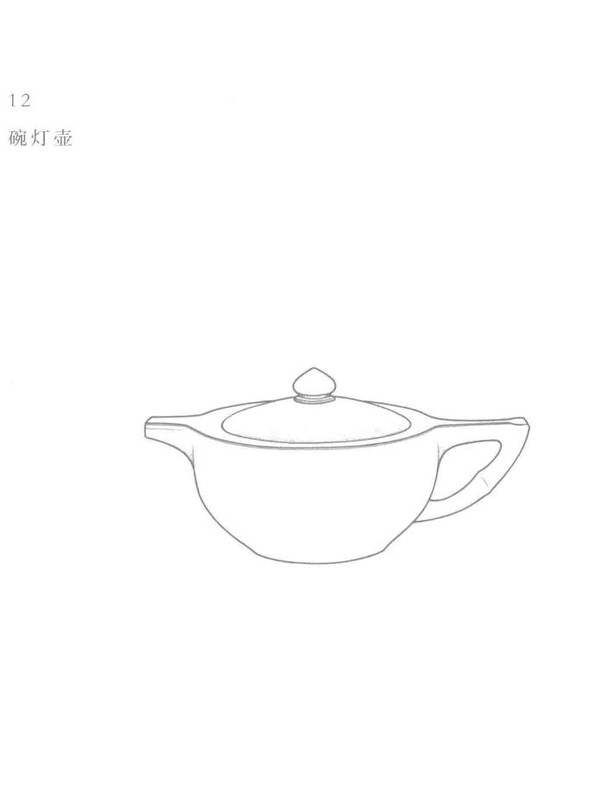
水平壶
Shuiping Teapots The "shuiping" teapot has a long history and is popular in Guangdong, Fujian, and Southeast Asian regions of China. It is the prim

The Shuiping Teapot: Where Precision Meets Poetry in Yixing Clay
When you hold a shuiping teapot (水平壶) in your hands, you’re cradling centuries of tea culture distilled into a vessel so perfectly balanced that its name literally means “horizontal level” or “water level.” This isn’t just another Yixing teapot—it’s the beating heart of gongfu tea ceremony, a design so essential to the ritual of tea that entire regions built their tea culture around it.
A Design Born from Ritual
The shuiping represents something rare in the world of teaware: a form that emerged not from an artist’s studio, but from the demands of a specific tea-drinking culture. Throughout Guangdong, Fujian, and the tea houses of Southeast Asia, the shuiping became the primary vessel for gongfu tea—and for good reason. Its low, stable profile and precise proportions make it the ideal tool for the controlled, meditative brewing that gongfu tea demands.
The term “gongfu tea” itself is often misunderstood. It doesn’t simply mean “paying attention to details” when making tea. Rather, it represents a standardized, ritualized approach to tea drinking—a complete philosophy compressed into the act of brewing. During the Qianlong period of the Qing Dynasty, the scholar Xi Guangdou captured this perfectly in his Min Suo Ji (Records of Fujian):
“Passing through Longxi, I encountered a rustic pavilion by chance on the road. The host invited me into a simple room where a ground stove kept a lively fire, and a teapot awaited. The pot was extremely small, holding only enough for one sip, yet as soon as it went down the throat, it permeated the heart and spleen.”
That image—a tiny pot, a single sip that transforms—captures the essence of what the shuiping was designed to achieve.
The Anatomy of Balance
What makes a shuiping a shuiping? The design is deceptively simple, yet every element serves a purpose. The body sits low and wide, creating a stable base that won’t tip during the rapid, precise pours of gongfu brewing. The spout extends horizontally from the body—hence the name—creating a straight, controlled pour that allows the tea master to direct the stream with surgical precision.
The handle curves gracefully but functionally, positioned to balance the weight of the filled pot perfectly. When you lift a well-made shuiping, you’ll notice how naturally it sits in your hand, how the weight distributes evenly, how the spout aligns exactly with your pouring motion. This isn’t accident—it’s geometry refined over generations.
The lid typically features a flat or slightly domed top, often with a small button knob that allows for easy removal without disrupting the brewing process. Many shuiping teapots incorporate an internal filter at the base of the spout, preventing tea leaves from escaping while allowing the liquor to flow freely.
The Dicaoqing Clay: Earth’s Hidden Treasure
The example documented from the late 1930s showcases dicaoqing clay (底槽青), translated as “bottom groove green”—one of the most prized clay types in Yixing pottery. This isn’t the purple-brown clay most people associate with Yixing teapots. Dicaoqing fires to a rich, complex color that can range from deep olive to a warm, earthy brown with subtle green undertones, depending on firing temperature and oxidation.
What makes dicaoqing special isn’t just its color—it’s the clay’s structure. When fired, it develops a fine, tight grain that’s slightly less porous than some other Yixing clays. This makes it particularly well-suited for oolong teas and aged teas, where you want the clay to enhance rather than absorb the tea’s character. The clay’s natural iron content also contributes to its ability to soften water and round out harsh notes in tea.
The dicaoqing used in quality shuiping teapots develops a lustrous patina over time, deepening in color and developing a subtle sheen that tea enthusiasts call “baojiang” (包浆)—the treasure light. This patina isn’t applied; it’s earned through years of use, as tea oils gradually season the clay.
Masters and Marks: The 1930s Golden Era
The late 1930s example bears two significant seals: “Heiyuanzhai” (黑缘斋, Black Edge Studio) on the base and “Jing Yi Ji” (景逸记, Studio of Tranquil Reflection) on the side. These weren’t just maker’s marks—they were signatures of quality and provenance in an era when Yixing teapots were reaching new heights of refinement.
The inscription “Hong Zhi / Made by Hui Qiaochen of Jingxi” (弘制 / 荆溪惠乔臣制) connects this piece to the rich tradition of Yixing craftsmanship. Jingxi is the ancient name for the Yixing region, and invoking it on a teapot was a way of claiming lineage with centuries of pottery tradition.
This period—the late 1930s—represents a fascinating moment in Yixing history. Despite the political turmoil of the era, master potters continued refining their craft, and the shuiping design was reaching its apex of popularity. The famous potter Gu Jingzhou, who would later become one of the most celebrated names in Yixing pottery, was making his own zhu ni (red clay) shuiping teapots during his early apprenticeship years around this time.
Gu commonly used the base seal “Moyuanzhai Yitang Zhi” and the handle seal “Jing Ji,” and occasionally stamped bases with “Yanxi Huimengchen Zhi.” His shuiping teapots were characterized by carefully selected clay, lustrous red color, exquisite craftsmanship, and what collectors describe as “elegant simplicity with spirit.”
The Huimengchen Connection
To understand the shuiping’s cultural significance, you need to know about Huimengchen—or rather, the legend of Huimengchen. During the Daoguang period of the Qing Dynasty, Zhou Kai wrote in Xiamen Zhi (Gazetteer of Xiamen): “The local custom favors Chinese tea, with utensils refined and small. Teapots must be from Huimengchen, and cups must be Ruoshen cups.”
Whether Huimengchen was a real potter or a brand name remains debated, but the name became synonymous with the finest small teapots used for gongfu tea. The famous Qing Dynasty scholar and connoisseur Zhang Tingji carved on the wooden base of a small Huimengchen purple clay teapot in his collection: “A single drop from this pot is worth a thousand gold.”
Think about that phrase for a moment. Not the pot itself, but a single drop of tea from it—worth a thousand gold. This captures the reverence with which these small, precise teapots were regarded. The shuiping inherited this tradition, becoming the modern embodiment of the Huimengchen ideal.
Tea Pairing: Finding the Perfect Match
The shuiping’s design makes it remarkably versatile, but certain teas truly sing when brewed in this style of pot. The key is understanding how the pot’s characteristics interact with different tea types.
Oolong Teas: This is where the shuiping truly excels. The pot’s size (typically 80-150ml) is perfect for the multiple short infusions that oolong demands. Tie Guan Yin, Da Hong Pao, and Phoenix Dan Cong oolongs all benefit from the shuiping’s ability to maintain consistent temperature while allowing for precise control over brewing time. The dicaoqing clay’s moderate porosity helps soften any astringency while preserving the tea’s floral and mineral notes.
Aged Pu-erh: A well-seasoned shuiping can work wonders with aged sheng or shou pu-erh. The clay’s ability to round out harsh edges while maintaining the tea’s depth makes it ideal for exploring the complex, earthy character of aged tea. The pot’s wide body also allows the leaves to fully expand, releasing their full range of flavors.
Aged Oolongs: Heavily roasted or aged oolongs find a perfect home in the shuiping. The clay enhances the tea’s roasted, caramelized notes while the pot’s design allows for the aggressive brewing these teas often require.
What to Avoid: Delicate green teas and white teas generally aren’t ideal for the shuiping. These teas prefer lower temperatures and gentler handling than the pot’s design encourages. Similarly, highly aromatic teas like jasmine pearls might overwhelm the pot’s seasoning.
Brewing Technique: The Art of the Pour
Using a shuiping properly requires understanding its design philosophy. This isn’t a pot for casual, distracted brewing—it demands your attention and rewards your precision.
Warming the Pot: Always begin by warming the pot with hot water. The shuiping’s relatively thin walls heat quickly, and this step ensures even temperature throughout the brewing process. Pour the warming water over the outside as well, heating the entire vessel.
Leaf Ratio: The shuiping’s small size means you’ll use more tea relative to water than you might in a larger pot. For oolong, start with about one-third to one-half of the pot’s volume in dry leaf. This seems like a lot, but remember—you’re making multiple short infusions, not a single long brew.
The Pour: This is where the shuiping’s design shines. Hold the pot with your thumb on the lid button, fingers wrapped around the handle. The pot should feel balanced, almost weightless. Pour in a single, smooth motion, keeping the stream low and controlled. The horizontal spout design allows you to direct the tea precisely into your fairness cup or directly into tasting cups.
Timing: Start with very short infusions—5 to 10 seconds for the first brew. The shuiping’s design allows for rapid heat transfer, so the tea extracts quickly. Gradually increase steeping time with each subsequent infusion, paying attention to how the tea evolves.
Maintenance: After each session, rinse the pot thoroughly with hot water but never use soap. Allow it to air dry completely with the lid off. The shuiping will gradually develop its patina, deepening in color and character with each use.
The Living Pot: Seasoning and Patina
One of the most rewarding aspects of owning a shuiping is watching it transform over time. Unlike glazed ceramics, Yixing clay is porous and interactive. Each brewing session leaves a microscopic trace—tea oils, minerals, aromatic compounds—that gradually season the clay.
This process, called “raising the pot” (养壶, yang hu), is both practical and meditative. A well-raised shuiping will develop a deep, lustrous sheen that seems to glow from within. The clay’s color will deepen and become more complex. Most importantly, the pot will begin to enhance the tea brewed in it, contributing a subtle roundness and depth that only comes from years of use.
The key to proper seasoning is consistency. Ideally, dedicate your shuiping to a single type of tea—or at least to teas within the same family. A pot used exclusively for roasted oolongs will develop differently than one used for raw pu-erh, and mixing tea types can create muddy, confused flavors.
Why the Shuiping Endures
In an age of precision temperature kettles and automated brewing systems, the shuiping remains relevant because it offers something technology cannot: a direct, tactile connection to the tea-making process. When you brew with a shuiping, you’re not just making tea—you’re participating in a ritual that connects you to centuries of tea culture.
The pot’s design forces you to slow down, to pay attention, to engage with the tea on a deeper level. You feel the weight of the pot, the heat of the clay, the resistance of the leaves as you pour. You watch the color of the liquor deepen with each infusion, smell the evolving aromatics, taste the subtle shifts in flavor.
This is what Xi Guangdou meant when he wrote about that single sip permeating “the heart and spleen.” The shuiping doesn’t just brew tea—it creates an experience, a moment of presence and attention in our distracted world.
Finding Your Shuiping
If you’re considering adding a shuiping to your tea practice, take your time. Hold different pots, feel their weight and balance. Look for clean lines, a spout that aligns perfectly with the handle, a lid that fits snugly without gaps. The clay should feel smooth but not slick, with a subtle texture that speaks to its mineral content.
Don’t be seduced by elaborate decoration or unusual shapes. The shuiping’s beauty lies in its restraint, its perfect proportions, its absolute commitment to function. A good shuiping should feel inevitable—as if it couldn’t be any other way.
And remember Zhang Tingji’s words: “A single drop from this pot is worth a thousand gold.” He wasn’t talking about the pot’s monetary value. He was talking about what happens when form, function, and tradition align perfectly—when a simple vessel becomes a gateway to something profound.
That’s the promise of the shuiping. Not just better tea, but a better way of being with tea.