艳灯壶
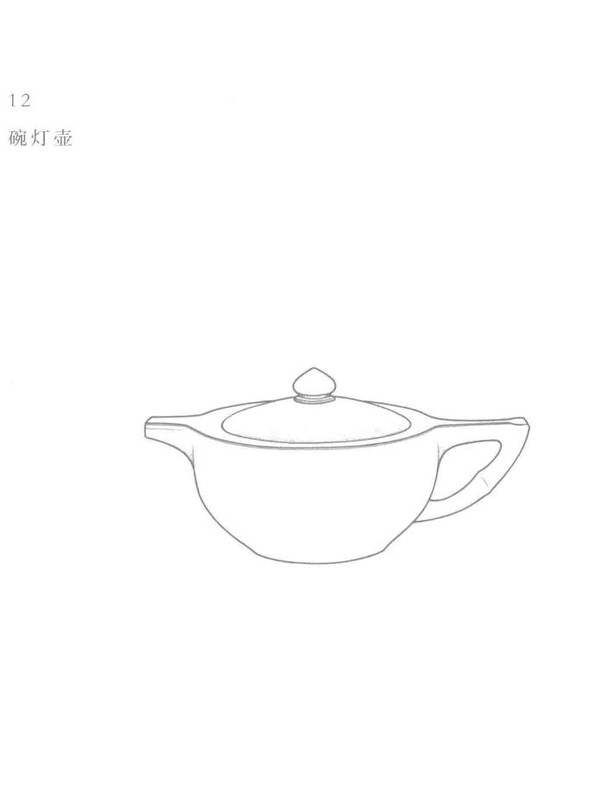
The Oil Lamp Teapot The design takes its form from the oil lamps used in daily life by common people, typically bowl-shaped with a wick placed in t
The Yan Deng Hu (艳灯壶): Gu Jingzhou’s Luminous Masterpiece
In the pantheon of classical Yixing teapot designs, few pieces capture the poetry of everyday life quite like the Yan Deng Hu—literally the “Beautiful Lamp Teapot” or “Radiant Lamp Teapot.” This remarkable design transforms the humble oil lamp, once a fixture in every Chinese household, into a vessel that illuminates not rooms but the very essence of tea itself.
Created by the legendary master Gu Jingzhou in the late 1930s, this teapot represents a pivotal moment when traditional craft met modernist sensibility. The example documented in historical records bears two significant seals: “Jing Zhou” on the lid and “Wu Ling Yi Ren” (Recluse of Wu Ling) on the base—both marks associated with Gu Jingzhou during this formative period of his career. These seals aren’t mere signatures; they’re windows into the artist’s identity and the cultural moment that shaped this design.
The Inspiration: From Functional Light to Aesthetic Delight
To understand the Yan Deng Hu, we must first picture the oil lamps that inspired it. In 1930s China, before electricity reached every corner of the nation, simple bowl-shaped oil lamps provided light for countless households. These utilitarian objects featured a wide, shallow bowl to hold oil, with a wick positioned at the center. The flame would dance atop this wick, casting warm light and long shadows.
Gu Jingzhou saw beyond the lamp’s mundane function to its essential form—and recognized its kinship with the teapot. Both are vessels. Both hold liquid. Both, in their way, provide sustenance and comfort. The genius lay in translating the lamp’s visual language into a functional tea vessel without losing either the poetic reference or the practical requirements of brewing.
The Form: Architecture of Light
The Yan Deng Hu’s body is immediately distinctive: wide at the top, narrowing toward the bottom, creating a bowl-like silhouette that directly echoes its oil lamp inspiration. This isn’t merely decorative mimicry—the shape serves the tea. The broad upper opening allows tea leaves ample room to unfurl and dance during steeping, while the narrower base concentrates heat and facilitates a stable pour.
The lid is where Gu Jingzhou’s artistry truly shines. Rather than sitting flat, the lid surface protrudes upward at its center, creating a gentle dome that represents the oil within the lamp. This subtle convexity isn’t just visual poetry; it prevents condensation from dripping back into the tea and helps maintain even heat distribution during brewing.
Crowning the lid is perhaps the most evocative element: a knob shaped like a peach heart or oval, representing the flame itself. When you lift this knob to pour tea, you’re symbolically grasping the light—a gesture that transforms the mundane act of serving tea into something almost ceremonial. The knob’s organic shape also provides an excellent grip, demonstrating how Gu Jingzhou never sacrificed function for form.
The spout and handle reveal the master’s sophisticated understanding of visual harmony. Their lower portions are rounded, flowing naturally from the body like molten clay frozen mid-movement. But their upper portions are treated differently—flattened to exist on the same plane as the body’s upper rim. This creates a unified horizontal line that reinforces the “lamp” reading while maintaining the structural integrity needed for pouring and handling.
Two Variations, One Vision
What makes the Yan Deng Hu particularly fascinating is that Gu Jingzhou created two distinct versions of this design. Though the spout, handle, knob, and body proportions differ between them, both maintain absolute fidelity to the oil lamp theme. As the historical documentation notes: “Different in form yet identical in essence, each possesses its own distinctive character.”
This duality reveals something profound about Gu Jingzhou’s creative philosophy. He wasn’t interested in creating a single “perfect” version and endlessly replicating it. Instead, he explored the design space around a central concept, demonstrating that a strong idea can support multiple interpretations. For collectors and tea enthusiasts, this means that encountering different Yan Deng Hu examples isn’t a matter of finding “authentic” versus “variant” versions—both are authentic expressions of the same artistic vision.
The Clay and Color
While the specific clay body used for the late 1930s Yan Deng Hu isn’t explicitly documented in the source material, Gu Jingzhou’s work from this period typically employed Yixing’s renowned zisha (purple sand) clay. The choice of clay would have been deliberate, selected to complement both the form and the intended tea pairings.
Given the bowl-like shape and the design’s emphasis on visual warmth (it is, after all, a lamp), Gu Jingzhou likely favored clays in the warmer spectrum—perhaps hongni (red clay) or zhuni (vermillion clay). These clays, when fired, produce colors ranging from warm browns to deep reds, echoing the glow of lamplight and creating a visual connection between the pot’s appearance and its inspiration.
The clay’s texture would have been relatively smooth, allowing the form’s curves and planes to read clearly without distraction. Too much texture would have obscured the subtle interplay between the rounded lower elements and the flattened upper portions—a key aspect of the design’s success.
Historical Context: Art in Turbulent Times
The late 1930s, when this Yan Deng Hu was created, was a period of tremendous upheaval in China. The Second Sino-Japanese War had begun in 1937, bringing conflict and uncertainty. Yet this was also a time of remarkable artistic innovation in Yixing, as masters like Gu Jingzhou continued refining their craft despite external chaos.
The choice to design a teapot inspired by an oil lamp during this period carries poignant resonance. As modern warfare threatened traditional ways of life, Gu Jingzhou created an object that honored the simple, enduring elements of domestic existence. The oil lamp represented continuity, the persistence of daily rituals even in difficult times. By elevating this humble object to art, Gu Jingzhou made a quiet statement about what endures.
The seals on this particular pot—“Jing Zhou” and “Wu Ling Yi Ren”—also tell a story. “Wu Ling Yi Ren” (Recluse of Wu Ling) suggests a withdrawal from worldly concerns, an embrace of artistic pursuit over political engagement. This wasn’t escapism but rather a commitment to preserving cultural traditions through dedicated craftsmanship.
Tea Pairing: Finding the Right Match
The Yan Deng Hu’s form makes it particularly well-suited for certain categories of tea. The wide, bowl-like body with its generous opening excels with teas that benefit from ample room to expand and breathe.
Oolong teas are perhaps the ideal match. Rolled oolongs like Tieguanyin or Dong Ding unfurl dramatically in the spacious interior, and the pot’s shape allows you to observe this transformation if you lift the lid between infusions. The clay’s heat retention supports the multiple short infusions that oolong brewing demands, while the broad opening facilitates easy cleaning between sessions—important when you’re brewing the same tea repeatedly.
Aged white teas also pair beautifully with this design. Teas like aged Bai Mudan or Shou Mei benefit from the even heat distribution provided by the bowl shape, which helps coax out the complex, mellow flavors that develop during aging. The pot’s capacity (typically medium-sized, suitable for 2-4 people) matches well with the contemplative pace of aged white tea sessions.
Raw puerh (sheng puerh) can work wonderfully in a Yan Deng Hu, particularly younger raw puerhs that benefit from the oxidation exposure provided by the wide opening. The shape allows the tea to breathe between infusions, softening any harsh edges while preserving the tea’s essential character.
I would generally avoid using this pot for heavily roasted teas or very delicate green teas. The former might benefit from a taller, narrower pot that concentrates heat more intensely, while the latter often prefer porcelain or glass to preserve their fresh, vegetal qualities without the seasoning effects of clay.
Brewing Technique: Working with the Design
Using a Yan Deng Hu requires understanding how its unique form affects the brewing process.
Preheating is essential. The bowl shape means there’s more surface area exposed to air, which can lead to faster heat loss. Before brewing, fill the pot with boiling water, replace the lid, and let it sit for 30-60 seconds. Pour this water over the exterior as well, warming the entire vessel.
Leaf quantity requires adjustment. The wide body means leaves spread out more than in a narrower pot. You may need slightly more leaf than you’d use in a different shape to achieve the same strength. Start with your usual ratio, then adjust upward if needed.
Pouring technique matters. The spout’s design, with its rounded lower portion flowing into a flattened upper section, creates a specific pour characteristic. Tilt the pot decisively rather than tentatively—the design rewards confidence. The pour should be smooth and controlled, with the flame-shaped knob providing excellent leverage.
Lid management is key. That domed lid isn’t just decorative. During brewing, it creates a specific circulation pattern inside the pot. For teas that benefit from oxidation (like oolong or raw puerh), you can slightly offset the lid between infusions to allow air exchange. For teas where you want to preserve heat and minimize oxidation, keep the lid fully seated.
Cleaning respects the form. After your session, the wide opening makes cleaning straightforward. Rinse thoroughly with hot water, using your fingers to gently remove any stuck leaves. Turn the pot upside down to drain, and allow it to air dry completely with the lid off. The bowl shape means water can pool if you’re not careful, so ensure complete drainage.
Seasoning and Care
Like all Yixing teapots, the Yan Deng Hu will develop a patina over time, building up tea oils that enhance both its appearance and its effect on the tea. However, the bowl shape means this seasoning process has unique characteristics.
The interior will season relatively evenly due to the broad, open form—there are fewer tight corners where tea oils might accumulate unevenly. This is actually an advantage, as it means the pot’s effect on your tea will be consistent across its interior surface.
The exterior, particularly around the shoulder where the body is widest, will develop patina most noticeably. This is where you pour hot water during preheating, and where your hands naturally grip the pot. Over years of use, this area will develop a warm, lustrous glow that enhances the lamp metaphor—the pot itself begins to seem illuminated from within.
Never use soap or detergents. Never put the pot in a dishwasher. Never scrub the interior. These rules apply to all Yixing pots, but they’re worth repeating because the Yan Deng Hu’s beauty makes it tempting to “clean” it more aggressively than necessary. Trust the process. The patina is not dirt—it’s the pot’s memory of every tea session, a physical record of your brewing journey.
Collecting and Authenticity
Original Yan Deng Hu teapots by Gu Jingzhou from the late 1930s are extremely rare and valuable. The seals—“Jing Zhou” on the lid and “Wu Ling Yi Ren” on the base—are important authentication markers, but they’ve also been forged. Genuine examples will show period-appropriate clay characteristics, tool marks consistent with 1930s production methods, and a patina that can’t be artificially replicated.
Contemporary potters continue to make Yan Deng Hu designs, and many of these are excellent teapots in their own right. There’s no shame in using a modern interpretation—what matters is that the pot is well-made and suits your brewing needs. However, be wary of sellers who claim their pots are vintage Gu Jingzhou pieces without substantial provenance. If the price seems too good to be true, it probably is.
The Lamp Still Burns
What makes the Yan Deng Hu endure beyond its historical moment is how completely it embodies its inspiration while remaining utterly functional as a teapot. Gu Jingzhou didn’t just make a pot that looks like a lamp—he translated the lamp’s essential qualities (warmth, light, domestic comfort) into ceramic form.
When you brew tea in a Yan Deng Hu, you’re participating in a conversation that spans decades. The pot connects you to the oil lamps that once lit Chinese homes, to Gu Jingzhou’s workshop in turbulent 1930s Yixing, and to every tea drinker who has lifted that flame-shaped knob and poured a cup. The lamp’s light, it turns out, wasn’t just for seeing—it was for remembering, for honoring the simple rituals that make us human.
In your hands, the Yan Deng Hu becomes what it was always meant to be: not a replica of a lamp, but a vessel that illuminates the tea within, casting its own kind of light into your cup and your day.
