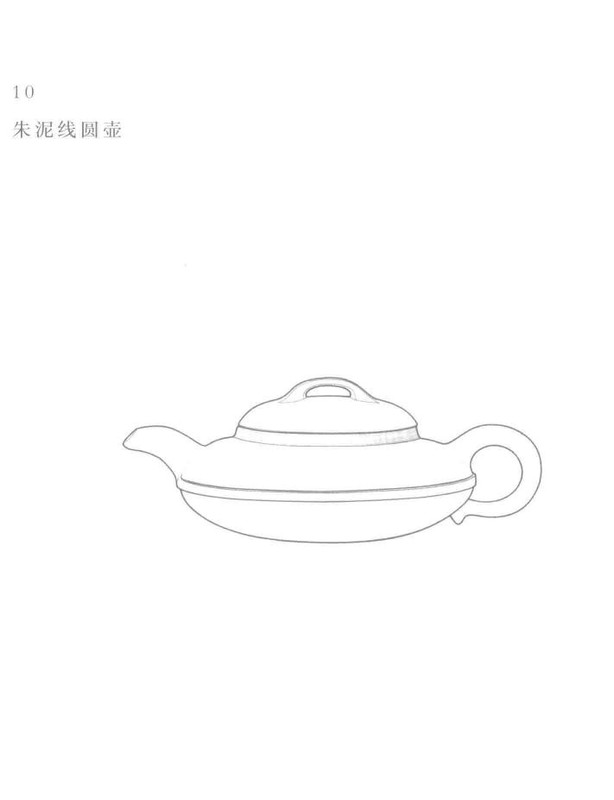
朱泥线圆壶
Discover the 朱泥线圆壶, a classic Yixing pottery design with unique characteristics and rich cultural heritage
The Zhu Ni Xian Yuan Hu: A Timeless Classic in Yixing Pottery
When you hold a well-crafted Yixing teapot in your hands, you’re not just touching clay—you’re connecting with centuries of tea culture, artisan tradition, and the pursuit of the perfect brew. Among the many classical designs that have emerged from the kilns of Yixing, the Zhu Ni Xian Yuan Hu (朱泥线圆壶) stands as a testament to the philosophy that true elegance lies in simplicity.
The name itself tells a story: “Zhu Ni” refers to the prized red clay from which it’s made, “Xian” means line or thread, and “Yuan Hu” translates to round pot. Put together, we have the “Red Clay Lined Round Pot”—a name that perfectly captures its essential character. But as any tea enthusiast knows, the beauty of Yixing pottery goes far deeper than names and appearances.
The Soul of Simplicity
At first glance, the Xian Yuan Hu might seem almost understated. In a world where teapots can feature elaborate dragon motifs, intricate calligraphy, or complex sculptural elements, this design takes a different path. Its beauty emerges from proportion, balance, and the subtle interplay of curves and lines.
The body of the pot is spherical—not perfectly round like a ball, but with a gentle, organic roundness that feels natural in the hand. This isn’t the aggressive geometry of modern design; it’s the kind of curve you might find in a river stone, shaped by water and time. The sphere represents completeness in Chinese aesthetics, a form that contains and protects while remaining open to the world.
What distinguishes the Xian Yuan Hu from other round teapots are the delicate incised lines that encircle the body. These aren’t merely decorative—they’re a defining feature that gives the pot its name. Typically, you’ll find two to four parallel lines carved into the clay, running horizontally around the widest part of the pot’s belly. These lines create visual rhythm, breaking up the smooth surface just enough to add interest without overwhelming the form.
The spout flows naturally from the body, usually in a gentle S-curve that speaks to both functionality and grace. A well-made Xian Yuan Hu will pour with precision—no drips, no hesitation, just a clean arc of tea flowing into your cup. The handle mirrors this curve, creating a visual harmony that makes the entire pot feel balanced and complete.
The lid sits flush with the rim, often featuring a small button-style knob that’s easy to grip even when the pot is hot. When you lift it, you’ll notice how precisely it fits—a hallmark of quality Yixing craftsmanship. The seal between lid and body should be tight enough that if you cover the air hole on the lid and pour, nothing comes out. This isn’t just showing off; it’s evidence of the potter’s skill and attention to detail.
The Magic of Zhu Ni Clay
To understand the Xian Yuan Hu, you need to understand zhu ni clay. Among Yixing clays, zhu ni holds a special place in the hearts of collectors and tea enthusiasts. It’s rarer than the more common zi sha (purple clay), more temperamental to work with, and when fired, it transforms into something extraordinary.
Fresh from the kiln, a zhu ni pot displays a warm, reddish-orange hue that can range from the color of autumn leaves to a deeper, almost cinnabar red. The surface has a natural luster—not glossy like a glaze, but with a soft sheen that seems to glow from within. This is the clay’s natural character, enhanced by the high firing temperature but never artificially treated.
What makes zhu ni truly special is its density. This clay has very fine particles and low porosity compared to other Yixing clays. When fired at high temperatures (often exceeding 1100°C), it vitrifies more completely, creating a pot with a tight, smooth texture. Run your fingers across a quality zhu ni pot, and you’ll feel a surface that’s almost silky, with a subtle graininess that reminds you this is natural clay, not industrial ceramic.
This density has practical implications for tea brewing. Zhu ni pots don’t absorb as much tea oil and flavor as more porous clays, which means they’re more versatile—you can use them for different teas without as much cross-contamination. However, they still season over time, developing a patina that tea lovers call “bao jiang” (包浆)—a treasured surface quality that only comes from years of use.
The high firing temperature also makes zhu ni pots more fragile than their zi sha cousins. They’re more susceptible to thermal shock, which means you need to treat them with care. But for many tea enthusiasts, this fragility is part of the appeal—it demands mindfulness, turning the simple act of brewing tea into a meditation on attention and care.
A Design Rooted in Tradition
The Xian Yuan Hu belongs to the classical repertoire of Yixing designs, forms that have been refined over generations of potters. While we can’t point to a single inventor or exact date of origin, this style emerged during the Ming and Qing dynasties, when Yixing pottery was reaching its artistic peak.
During this period, scholar-officials and literati were deeply involved in tea culture, and they brought their aesthetic sensibilities to teapot design. They favored forms that embodied Confucian and Daoist principles: harmony, balance, naturalness, and restraint. The Xian Yuan Hu perfectly captures this philosophy—it’s refined without being fussy, elegant without being pretentious.
The incised lines that define this design have roots in ancient Chinese bronze vessels, where similar decorative bands served both aesthetic and symbolic purposes. By incorporating these lines into a teapot, potters were connecting their work to a broader artistic tradition, suggesting that even a humble tea vessel could carry cultural weight.
Traditional potters would create these pots entirely by hand, using techniques passed down through apprenticeship. The body would be formed by beating and shaping slabs of clay around a mold, the spout and handle attached with liquid clay slip, and the lines carved with precision tools while the clay was leather-hard. Each pot was unique, bearing the subtle marks of its maker’s hand.
Today, the Xian Yuan Hu continues to be made by both traditional artisans and contemporary potters. The best examples still follow time-honored methods, though modern tools and techniques have made the process somewhat more accessible. What hasn’t changed is the standard of excellence—a truly fine Xian Yuan Hu still requires skill, patience, and an understanding of how form and function unite in a great teapot.
The Perfect Tea Companion
So what should you brew in a Zhu Ni Xian Yuan Hu? The answer depends partly on the pot’s size and partly on the characteristics of zhu ni clay itself.
The density and low porosity of zhu ni make it particularly well-suited for teas that benefit from higher temperatures and where you want to preserve the tea’s original character without much modification from the pot. This makes it an excellent choice for several categories of tea.
Oolong teas are perhaps the most classic pairing. The pot’s ability to handle high temperatures makes it perfect for traditional Taiwanese high-mountain oolongs or Wuyi rock teas. These teas need heat to fully open up and release their complex aromatics, and a zhu ni pot delivers that heat efficiently while adding a subtle smoothness to the brew. The round body of the Xian Yuan Hu gives rolled oolong leaves plenty of room to unfurl, and the pot’s heat retention helps maintain optimal brewing temperature.
Phoenix Dan Cong oolongs are another superb match. These highly aromatic teas from Guangdong province have intense floral and fruity notes that can be delicate despite their strength. A zhu ni pot preserves these aromatics beautifully, neither absorbing them nor adding competing flavors.
Aged white teas also work wonderfully in this pot style. As white tea ages, it develops deeper, more complex flavors that benefit from the higher temperatures a zhu ni pot can provide. The pot’s smooth interior surface won’t trap the delicate aged notes, allowing them to express themselves fully in your cup.
Some tea enthusiasts also use zhu ni pots for raw (sheng) puerh, particularly younger vintages. The pot’s heat and density can help tame some of the astringency in young puerh while highlighting its fresh, vibrant qualities. However, this is more controversial—many puerh devotees prefer more porous clays that can soften the tea’s rough edges.
What you generally want to avoid in a zhu ni pot are teas that benefit from lower temperatures or that need a more porous clay to smooth out harsh notes. Delicate green teas, for instance, might become bitter in the high heat a zhu ni pot retains. Very young, aggressive raw puerh might be too intense without the mellowing effect of a more porous clay.
The size of your Xian Yuan Hu also matters. These pots typically range from about 100ml to 250ml in capacity. Smaller pots (100-150ml) are ideal for solo sessions or for teas where you want to do multiple quick infusions, adjusting the brew with each round. Larger pots (180-250ml) work better for sharing tea with friends or for teas that can handle longer steeping times.
Brewing with Your Xian Yuan Hu
Using a Yixing pot isn’t complicated, but there are some practices that will help you get the most from your Xian Yuan Hu and keep it in good condition for years to come.
Before first use, you’ll want to season your pot. This isn’t as elaborate as some sources suggest—you don’t need complex rituals or overnight soaking. Simply rinse the pot with hot water to remove any dust, then brew several pots of the tea you plan to use it for, discarding the tea each time. This helps remove any residual clay taste and begins the seasoning process.
Warming the pot is essential, especially with zhu ni. Pour hot water into the empty pot and let it sit for a minute before discarding. This preheats the clay and reduces thermal shock when you add your tea and brewing water. With zhu ni’s sensitivity to temperature changes, this step isn’t optional—it’s insurance against cracks.
Water temperature should match your tea’s requirements, but remember that zhu ni retains heat well. If you’re brewing a tea that needs 90°C water, the pot will help maintain that temperature throughout the infusion. You don’t need to compensate by using hotter water; trust the pot to do its job.
After brewing, rinse the pot with hot water and let it air dry completely with the lid off. Never put the lid on a wet pot—trapped moisture can lead to mold or musty odors. Some people like to give the pot a final rinse with the last bit of tea, believing this helps build the patina. This is fine, but not necessary.
Dedicate your pot to one type of tea, or at least to teas with similar flavor profiles. While zhu ni is less porous than other Yixing clays, it still absorbs some tea oils over time. Using it for both delicate oolongs and heavy ripe puerh will create a muddled flavor profile that doesn’t serve either tea well.
Handle with care, especially regarding temperature. Don’t pour boiling water directly onto a cold pot. Don’t place a hot pot on a cold surface. Don’t wash it with cold water immediately after use. These temperature shocks are the main cause of cracks in zhu ni pots.
Over time, you’ll notice your pot developing a patina—a subtle change in surface quality and color that comes from tea oils and handling. This is desirable and shows that your pot is being well-used. The surface may become slightly darker and develop a soft luster that wasn’t there when new. This is your pot’s story, written in tea.
Why the Xian Yuan Hu Endures
In an age of endless options and constant innovation, why does a classical design like the Xian Yuan Hu continue to captivate tea enthusiasts? The answer lies in its fundamental rightness—the way form and function unite so seamlessly that the pot seems inevitable, as if it couldn’t be any other way.
The round body isn’t just aesthetically pleasing; it’s the optimal shape for heat distribution and leaf expansion. The incised lines aren’t merely decorative; they provide visual interest and tactile feedback, helping you grip the pot securely. The proportions aren’t arbitrary; they’re the result of generations of refinement, each potter making tiny adjustments until arriving at dimensions that simply work.
This is design as distillation—removing everything unnecessary until only the essential remains. It’s a philosophy that resonates deeply with tea culture itself, where the goal is often to strip away distractions and focus on the pure experience of tea, water, and attention.
When you brew tea in a Xian Yuan Hu, you’re participating in this tradition of refinement. You’re using a tool that has been perfected over centuries, shaped by countless hands and informed by millions of cups of tea. There’s something profoundly satisfying about that continuity, about knowing that the pot in your hands connects you to tea lovers across time and space.
The Zhu Ni Xian Yuan Hu doesn’t demand attention or make bold statements. It simply does its job with quiet excellence, improving your tea while asking nothing in return but care and respect. In a world that often values flash over substance, that kind of humble mastery is worth celebrating.
Whether you’re a seasoned collector or just beginning your journey into Yixing pottery, the Xian Yuan Hu offers a perfect entry point into understanding what makes these pots special. It teaches you to appreciate subtlety, to value craftsmanship, and to understand that sometimes the simplest forms are the most profound.
So the next time you hold a Xian Yuan Hu, take a moment to appreciate its curves, its lines, its weight in your hand. Then brew some tea, and let the pot do what it was born to do—transform leaves and water into something greater than the sum of its parts. That’s the real magic of Yixing pottery, and the Xian Yuan Hu embodies it perfectly.
