上肩线圆壶
Shang Bian Xian Yuan (Upper Flat Line Round Teapot) An early work by Gu Jingzhou, named for the convex rounded line on the upper shoulder area. Th
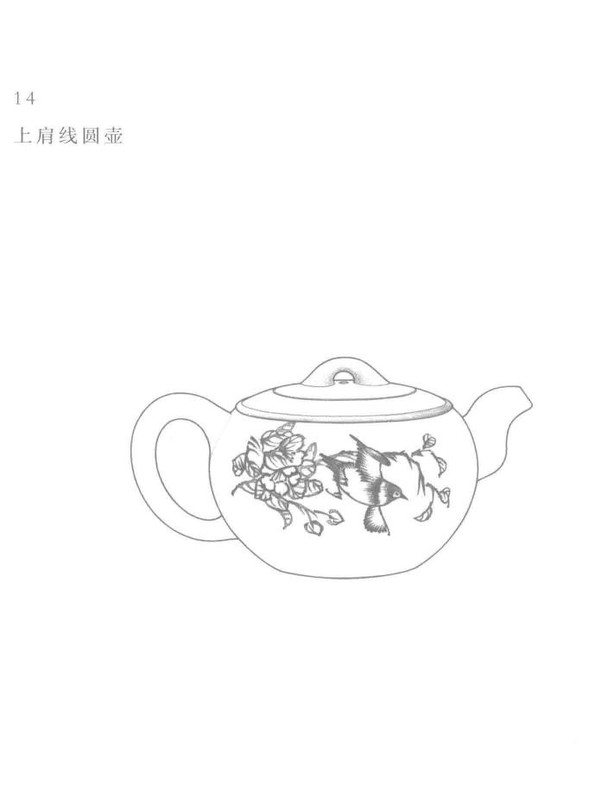
The Shang Jian Xian Yuan: Gu Jingzhou’s Spherical Masterpiece from the Late 1930s
When you hold a teapot that balances perfect geometry with organic warmth, you’re experiencing the genius of early Yixing mastery. The Shang Jian Xian Yuan (上肩线圆壶), literally “Upper Shoulder Line Round Pot,” represents one of the most elegant expressions of spherical teapot design to emerge from the Republican era. Created in the late 1930s, this design showcases the early brilliance of Gu Jingzhou, who would later become one of the most celebrated Yixing masters of the 20th century.
The name itself tells you what makes this pot special: that distinctive convex rounded line gracing the upper shoulder area. It’s a subtle detail that transforms what could be an ordinary round teapot into something with visual rhythm and architectural interest. This isn’t just another spherical pot—it’s a carefully considered study in how a single design element can elevate an entire form.
The Design Philosophy: Avoiding the Bloated Sphere
Many round teapots fall into a common trap: they become too spherical, too perfectly ball-like, and end up looking bloated or weak. The Shang Jian Xian Yuan solves this problem through intelligent proportioning. While the overall body does resemble a sphere, the lower belly tapers slightly toward the base. This seemingly minor adjustment creates a more upright, grounded visual effect that gives the pot presence and stability.
Think of it like the difference between a balloon floating aimlessly and a well-planted tree—both can be round, but one has rootedness and intention. That tapering lower section anchors the pot visually, preventing it from appearing to float or sag. It’s the kind of design decision that separates competent pottery from masterful work.
The flush lid continues this theme of integrated design. Rather than sitting prominently atop the pot, it features a round bridge knob that subtly merges into the lid surface. This knob echoes the rounded, charming form of the pot body itself—everything speaks the same visual language. There’s no jarring transition, no element that feels added as an afterthought. The lid becomes part of the continuous flow of curves that defines the piece.
Republican-Era Aesthetics: Simple and Unadorned
The spout of the Shang Jian Xian Yuan exhibits what collectors recognize as the hallmark styling of Republican-era Yixing pottery: plump, double-curved, and refreshingly simple. During the 1930s, Yixing potters were moving away from overly ornate designs toward forms that let the clay and shape speak for themselves. This spout isn’t trying to impress you with complexity—it’s confident enough to be straightforward.
The double curve creates a gentle S-shape that guides water smoothly from pot to cup. It’s plump without being clumsy, substantial without being heavy. This is functional design at its finest: beautiful because it works perfectly, not decorated to distract from poor function.
The handle completes the composition with an upright ear-shaped form that extends gracefully from the body. It corresponds with the spout in both visual weight and curvature, creating that essential balance that makes a teapot feel right in the hand. When you pour from this pot, the handle’s positioning and shape work with the pot’s center of gravity to make the motion effortless.
The Canvas for Art: Jiang Yongxi’s Carved Poetry
What makes the surviving examples of this design particularly special is how the rounded, full, drum-like body provides an ideal canvas for carved embellishment. The regularity and smoothness of the form create decorative space that carving artists could use to add layers of meaning and beauty.
One notable example features the work of Yixing purple clay carving artist Jiang Yongxi, who incised the poetic lines “Bright moon shines through the pines, clear spring flows over stones” (明月松间照,清泉石上流) along with floral and bird motifs. These lines come from Wang Wei’s famous Tang dynasty poem “Mountain Dwelling in Autumn,” and they transform the pot into a meditation on nature, solitude, and the scholar’s life.
Imagine sitting with this pot in the evening, reading those carved characters as you brew tea. The simple, rustic beauty of appreciating the moon while sipping tea and composing poetry suddenly springs to life before your eyes. The pot becomes more than a brewing vessel—it’s a companion in contemplation, a reminder of the connection between tea culture and literary tradition.
The Maker’s Marks: Shou Ping and Zi Yi Xuan
The example documented from the late 1930s bears two important seals that help us understand its provenance. The lid seal reads “Shou Ping” (瘦萍), while the base seal shows “Zi Yi Xuan” (自怡轩). These marks are crucial for collectors and historians, as they help authenticate pieces and trace them back to specific workshops and periods.
“Zi Yi Xuan” translates roughly to “Hall of Self-Contentment” or “Studio of Personal Joy”—a name that reflects the scholar’s ideal of finding satisfaction in simple pleasures like tea and pottery. These studio names weren’t just branding; they represented philosophical positions about how one should approach art and life.
Gu Jingzhou’s Early Mastery
What makes this design historically significant is that it represents an early work by Gu Jingzhou, who would go on to become one of the most influential Yixing masters of the modern era. Born in 1915, Gu was only in his early twenties when he created this design in the late 1930s. Yet already you can see the principles that would define his later work: respect for geometric purity, attention to proportional relationships, and the ability to make subtle adjustments that elevate a form from good to exceptional.
Studying this pot gives us insight into how a master’s style develops. The confidence to keep things simple, the understanding of how small tapers and curves affect visual weight, the integration of all elements into a unified whole—these weren’t skills Gu suddenly acquired later in life. They were already present in this youthful work, waiting to be refined over decades of practice.
Clay and Color Considerations
While the specific clay body used for the original late 1930s examples isn’t detailed in the historical records, pots of this era and style typically employed Yixing’s famous zisha (purple sand) clay in its various natural colors. The rounded form of the Shang Jian Xian Yuan works particularly well with darker clays—deep purples, rich browns, or black clays—because the curves catch and reflect light in ways that reveal the clay’s texture and depth.
The smooth, regular surface of this design also showcases the clay’s natural beauty without distraction. Unlike pots with heavy texturing or complex surface treatments, the Shang Jian Xian Yuan lets you appreciate the clay itself: its grain, its subtle color variations, the way it develops a patina with use.
Tea Pairing: What Brews Best
The Shang Jian Xian Yuan’s design characteristics make it particularly well-suited for certain types of tea. The rounded body with its generous volume works beautifully for teas that need room to expand and unfurl. The flush lid design helps retain heat, while the smooth interior surfaces don’t trap leaves in corners or crevices.
Oolong teas are an excellent match for this pot style. The heat retention and spacious interior allow rolled oolongs like Tieguanyin or Dong Ding to fully open and express their complex aromatics. The pot’s capacity (typically in the 200-300ml range for pots of this style) is ideal for the multiple short infusions that oolong brewing requires.
Aged raw puerh also pairs wonderfully with this design. The rounded body and heat-retaining properties help coax out the deep, complex flavors that develop in puerh over years of storage. The smooth pour from that double-curved spout is particularly appreciated when you’re doing many quick infusions, as puerh brewing often demands.
Red teas (what the West calls black tea) from Fujian or Yunnan find a good home in this pot as well. The design doesn’t over-emphasize any particular flavor note, allowing the tea’s natural sweetness and body to shine through. A Zhengshan Xiaozhong or Dian Hong brewed in a well-seasoned Shang Jian Xian Yuan develops a smoothness and depth that’s hard to achieve in other vessels.
What you might want to avoid are delicate green teas or white teas that prefer cooler water and less heat retention. The Shang Jian Xian Yuan’s design is optimized for teas that benefit from sustained heat, not those that can become bitter or lose their fresh character with too much warmth.
Brewing Technique and Care
Using a Shang Jian Xian Yuan effectively requires understanding how its design affects the brewing process. The rounded body means water circulates well during steeping, ensuring even extraction. However, that same roundness means you need to be mindful of how you pour water in—aim for the side of the pot rather than directly onto the leaves to avoid agitating them too much.
The flush lid design is both a blessing and something to be aware of. It seals well and retains heat beautifully, but you need to ensure it’s properly seated before pouring. A slightly askew lid can affect the pour and potentially cause drips. Take a moment to settle the lid properly, and you’ll be rewarded with a clean, controlled stream.
That double-curved spout pours best when the pot is tilted decisively. Don’t be tentative—commit to the pour, and the spout’s design will reward you with a smooth arc of tea that cuts off cleanly when you return the pot to upright. Hesitant pouring can lead to drips or dribbles.
For seasoning a new Shang Jian Xian Yuan, the traditional approach works well: rinse thoroughly with boiling water, then dedicate it to one type of tea. The smooth interior surfaces will gradually develop a patina that enhances the tea’s flavor. Some brewers like to do an initial “opening” session where they brew several pots of tea in succession, discarding the liquid, to help the clay absorb the tea’s character more quickly.
Clean your pot with hot water only—no soap, no scrubbing. The rounded interior makes it easy to rinse thoroughly. After each use, empty the leaves, rinse well, and let the pot air dry completely with the lid off. The design’s openness and lack of tight corners means it dries relatively quickly and completely.
Collecting and Appreciation
For collectors, the Shang Jian Xian Yuan represents an important design in the Yixing canon. Original examples from the late 1930s are rare and valuable, particularly those with documented provenance and maker’s marks. Later reproductions and interpretations of the design exist, and while they may not have the historical significance of the originals, they can still be excellent users if made by skilled potters.
When evaluating a Shang Jian Xian Yuan, look for that characteristic tapering in the lower belly—it should be subtle but present. The shoulder line that gives the pot its name should be crisp and well-defined, not mushy or vague. The lid should fit precisely, with minimal wobble. The spout and handle should feel balanced, both visually and when you hold the pot.
The quality of any carved decoration is also important. If the pot features incised poetry or imagery, the carving should be clean and confident, with consistent depth and clear characters. Poor carving can detract from even a well-formed pot.
The Enduring Appeal
Nearly ninety years after its creation, the Shang Jian Xian Yuan remains relevant because it solved fundamental design problems in ways that still feel fresh. How do you make a round teapot that doesn’t look bloated? How do you integrate a lid so it feels like part of the whole rather than an addition? How do you create visual interest through subtle geometry rather than applied decoration?
Gu Jingzhou’s answers to these questions in his early twenties demonstrate why he would become a master. The Shang Jian Xian Yuan doesn’t shout for attention—it earns your appreciation gradually, as you notice the thoughtfulness in every curve and proportion. It’s a pot that rewards daily use, revealing its qualities through the ritual of brewing rather than through immediate visual impact.
For the tea drinker, this design offers something equally valuable: a vessel that gets out of the way and lets the tea speak. It doesn’t impose its personality on the brew; it facilitates and enhances. That’s the mark of truly functional beauty—when form serves purpose so well that the object becomes transparent, a tool that feels like an extension of your intention.
Whether you’re fortunate enough to own an original from the 1930s or a well-made contemporary interpretation, the Shang Jian Xian Yuan invites you into a tradition of thoughtful design and mindful brewing. Each time you fill it with leaves and water, you’re participating in a conversation about form and function that spans generations. And like those carved lines about moonlight and mountain springs, the pot reminds us that the simplest pleasures—good tea, good pottery, a moment of quiet—are often the most profound.
