僧帽壶
Discover the 僧帽壶, a classic Yixing pottery design with unique characteristics
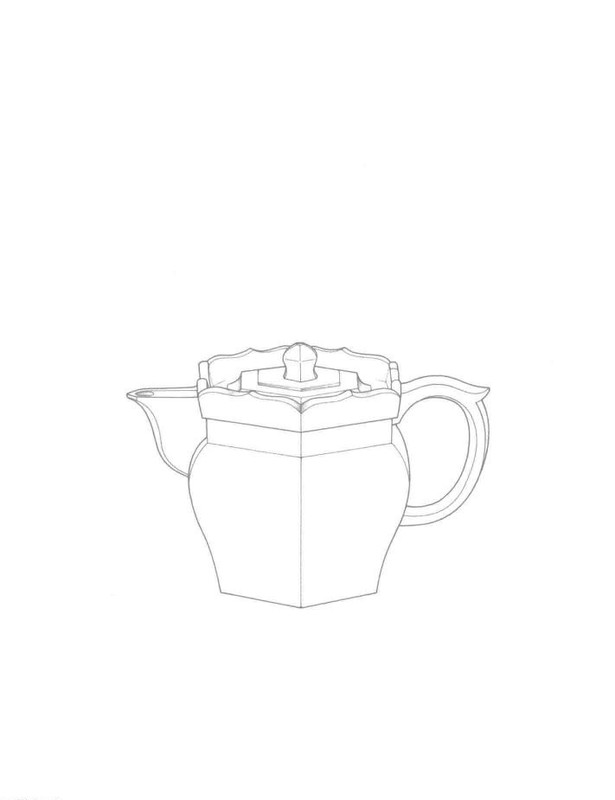
The僧帽壶 (Sēng Mào Hú): The Monk’s Cap Teapot and Its Spiritual Journey Through Clay
When you first encounter a 僧帽壶 (Sēng Mào Hú, or Monk’s Cap teapot), you might pause and tilt your head slightly, trying to understand what you’re seeing. The lid rises in an unusual peaked form that immediately distinguishes it from the rounded, smooth profiles of most Yixing teapots. This isn’t just aesthetic whimsy—the design directly references the distinctive caps worn by Buddhist monks during the Ming Dynasty, creating a bridge between the spiritual and the everyday ritual of tea.
The Monk’s Cap teapot represents one of the most culturally resonant designs in the Yixing tradition, where form doesn’t just follow function but carries meaning. Unlike the more common Xi Shi or Shui Ping shapes that prioritize pure ergonomics, the 僧帽壶 makes a statement about contemplation, simplicity, and the meditative nature of tea itself.
The Master’s Hand: Gu Jingzhou’s Interpretations
The source material reveals something fascinating: multiple examples of this design created by Gu Jingzhou (顾景舟), one of the most celebrated Yixing masters of the 20th century, all dating to the 1980s. This wasn’t a young artisan experimenting with traditional forms—these were pieces created by Gu Jingzhou in his mature period, with one specifically noted as “made by Jingzhou after age seventy” (景舟七十后作), placing it in the late 1980s.
This timing matters. By the 1980s, Gu Jingzhou had spent decades refining his understanding of classical forms. His return to the Monk’s Cap design during this period suggests a master revisiting fundamental shapes with the wisdom of experience. The pieces documented show variations in rim height—specifically noted is a “low-rimmed” version (矮沿僧帽)—indicating that even within this traditional form, Gu was exploring subtle modifications.
The seals and inscriptions on these teapots tell their own story. Beyond his standard “Gu Jingzhou” lid seal and “Made by Jingzhou” base inscription, one piece bears the studio name “Tao Yi Waishi” (陶壹外史), which translates roughly as “Pottery One Unofficial Historian.” This pseudonym reveals something about how Gu Jingzhou saw himself: not just as a craftsman, but as someone documenting and preserving pottery traditions through his work. Each teapot became a historical record in clay.
Understanding the Monk’s Cap Form
The defining characteristic of the 僧帽壶 is, of course, its lid. The peaked, angular form mimics the 僧帽 (monk’s cap) worn during the Ming Dynasty—not the rounded caps you might see in contemporary Buddhist temples, but the distinctive four-cornered or six-cornered caps with upward-pointing peaks that were common during the 15th and 16th centuries.
This design choice creates several practical and aesthetic effects. The peaked lid provides a natural grip point, making it easy to remove even when your hands are slightly damp from handling tea. The angular geometry contrasts beautifully with the typically rounded body of the pot, creating visual tension that keeps the eye engaged. And the upward thrust of the peak gives the entire piece a sense of aspiration—appropriate for an object associated with spiritual practice.
The body of a traditional Monk’s Cap teapot tends toward a compressed, slightly flattened spherical form. This isn’t as round as a Xi Shi pot, nor as angular as a Fang Gu (square drum). Instead, it occupies a middle ground that feels grounded and stable. The spout typically emerges in a gentle curve, neither too aggressive nor too timid, while the handle often features a simple loop that echoes the curved lines of the body.
In Gu Jingzhou’s versions from the 1980s, we see attention to proportion that only comes from deep familiarity with the form. The “low-rimmed” variation mentioned in the source material suggests a more subtle transition between body and lid, creating a sleeker profile while maintaining the distinctive peaked cap.
Clay, Color, and Character
While the source material doesn’t specify the exact clay used for these particular pieces, Gu Jingzhou was known for his discerning selection of Yixing clays. The Monk’s Cap form works beautifully with several traditional clay types, each bringing different qualities to both appearance and tea brewing.
Zisha (purple clay) in its various shades—from reddish-brown to deep purple—provides the classic Yixing aesthetic. The slightly rough, unglazed surface develops a patina over time, rewarding long-term use with increasing luster. Zhuni (vermillion clay), with its finer particle size and brighter red-orange color, creates a more refined, almost jewel-like appearance that contrasts beautifully with the angular geometry of the monk’s cap lid.
Duanni (yellow clay) offers a warmer, earthier palette, while the rare and prized lüni (green clay) provides a subtle, sophisticated backdrop that lets the form speak for itself. The choice of clay isn’t merely aesthetic—it affects heat retention, porosity, and how the pot interacts with different teas over time.
The unglazed nature of Yixing clay means these pots are “seasoned” by the teas brewed in them, gradually absorbing oils and developing what collectors call “tea mountain” (茶山)—a buildup of tea residue that, when properly maintained, enhances the pot’s ability to brew tea. A well-used Monk’s Cap teapot from the 1980s would, by now, have developed significant character, its clay darkened and enriched by decades of use.
The Spiritual Dimension of Form
The Monk’s Cap teapot exists at the intersection of utility and symbolism. In Chinese tea culture, the choice of teapot isn’t purely practical—it’s an expression of values, aesthetics, and sometimes spiritual orientation. Using a 僧帽壶 signals an appreciation for Buddhist philosophy and the contemplative aspects of tea drinking.
Buddhism and tea have been intertwined in Chinese culture since at least the Tang Dynasty, when monks used tea to maintain alertness during long meditation sessions. The tea ceremony itself became a form of moving meditation, and the objects used in tea preparation took on spiritual significance. A teapot shaped like a monk’s cap serves as a constant reminder of this connection.
The angular, upward-pointing form of the lid can be read as a gesture toward enlightenment—the peak pointing toward higher understanding. The stability of the body grounds this aspiration in earthly practice. Together, they embody a Buddhist principle: spiritual development requires both aspiration and grounded, daily practice.
When Gu Jingzhou chose to create multiple versions of this form in his later years, he was engaging with this entire tradition. His use of the studio name “Tao Yi Waishi” (Pottery One Unofficial Historian) on one piece suggests he saw himself as preserving and transmitting these cultural meanings through his craft.
Tea Pairing: What Brews Best in a Monk’s Cap
The 僧帽壶 typically falls into the medium-capacity range, making it versatile for various tea types. However, certain teas particularly shine when brewed in this form.
Oolong teas, especially traditional Wuyi rock teas like Da Hong Pao or Shui Xian, pair beautifully with the Monk’s Cap design. These teas benefit from the heat retention of Yixing clay and the moderate capacity that allows for multiple infusions without the tea cooling too quickly. The spiritual associations of the pot complement the contemplative experience of savoring a complex rock oolong through six or seven infusions.
Aged pu-erh also works exceptionally well. The earthy, deep flavors of a well-aged sheng or shou pu-erh resonate with the grounded, substantial form of the Monk’s Cap pot. If the pot has been seasoned with pu-erh over time, it will contribute subtle complexity to each brewing, creating a dialogue between the tea and the clay.
Phoenix Dan Cong oolongs, with their intense aromatics and complex flavor profiles, benefit from the Monk’s Cap’s ability to maintain consistent temperature while allowing the tea to breathe. The peaked lid, when slightly loosened, can help regulate the intensity of the brew.
Red teas (what the West calls black tea), particularly Fujian varieties like Zheng Shan Xiao Zhong or Jin Jun Mei, find a good home in this pot style. The clay softens any astringency while preserving the tea’s natural sweetness and complexity.
What you’ll want to avoid are delicate green teas or white teas that require lower temperatures and benefit from porcelain or glass. The heat retention of Yixing clay can overwhelm these subtle teas, and the seasoning of the pot (if it’s been used for darker teas) will interfere with their delicate flavors.
Brewing Technique: Working with the Form
Using a Monk’s Cap teapot requires understanding its particular characteristics. The peaked lid, while visually striking, affects how you handle the pot during brewing.
Warming the pot is essential. Pour hot water over the exterior and fill the interior, letting it sit for 30 seconds before discarding the water. This brings the clay to temperature and ensures your first infusion won’t be compromised by heat loss to cold clay.
The lid grip is one of the Monk’s Cap’s advantages. The peaked form provides a natural, secure grip point. However, be mindful that the peak can become quite hot—some practitioners keep a small cloth nearby specifically for lid handling.
Pouring technique matters with any Yixing pot, but the Monk’s Cap’s typically moderate spout requires attention to angle. Pour from a height that allows the tea to aerate slightly without splashing. The goal is a smooth, controlled stream that fills the cup evenly.
Temperature control is where the form really shows its character. The peaked lid can be loosened slightly during steeping to release excess heat for teas that benefit from slightly lower temperatures, or kept tight for teas that want sustained heat. This adjustability makes the Monk’s Cap more versatile than its traditional appearance might suggest.
Cleaning and maintenance follow standard Yixing protocols, but the angular lid requires extra attention. Tea residue can accumulate in the corners where the peak meets the rim. After each session, rinse thoroughly with hot water (never soap), and use a soft brush to gently clean these areas. Allow the pot to air dry completely, lid off, before storing.
The Collector’s Perspective
A Monk’s Cap teapot by Gu Jingzhou from the 1980s represents a significant piece of Yixing history. Gu Jingzhou (1915-1996) is often called the “father of modern Yixing pottery,” and his work from this period shows the full maturity of his artistic vision.
The pieces documented in the source material show the kind of details collectors examine: the specific seals used, the variations in inscription, the subtle differences in rim height. Each of these elements helps authenticate a piece and tells us something about when and under what circumstances it was made.
The “low-rimmed” variation mentioned is particularly interesting because it shows Gu Jingzhou wasn’t simply reproducing a traditional form—he was refining it, exploring how small adjustments in proportion could affect both aesthetics and function. This is the mark of a master: the ability to work within tradition while still innovating.
For contemporary tea practitioners, owning a Monk’s Cap teapot—whether a vintage piece or a modern interpretation—means participating in this ongoing tradition. Each time you brew tea, you’re engaging with centuries of cultural meaning and craftsmanship.
Living Tradition
The 僧帽壶 reminds us that tea objects can be both functional and meaningful, practical and poetic. Its distinctive form has survived centuries not because of nostalgia, but because it successfully balances aesthetic appeal with brewing performance, while carrying cultural resonance that enriches the tea experience.
When Gu Jingzhou returned to this classical form in his seventies, he was demonstrating something important: traditional forms remain relevant not because they’re old, but because they embody accumulated wisdom about proportion, function, and meaning. His variations on the Monk’s Cap—the low-rimmed version, the different inscriptions and seals—show that tradition is alive, not frozen.
For the modern tea drinker, a Monk’s Cap teapot offers an entry point into this living tradition. It’s a pot that rewards attention and care, that develops character over time, and that connects each brewing session to a larger cultural conversation about craft, contemplation, and the simple pleasure of well-made tea.
Whether you’re drawn to its spiritual associations, its distinctive aesthetics, or simply its excellent brewing characteristics, the 僧帽壶 represents Yixing pottery at its most culturally resonant—a functional object that carries meaning, a traditional form that remains vital, and a reminder that the best tea experiences engage not just the palate, but the mind and spirit as well.
