仿鼓壶
Discover the 仿鼓壶, a classic Yixing pottery design with unique characteristics
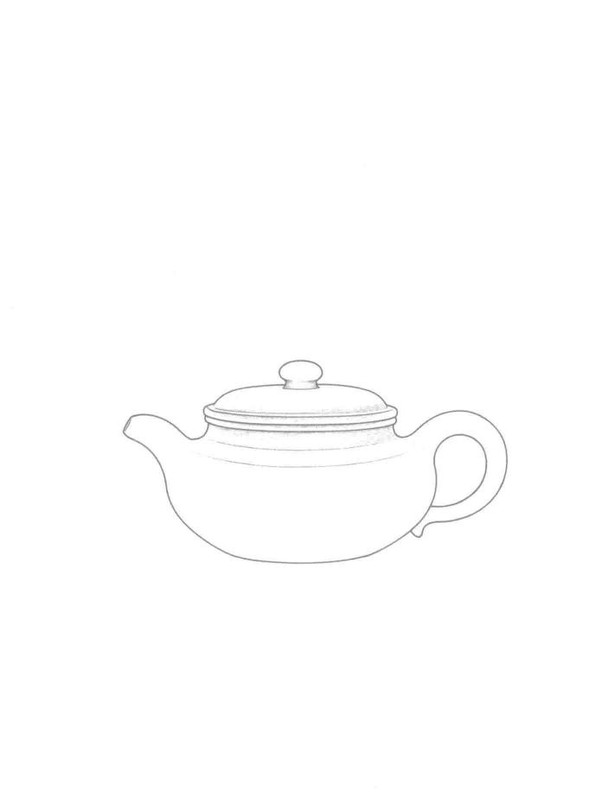
The Fang Gu Hu (仿鼓壶): The Drum That Echoes Through Yixing History
When you hold a Fang Gu Hu—literally “Imitation Drum Teapot”—you’re cradling a piece of musical history transformed into clay. This isn’t just another round teapot. It’s a deliberate echo of ancient Chinese percussion instruments, where the robust, resonant form of a drum becomes a vessel for brewing tea. The design speaks to a uniquely Chinese aesthetic philosophy: everyday objects should carry cultural memory, and beauty should serve function.
The Fang Gu Hu belongs to the classical repertoire of Yixing designs, those time-tested forms that have survived centuries because they simply work—both visually and practically. Unlike experimental modern shapes, this is a design that has earned its place through generations of tea drinkers who found in its drum-like proportions the perfect balance of capacity, heat retention, and pouring control.
The Master’s Touch: Gu Jingzhou’s Interpretations
The source material reveals something fascinating: this design attracted the attention of Gu Jingzhou (顾景舟), arguably the most celebrated Yixing master of the 20th century. We have documented examples of his Fang Gu Hu from two distinct periods—the late 1970s and early 1990s—each bearing his unmistakable seals.
The late 1970s example carries three signature marks: “Gu Jingzhou” on the lid, “Jingzhou handmade” (景舟手制) on the base, and his seal on the handle. This triple authentication wasn’t mere vanity. By this period, Gu Jingzhou had already achieved legendary status, and forgeries were rampant. The multiple seals served as a guarantee of authenticity, each placement requiring the pot to be handled at different stages of creation, making counterfeiting exponentially more difficult.
The early 1990s version shows similar authentication patterns, though the handle seal differs slightly. This wasn’t inconsistency—it was evolution. Gu Jingzhou continuously refined his seal designs throughout his career, and collectors can often date his work by these subtle variations. By the 1990s, he was in his seventies, working with the accumulated wisdom of six decades at the wheel, and every pot from this period represents a master at the absolute peak of his powers.
What’s particularly intriguing is that Gu Jingzhou returned to this design across decades. He wasn’t simply reproducing a classic—he was in dialogue with it, exploring how the drum form could be perfected through minute adjustments in proportion, wall thickness, and the relationship between body and lid.
Beyond the Master: Suo Chang and the Living Tradition
The source material also documents an early 1990s Fang Gu Hu by Suo Chang (索昌), a lesser-known but skilled artisan working during the same period as Gu Jingzhou’s later work. This parallel production reveals something important about Yixing culture: classical designs aren’t monopolized by masters. They’re part of a shared vocabulary that artisans at different skill levels interpret according to their abilities.
Suo Chang’s version would have been more accessible to everyday tea drinkers, lacking the prestige (and price) of a Gu Jingzhou piece but still embodying the essential qualities of the Fang Gu design. This democratization of classical forms is what kept Yixing pottery vital—it wasn’t just museum pieces and collector’s items, but working teapots in daily use across China.
The Drum Made Clay: Understanding the Form
The Fang Gu Hu’s defining characteristic is its drum-like body—a wide, cylindrical form with gently curved sides that evoke the taut skin of a traditional Chinese drum. This isn’t decorative mimicry; the shape serves multiple practical purposes.
The wide, stable base provides excellent heat distribution. Unlike tall, narrow pots where heat concentrates at the bottom, the drum shape allows heat to spread evenly across a larger surface area. This is crucial for teas that need consistent temperature throughout the brewing process.
The relatively low height compared to width creates a large surface area for tea leaves to unfurl. Tightly rolled oolongs or compressed pu-erh can expand fully without crowding, allowing water to circulate freely and extract flavors evenly. The drum isn’t just containing the tea—it’s giving it room to breathe and perform.
The lid typically sits flush with the rim, creating a clean horizontal line that emphasizes the pot’s drum-like silhouette. This isn’t just aesthetics; a well-fitted lid on a Fang Gu Hu creates an excellent seal, retaining heat and aroma while allowing just enough air exchange to prevent stewing.
The spout and handle placement requires particular skill in this design. Because the body is so wide and low, the spout must be positioned to pour cleanly without the water having to travel too far horizontally. Master artisans like Gu Jingzhou understood the physics involved—the spout’s internal channel, its angle, and its relationship to the water level all had to be precisely calculated to achieve that perfect, controlled pour that doesn’t dribble or splash.
Clay Choices and Their Consequences
While the source material doesn’t specify the clay type for these particular examples, the Fang Gu Hu design has traditionally been executed in several classic Yixing clays, each bringing different qualities to the brewing experience.
Zisha (purple clay) is the most common choice, offering excellent heat retention and a slightly porous structure that seasons beautifully over time. The drum shape in zisha develops a particularly lustrous patina because the wide body provides more surface area for tea oils to accumulate and polish.
Zhuni (vermillion clay) creates a more refined, delicate version of the Fang Gu Hu. The higher firing temperature of zhuni produces a denser, less porous body with a distinctive metallic ring when tapped—quite literally making the drum sing. However, zhuni’s lower heat retention makes it better suited for lighter teas that don’t require sustained high temperatures.
Duanni (yellow clay) offers a middle path—more porous than zhuni but finer-grained than typical zisha. A Fang Gu Hu in duanni has a warm, earthy presence that complements the drum form’s grounded aesthetic.
The Perfect Match: Tea Pairing for the Drum
The Fang Gu Hu’s wide, low form makes it particularly well-suited for specific categories of tea, and understanding these pairings transforms the pot from a beautiful object into a precision brewing instrument.
Aged Oolongs find their ideal home in a Fang Gu Hu. Traditional Taiwanese oolongs that have been aged for decades develop complex, deep flavors that need room to express themselves. The drum’s generous interior allows these leaves—often tightly rolled into dense pellets—to expand fully. The wide surface area means water contacts more leaf material simultaneously, extracting the layered flavors evenly rather than creating hot spots that over-extract some leaves while under-extracting others.
Ripe Pu-erh (Shou Pu-erh) is another natural partner. These compressed teas need space to break apart and unfurl, and they benefit from the even heat distribution the drum shape provides. The wide body prevents the earthy, rich flavors from becoming muddy or over-concentrated, while the good heat retention maintains the temperature needed to fully extract pu-erh’s complex profile.
Aged Raw Pu-erh (Sheng Pu-erh) with 15+ years of age also works beautifully. Younger sheng can be too aggressive for the Fang Gu Hu’s generous proportions, but aged sheng has mellowed into complexity that benefits from the space and even extraction the drum provides.
Heavily roasted Wuyi oolongs like aged Da Hong Pao or Shui Xian are excellent choices. These teas have been roasted multiple times over years, developing deep, mineral-rich flavors with hints of charcoal and stone fruit. The Fang Gu Hu’s heat retention maintains the temperature needed to unlock these roasted notes, while the wide body prevents the intensity from becoming overwhelming.
What doesn’t work as well? Delicate green teas or lightly oxidized oolongs tend to get lost in a Fang Gu Hu. The pot’s heat retention is too aggressive for teas that need cooler water and shorter steeps. The generous capacity means you’re either brewing large quantities (which can lead to waste with expensive greens) or using too few leaves in too much space (which produces weak, disappointing tea).
Brewing Wisdom: Using Your Fang Gu Hu
Owning a Fang Gu Hu is one thing; using it well requires understanding its particular characteristics.
Seasoning is crucial. Before first use, rinse the pot with boiling water several times, then brew several pots of inexpensive tea of the type you plan to use regularly. Discard these initial brews—you’re not drinking them, you’re introducing the clay to the tea’s character. The wide interior surface of the Fang Gu Hu means there’s more clay to season, but also more surface area to develop that beautiful patina over time.
Water temperature matters more than you might think. The drum’s excellent heat retention means it holds temperature aggressively. If you’re brewing a tea that needs 90°C water, the pot will keep it there. This is perfect for aged oolongs and pu-erh, but it means you need to be more careful with teas that are sensitive to over-extraction. Some brewers actually pre-heat their Fang Gu Hu less thoroughly when brewing teas that need slightly cooler water, allowing the pot’s thermal mass to work for them rather than against them.
Leaf quantity requires adjustment. The wide, low interior means leaves spread out more than they would in a tall, narrow pot. You might need slightly more leaf than you’d use in a different shape to achieve the same strength. Start with your normal ratio, then adjust upward if needed. The goal is to see the leaves covering most of the bottom surface when dry, then filling about two-thirds of the pot when fully expanded.
Pouring technique is distinctive. The Fang Gu Hu’s spout, positioned on that wide, low body, often pours best at a moderate angle rather than tipped steeply. Practice with plain water first to find your pot’s sweet spot—that angle where the stream is smooth and controlled, without dribbling or splashing. Each pot is slightly different, and part of the pleasure of owning a Fang Gu Hu is learning its particular personality.
Cleaning is straightforward but important. After each session, empty the leaves and rinse with hot water—no soap, ever. The wide opening makes this easier than with narrow-necked pots. Let the pot air dry completely with the lid off before storing. The large surface area means it dries relatively quickly, but don’t rush it. Storing a damp pot can lead to musty odors that are difficult to remove.
The Collector’s Perspective
For those interested in Yixing pottery as collectible art, the Fang Gu Hu presents interesting considerations. The examples by Gu Jingzhou documented in the source material represent museum-quality pieces, particularly the late 1970s version. This was created during a pivotal period when Gu Jingzhou was training the next generation of masters while producing some of his finest personal work.
The early 1990s examples—both by Gu Jingzhou and Suo Chang—come from a period of renewed interest in traditional Yixing forms after the disruptions of the Cultural Revolution. There was a conscious effort to preserve and transmit classical designs, and pots from this era often show both technical excellence and a kind of cultural urgency—a determination to ensure these forms survived.
Authentication is crucial. The multiple seals on Gu Jingzhou’s work weren’t just artistic choices—they were necessary protections against forgery. Even during his lifetime, fake “Gu Jingzhou” pots flooded the market. Today, authentication requires expertise in reading seal styles, understanding clay bodies, and recognizing the subtle proportions that distinguish a master’s work from a competent copy.
For users rather than pure collectors, a well-made Fang Gu Hu by a contemporary artisan offers the design’s functional benefits without the five or six-figure price tag of a Gu Jingzhou original. The form itself is what matters for brewing—the master’s touch adds artistic and historical value, but a skilled contemporary maker can produce a Fang Gu Hu that brews tea just as beautifully.
Living With the Drum
The Fang Gu Hu rewards daily use in ways that more delicate or experimental designs don’t. Its stable, wide base means it’s less likely to tip over on a crowded tea table. The generous capacity makes it practical for sharing tea with friends—not so large that you’re brewing restaurant quantities, but substantial enough that you’re not constantly refilling a tiny pot.
Over months and years of use, a Fang Gu Hu develops character. The wide exterior surface shows the patina of countless handling—the subtle shine where fingers naturally grip, the deepening color where tea occasionally splashes. This isn’t damage; it’s the pot becoming itself, accumulating the history of every brewing session.
The drum form also has a psychological effect. There’s something grounding about its proportions, the way it sits solidly on the table, wide and stable. In a tea practice that can sometimes become overly precious or fussy, the Fang Gu Hu brings you back to basics: this is a pot for brewing tea, designed with centuries of practical wisdom, ready to do its job day after day.
Conclusion: Why the Drum Endures
The Fang Gu Hu has survived as a classical design because it solves real problems elegantly. It provides the space, heat retention, and pouring control that certain teas need, wrapped in a form that references Chinese cultural heritage without being merely decorative.
When masters like Gu Jingzhou returned to this design repeatedly across their careers, they weren’t being conservative or unimaginative. They were recognizing that some forms achieve a kind of perfection—not because they can’t be improved, but because they’ve reached an equilibrium where every element serves both function and beauty.
For the tea drinker, the Fang Gu Hu offers an entry point into understanding how form shapes experience. Brew the same aged oolong in a tall, narrow pot and then in a Fang Gu Hu, and you’ll taste the difference. The drum’s proportions aren’t arbitrary—they’re the accumulated wisdom of generations of tea drinkers who discovered, through trial and error, what works.
In an era of endless novelty, there’s something deeply satisfying about using a design that has proven itself across centuries. The Fang Gu Hu doesn’t need to be revolutionary. It just needs to be itself: a drum made clay, ready to sound its quiet note in your daily tea practice.
