仿鼓壶
Transformation and Spirit Chasing and surpassing the pinnacle of Yixing pottery in his own heart naturally became a creative impulse he had been nu
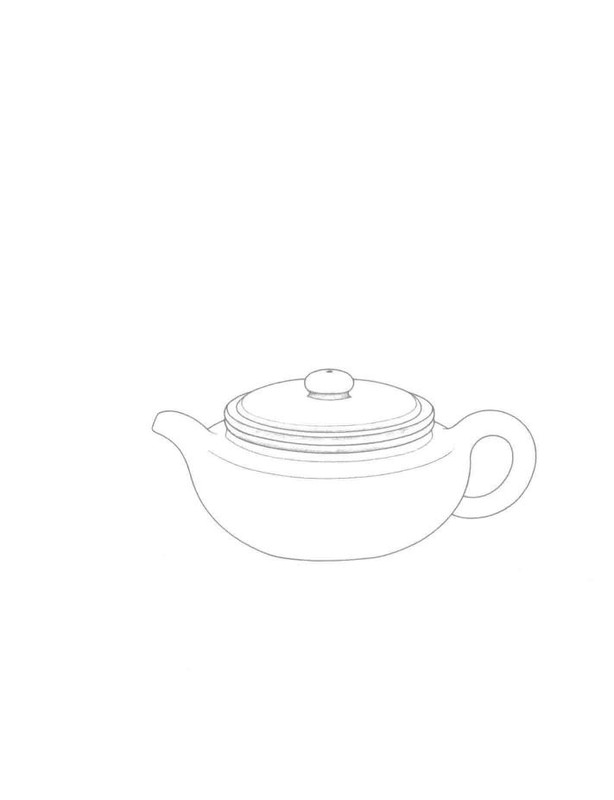
The Fang Gu Hu (仿鼓壶): Gu Jingzhou’s Masterful Reinterpretation of the Imitation Drum Teapot
In the world of Yixing pottery, certain forms transcend their utilitarian purpose to become vehicles of artistic philosophy. The Fang Gu Hu—literally “Imitation Drum Teapot”—represents one of these transformative designs. While nearly every Yixing practitioner learns to craft this classic shape during their training, creating one that captures both technical mastery and spiritual depth remains extraordinarily rare. As the saying goes in Chinese pottery circles, such achievements are “as rare as phoenix feathers and unicorn horns.”
The 1940s examples crafted by the legendary Gu Jingzhou stand as testament to this rarity. These teapots, bearing his seal on the lid and inscriptions like “Manfeng Pottery Art” and the poetic “De yi ri xian wei wo fu” (To gain one day of leisure is my fortune) on their bases, represent more than mere functional vessels. They embody Gu’s lifelong quest to chase and surpass what he considered the pinnacle of Yixing craftsmanship—a creative impulse he nurtured throughout his career.
Understanding the Drum Form: Heritage and Innovation
The Fang Gu Hu takes its inspiration from ancient Chinese drums, translating their robust, grounded presence into teapot form. This design belongs to the “wide mouth, round body type” (大口遍腹型) classification—a fundamental shape in the Yixing repertoire. Its apparent simplicity, however, conceals profound complexity. The form demands absolute precision in proportion, as even minor miscalculations in the relationship between body, spout, handle, and lid can destroy the visual harmony.
Historically, the master potter Shao Daheng set the standard for this form. His Fang Gu teapots became legendary for their presentation of what Chinese aesthetics call “gu zhuo zhi mei”—an archaic, unadorned beauty. Shao’s work achieved something remarkable: it appeared ancient without rigidity, simple without crudeness. His teapots possessed both “li” (strength) and “du” (bearing)—qualities that represent the extraordinary power of traditional Yixing craftsmanship at its finest.
Gu Jingzhou’s Revolutionary Refinements
When Gu Jingzhou approached the Fang Gu form in the 1940s, he didn’t merely copy Daheng’s masterpieces. Instead, he inherited their essential “weightiness” and “bearing” while introducing subtle yet transformative modifications that would eventually define his personal artistic language.
The key to Gu’s innovation lay in compression and extension. He further compressed the shoulder and lid surface, tightening the shoulder line while simultaneously widening the lid rim line. This seemingly minor adjustment created a dramatic effect: the upper portion of the spout could now extend smoothly and gently from the shoulder line, while the lower portion remained tangent to the curved line of the flattened drum body.
The result? A spout that appears short without feeling cramped—a point of powerful extension emerging from the overall flattened spatial form. This design choice introduced dynamic tension to what could otherwise become a static, squat shape.
The handle received equally thoughtful treatment. Gu crafted it to curve and extend gracefully, with an interior that’s notably wide, thick, and flat. This wasn’t merely aesthetic—it served crucial practical purposes. Despite the body’s flatness and outward center of gravity, despite a capacity of approximately half a liter, the teapot could be held comfortably in one hand even when full of water. The ergonomic design meant no strain, no awkwardness—just natural, effortless handling.
The Aesthetic Philosophy: Flat Without Collapse
Viewing a Gu Jingzhou Fang Gu Hu in its entirety reveals a masterclass in spatial relationships. The body achieves flatness without collapsing—maintaining structural integrity and visual interest despite its compressed form. The spout, handle, and knob all extend naturally from the body, creating what Chinese aesthetics describe as rhythmic beauty (韵律美) and refined elegance.
This aesthetic orientation—this particular way of seeing and creating—permeated Gu Jingzhou’s entire creative career. Through repeated engagement with forms like the Fang Gu Hu, he gradually developed the distinctive personal style that would make his work instantly recognizable to connoisseurs.
The evidence suggests Gu returned to this form obsessively. Surviving works bearing different seal marks indicate he created the “Large Mouth Shoulder and Belly Teapot” multiple times over an extended period, with no fewer than ten pieces documented. This repetition wasn’t mere production—it was exploration. Gu was searching for a feeling, searching for his understanding of Yixing pottery, searching for a visual and tactile language that belonged to himself alone.
The Clay and Its Character
While the specific clay body used for these 1940s examples isn’t detailed in historical records, Fang Gu Hu teapots traditionally employ Zisha clays that can withstand the structural demands of the compressed form. The wide, flat body requires clay with excellent plasticity and minimal shrinkage to maintain proportions during firing.
The flattened drum shape also influences how the clay’s surface develops character over time. The broad, gently curved surfaces of the body provide ideal canvases for the patina that develops through repeated tea brewing—what Yixing enthusiasts call “yang hu” or “nourishing the pot.” These expansive surfaces allow the tea oils to create subtle, even color changes that enhance rather than obscure the form’s elegant lines.
Tea Pairing: Matching Leaf to Form
The Fang Gu Hu’s design characteristics make it particularly well-suited for specific tea types. Understanding these pairings requires considering both the pot’s physical properties and its aesthetic character.
Oolong Teas: The half-liter capacity and wide body make this design excellent for rolled oolongs like Tieguanyin or Dong Ding. The broad interior allows the tightly rolled leaves to unfurl completely, while the compressed form maintains heat efficiently for the multiple short infusions oolong brewing demands. The pot’s “bearing” and “weightiness” aesthetically complement the substantial, complex character of high-quality oolongs.
Aged Teas: The Fang Gu Hu’s archaic, unadorned beauty creates natural harmony with aged teas—whether aged oolongs, aged white teas, or ripe pu-erh. The pot’s grounded, stable presence mirrors the deep, settled character these teas develop over time. The wide mouth facilitates easy cleaning after brewing darker aged teas, while the efficient heat retention helps extract the mellow, complex flavors these teas offer.
Red Teas (Black Teas): Chinese red teas like Dianhong or Qimen find an excellent home in this design. The pot’s capacity suits the generous leaf quantities these teas often require, while the smooth interior surfaces won’t trap the fine particles some red teas produce. The compressed form’s heat retention brings out the sweet, malty notes characteristic of quality red teas.
What to Avoid: The Fang Gu Hu’s design makes it less ideal for delicate green teas or white teas that require cooler water and shorter steeping times. The heat retention that benefits oolongs and red teas can over-extract these gentler leaves. Similarly, the half-liter capacity may be excessive for expensive teas typically brewed in smaller quantities.
Brewing Techniques for the Fang Gu Hu
Using a Fang Gu Hu effectively requires understanding how its unique design influences the brewing process:
Preheating: The compressed form and substantial clay walls mean this pot requires thorough preheating. Pour boiling water into the empty pot, replace the lid, and pour additional hot water over the exterior. Let it sit for 30-60 seconds before discarding the water. This ensures even heat distribution throughout the clay body.
Leaf Quantity: The wide, flat interior creates more horizontal space than vertical depth. This affects how leaves settle and expand. For rolled oolongs, use slightly less leaf than you might in a taller pot of similar capacity—the leaves will have more room to unfurl horizontally. Start with about one-third of the pot’s volume in dry leaf and adjust based on results.
Pouring Technique: The short, powerful spout design that Gu Jingzhou perfected pours with authority. The water stream will be strong and direct rather than gentle and arcing. Position your cup closer to the spout than you might with other designs, and pour decisively. The spout’s tangent relationship to the body means the pot pours cleanly without dribbling when tilted at the proper angle—usually around 45-60 degrees.
Handling: Take advantage of that wide, flat handle interior Gu designed for comfort. Your fingers should fit naturally into the space, with your thumb resting on the top curve. The pot’s low center of gravity means it feels stable even when full, but always support the lid knob with your other hand’s index finger when pouring to prevent the lid from falling.
Temperature Maintenance: The compressed form excels at heat retention. For teas requiring multiple short infusions, you may find the water stays hotter longer than in taller pots. This can be advantageous for oolongs but requires attention—if subsequent infusions taste bitter or astringent, try slightly shorter steeping times or allow a few extra seconds between infusions for the pot to cool slightly.
Cleaning and Maintenance: After each session, remove all leaves promptly and rinse with hot water only—never soap. The wide mouth makes this easy. The broad, flat surfaces should be gently wiped with a soft cloth while still warm to begin developing that prized patina. Allow the pot to air dry completely, lid off, before storing.
The Collector’s Perspective
For those fortunate enough to encounter an authentic 1940s Gu Jingzhou Fang Gu Hu, certain details confirm authenticity. Look for the “Gu Jingzhou” seal on the lid—his seal work from this period shows characteristic precision. The base inscriptions, whether “Manfeng Pottery Art” or poetic phrases like “To gain one day of leisure is my fortune,” should show the natural irregularities of hand-carved seals rather than mechanical uniformity.
The proportions matter immensely. Gu’s refinements to the form—that compressed shoulder, the widened lid rim, the spout’s particular relationship to the body—create a specific visual signature. The pot should feel substantial in hand but not heavy, balanced despite its low profile, comfortable despite its capacity.
Living with the Form
What makes the Fang Gu Hu enduringly relevant isn’t just its historical significance or technical mastery—it’s the way the form integrates into daily tea practice. The design’s apparent simplicity means it doesn’t demand attention or dominate the tea table. Instead, it provides a stable, reliable presence that allows the tea itself to take center stage.
This was perhaps what Gu Jingzhou was searching for through his repeated explorations of the form: not just technical perfection, but a design that could disappear into use while simultaneously elevating the experience. A pot that could be both tool and art, both functional and contemplative.
The poetic inscription “To gain one day of leisure is my fortune” found on some examples captures this philosophy perfectly. The Fang Gu Hu doesn’t announce itself or demand special occasions. It’s a pot for those stolen moments of leisure, those ordinary days made extraordinary by mindful attention to simple pleasures.
Conclusion: The Search Continues
Gu Jingzhou’s decade-long engagement with the Fang Gu Hu form—creating at least ten documented examples—reminds us that mastery isn’t a destination but a continuous journey. Each iteration represented another step in his search for understanding, another attempt to capture in clay what he envisioned in his mind.
For contemporary tea enthusiasts, the Fang Gu Hu offers lessons beyond brewing technique. It demonstrates how constraints—the limitations of a traditional form—can become vehicles for innovation. It shows how repetition and refinement, rather than constant novelty, can lead to profound artistic development. And it proves that the simplest forms, executed with deep understanding and technical mastery, can achieve a beauty that transcends their humble origins.
Whether you’re fortunate enough to brew tea in an authentic Gu Jingzhou piece or a contemporary interpretation of his design, the Fang Gu Hu invites you into this same search—for understanding, for that perfect moment of leisure, for the language that expresses your own relationship with tea.
