仿鼓如意壶
Discover the 仿鼓如意壶, a classic Yixing pottery design with unique characteristics
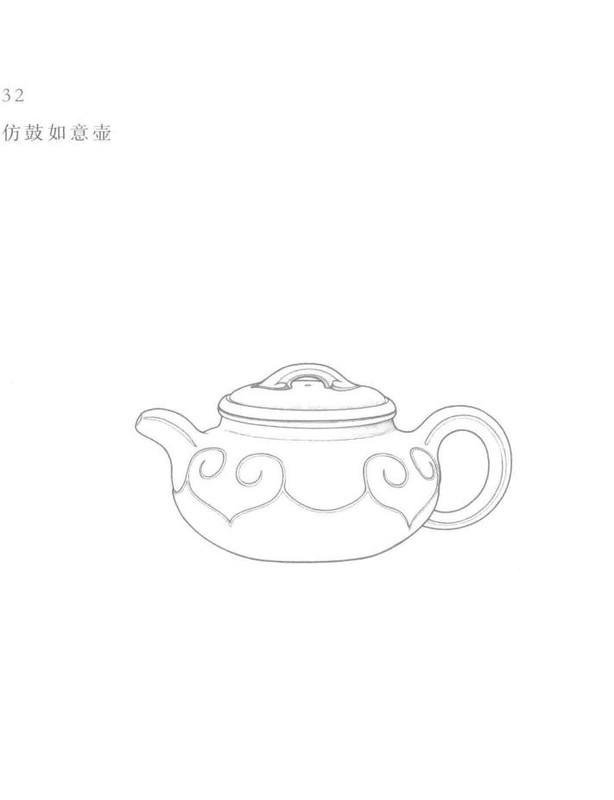
The Fang Gu Ruyi Hu (仿鼓如意壶): A Masterpiece of 1940s Yixing Craftsmanship
When Gu Jingzhou shaped clay in his workshop during the 1940s, he wasn’t simply making teapots—he was bridging centuries of ceramic tradition with a modernist sensibility that would define an era. The Fang Gu Ruyi Hu, or Drum-Inspired Ruyi Teapot, stands as one of his most compelling designs from this transformative period, a piece that captures both the robust simplicity of ancient percussion instruments and the flowing elegance of the ruyi, the ceremonial scepter symbolizing wishes fulfilled.
Understanding the Name: Where Drum Meets Auspicious Cloud
The Chinese name 仿鼓如意壶 tells us everything about this pot’s design philosophy. “Fang gu” (仿鼓) means “imitating the drum”—not a literal reproduction, but an artistic interpretation of the drum’s rounded, resonant form. “Ruyi” (如意) refers to the distinctive S-curved scepter that appears throughout Chinese decorative arts, literally meaning “as you wish.” This teapot marries the grounded, earthy presence of a drum with the celestial grace of the ruyi motif, creating a form that feels both substantial and ethereal.
This isn’t coincidental naming. Gu Jingzhou, whose seal marks both the lid and base of authenticated examples from this period, was known for his ability to synthesize multiple cultural references into cohesive, functional forms. The 1940s marked a particularly creative period in his career, when he was refining techniques that would later establish him as one of the most influential Yixing masters of the 20th century.
The Historical Moment: Yixing in the 1940s
To understand this teapot, we must understand its context. The 1940s were tumultuous years in China, yet Yixing’s pottery workshops continued their centuries-old traditions, adapting and evolving. Gu Jingzhou was in his thirties during this decade, having already apprenticed under multiple masters and absorbed the classical repertoire of Yixing forms. This was his experimental period, when he began creating designs that would become templates for generations of potters to follow.
The seals on these pots tell their own story. The lid bears Gu Jingzhou’s personal seal, while the base shows “Ernan Shanliu” (二南山榴)—a studio name or possibly a collector’s mark. Another variation features the inscription “Zu Ji Suo Hao Wan Er Lao Zhi” (足吉所好玩而老址), which roughly translates to “Made at the old address for the amusement of those who appreciate such things.” This playful inscription reveals the spirit in which these pots were created: serious craftsmanship infused with joy and a sense of connection to tradition.
The Form: Reading the Drum’s Language
The Fang Gu Ruyi Hu presents a rounded, barrel-like body that echoes the shape of traditional Chinese drums. Unlike the sharp angles of geometric Yixing designs or the naturalistic curves of fruit-shaped pots, this form occupies a middle ground—structured yet organic, formal yet approachable.
The body swells gently from a stable base, creating a sense of contained energy, much like a drum skin stretched taut and ready to resonate. This isn’t merely aesthetic; the rounded form serves practical purposes in tea brewing, allowing water to circulate evenly and tea leaves to unfurl without crowding. The clay walls, typically of moderate thickness in Gu Jingzhou’s work, retain heat effectively while remaining light enough for comfortable handling.
The ruyi element appears most prominently in the handle and spout design. Rather than simple functional appendages, these elements curve with the characteristic S-shape of the ruyi scepter, their lines flowing smoothly into the body. The handle rises with confidence before curving back toward the pot, creating a grip that feels natural in the hand while maintaining visual balance with the spout’s forward thrust.
The lid deserves particular attention. Gu Jingzhou was meticulous about lid fit—his lids are famous for their precision, creating a slight suction when lifted that indicates perfect tolerances. On the Fang Gu Ruyi Hu, the lid typically features a button finial that echoes the pot’s overall rounded aesthetic, sometimes with subtle ruyi-inspired curves that tie the design together.
Clay and Color: The Material Truth
While the source material doesn’t specify the exact clay body used for these 1940s examples, Gu Jingzhou typically worked with zisha (purple sand) clays ranging from deep purple-brown to reddish tones. The Fang Gu Ruyi Hu’s form particularly suits zhuni (vermillion clay) or hongni (red clay), both of which develop a lustrous patina with use and complement the pot’s warm, inviting aesthetic.
The clay choice matters profoundly for tea brewing. Zhuni, with its higher firing temperature and denser structure, excels with lighter oolongs and aged white teas, bringing clarity and brightness to the brew. Hongni, slightly more porous, works beautifully with darker oolongs and aged pu-erh, adding body and smoothness to the liquor.
The surface finish on authentic 1940s examples shows the hand of the maker—not perfectly smooth like modern production pieces, but with subtle variations that catch the light differently across the pot’s surface. This is the mark of handwork, of clay shaped by fingers rather than molds, and it’s part of what makes these pieces so compelling to handle and use.
Tea Pairing: Finding the Right Match
The Fang Gu Ruyi Hu’s moderate size and rounded form make it remarkably versatile, but certain teas truly sing in this pot. The drum-inspired body creates excellent heat retention, making it ideal for teas that benefit from sustained high temperatures.
Aged Oolongs: The pot’s shape and typical clay body excel with traditional Taiwanese aged oolongs or Wuyi rock teas. The rounded interior allows these tightly rolled leaves to unfurl completely, while the clay’s porosity interacts with the tea’s oils to smooth any rough edges and emphasize the deep, roasted sweetness these teas develop over time.
Ripe Pu-erh: If your Fang Gu Ruyi Hu is made from hongni or zini (purple clay), it becomes an excellent vessel for ripe pu-erh. The pot’s heat retention brings out the tea’s earthy complexity, while the clay’s slight breathability prevents the brew from becoming stuffy or flat. Over time, the pot will season specifically to pu-erh, developing a patina that enhances each subsequent brewing.
Aged White Tea: For zhuni versions of this design, aged white tea (particularly aged Shou Mei or Gong Mei) finds a perfect home. The pot’s form allows the large, fluffy leaves to expand fully, while the clay’s characteristics bring forward the tea’s honeyed sweetness and subtle herbal notes without overwhelming its delicate complexity.
Phoenix Dancong: The Fang Gu Ruyi Hu’s balanced proportions work wonderfully with the aromatic complexity of Phoenix Dancong oolongs. The pot’s shape concentrates the tea’s fragrance while the spout delivers a smooth, controlled pour that preserves the tea’s delicate aromatics.
Brewing Technique: Honoring the Design
Using a Fang Gu Ruyi Hu effectively requires understanding its particular characteristics:
Preheating is Essential: The pot’s rounded form and moderate wall thickness mean it holds heat well, but you must preheat thoroughly. Pour boiling water into the empty pot, swirl it around, and let it sit for 30 seconds before discarding. This ensures the clay is fully warmed and won’t shock your tea leaves with temperature fluctuations.
Leaf Quantity: The drum-shaped body provides generous interior space. For most oolongs, fill the pot about one-third full with dry leaves—they’ll expand significantly. For pu-erh, you can use slightly less, as these leaves are often more compressed.
Water Temperature: The pot’s excellent heat retention means you can use water just off the boil (95-100°C) for most appropriate teas. The clay will moderate the temperature slightly, preventing bitterness while extracting full flavor.
Pouring Technique: The ruyi-curved spout typically delivers a smooth, laminar flow. Pour with confidence—hesitant pouring can cause dripping. The spout’s design allows you to control the pour speed by adjusting the pot’s angle, giving you precision over extraction time.
Multiple Infusions: This pot excels at gongfu-style brewing with multiple short infusions. Start with 20-30 seconds for the first infusion, gradually increasing time with each subsequent steep. The pot’s form ensures even extraction across all infusions, revealing the tea’s evolution from bright opening notes to deeper, more contemplative flavors.
Care and Seasoning: Building Relationship
A Yixing pot from the 1940s, if you’re fortunate enough to own one, requires respectful care. Even modern versions of the Fang Gu Ruyi Hu design deserve attention:
Dedicated Use: Traditional wisdom says to use your Yixing pot for only one type of tea—or at least one category. The clay absorbs tea oils and flavors, building a seasoning that enhances future brews. Switching between green tea and pu-erh would create confusion rather than harmony.
Cleaning: Never use soap. After each session, rinse the pot thoroughly with hot water, using a soft brush to remove any stuck leaves. Leave the lid off and allow the pot to air dry completely before storing. The clay needs to breathe.
Patina Development: Over months and years of use, your pot will develop a patina—a subtle sheen on the exterior from tea oils and the natural oils from your hands. This is desirable, a visible record of the pot’s history with you. Some enthusiasts gently brush the exterior with tea liquor after brewing to encourage even patina development.
Storage: Keep your pot in a place with good air circulation, away from strong odors. The clay’s porosity means it can absorb smells from its environment, which would affect your tea.
The Legacy: Why This Design Endures
The Fang Gu Ruyi Hu represents something essential about Yixing pottery’s enduring appeal. It’s not the most elaborate design—there are pots with more intricate carving, more dramatic forms, more obvious technical virtuosity. But this pot succeeds through balance and restraint, through the confidence to let simple forms speak clearly.
Gu Jingzhou’s genius lay partly in understanding that a teapot’s primary job is to brew tea well. The Fang Gu Ruyi Hu does this superbly, its form following function while maintaining aesthetic grace. The drum-inspired body isn’t just visually appealing—it creates ideal conditions for tea leaf expansion and water circulation. The ruyi curves aren’t merely decorative—they provide ergonomic comfort and pouring control.
This design has been reproduced countless times since the 1940s, by students of Gu Jingzhou and by potters who never met him but recognized the form’s essential rightness. Each reproduction is a form of homage, an acknowledgment that some designs achieve a kind of perfection that transcends their moment of creation.
Collecting and Authentication
For those interested in acquiring a Fang Gu Ruyi Hu, whether a vintage piece or a contemporary interpretation, several considerations matter:
Authentic 1940s examples bearing Gu Jingzhou’s seal are rare and valuable, requiring expert authentication. The seals mentioned in historical records—“Gu Jingzhou” on the lid, “Ernan Shanliu” or the longer inscription on the base—are important markers, but seals can be faked. Look for consistency in the clay body, the precision of the lid fit, the quality of the spout’s pour, and the overall proportions that characterize Gu Jingzhou’s work.
Contemporary versions by skilled potters can be excellent users and more accessible. Focus on craftsmanship: How does the lid fit? How does the pot pour? Does the form feel balanced in your hand? A well-made modern Fang Gu Ruyi Hu will serve your tea practice beautifully, even if it lacks the historical provenance of a 1940s original.
Conclusion: The Pot as Practice
Ultimately, the Fang Gu Ruyi Hu invites us into a particular relationship with tea. Its form suggests stability and resonance—like a drum, it wants to be filled and to sound its note. Like the ruyi scepter, it promises that wishes can be fulfilled, that the simple act of brewing tea can become a moment of satisfaction and peace.
Whether you’re fortunate enough to use a 1940s original or a faithful contemporary reproduction, this pot asks you to slow down, to pay attention, to honor the tea and the moment. In our hurried age, that might be the most valuable thing any teapot can offer—not just a vessel for brewing, but an invitation to presence, to the quiet joy of doing one thing well.
The Fang Gu Ruyi Hu endures because it understands something fundamental: that beauty and function need not compete, that tradition and innovation can coexist, and that sometimes the most profound designs are those that simply, gracefully, do what they’re meant to do.
