盘钟壶
Discover the 盘钟壶, a classic Yixing pottery design with unique characteristics and rich cultural heritage
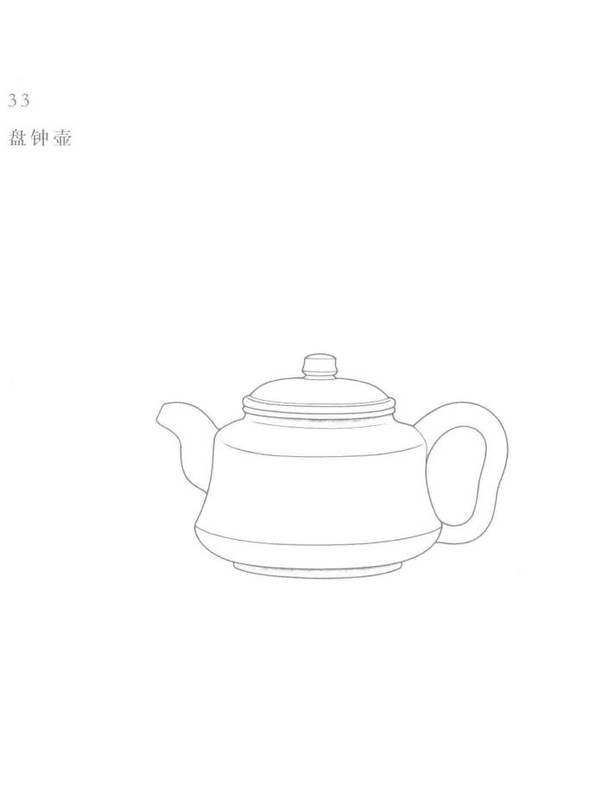
The Pan Zhong Hu: A Timeless Classic in Yixing Pottery
When you first encounter a Pan Zhong Hu (盘钟壶) sitting on a tea table, there’s something immediately grounding about it. This isn’t a teapot that shouts for attention with elaborate flourishes or dramatic curves. Instead, it commands respect through its quiet dignity—a rounded, bell-like form that seems to have emerged from the earth itself, perfectly balanced and utterly self-assured.
The name “Pan Zhong” translates roughly to “inverted bell” or “upturned bell,” and once you know this, you can’t unsee it. Imagine taking a temple bell and flipping it over—that gentle, swelling curve that rises from a stable base before tapering toward the top. This is the essence of the Pan Zhong Hu, a design that has captivated tea drinkers for generations and remains one of the most beloved classical forms in the Yixing pottery tradition.
A Shape Born from Simplicity
The Pan Zhong Hu belongs to that rare category of designs that appear deceptively simple at first glance. There are no dragons coiling around the handle, no elaborate carved scenes depicting mountain landscapes, no complex geometric patterns demanding your attention. What you see is a rounded body, a gracefully arched spout, a comfortable handle, and a lid that sits flush with the pot’s rim.
But here’s where the magic happens: creating something this “simple” requires extraordinary skill. The Pan Zhong Hu’s beauty lies in its proportions, in the subtle relationships between its curves, in the way the body swells outward before drawing back in toward the shoulder. A millimeter too much in one direction, and the pot looks squat and heavy. A fraction too little, and it appears stretched and unstable.
The body typically rises from a flat or slightly recessed base, creating a stable foundation that gives the pot its characteristic grounded presence. As your eye travels upward, the walls curve outward in a gentle arc—not too aggressive, not too timid—reaching their widest point roughly two-thirds up the body. From there, the curve reverses, drawing inward to create a defined shoulder before meeting the lid.
The spout on a well-made Pan Zhong Hu flows naturally from the body, neither too short nor overly elongated. It typically has a slight upward tilt, ensuring a clean pour without drips. The handle mirrors the body’s curves, arching backward in a comfortable grip that balances the weight of the filled pot perfectly. When you lift a good Pan Zhong Hu, it should feel like an extension of your hand—the weight distributed so naturally that pouring becomes an effortless, meditative act.
Roots in Tradition
The Pan Zhong Hu emerged during a golden age of Yixing pottery when master craftsmen were refining and codifying the classical teapot forms that would influence generations to come. While we can’t pinpoint an exact moment of creation—pottery designs evolved organically through the hands of countless artisans—the Pan Zhong Hu represents the Ming and Qing dynasty aesthetic at its finest: elegant restraint, perfect proportion, and form following function.
During these periods, tea culture in China had reached sophisticated heights. The literati—scholars, poets, and artists—elevated tea drinking from mere refreshment to a refined art form. They sought teapots that reflected their philosophical values: harmony with nature, appreciation for understated beauty, and respect for craftsmanship. The Pan Zhong Hu answered this call perfectly.
What made Yixing pottery special wasn’t just the skill of the potters, but the clay itself. The region around Yixing in Jiangsu Province possessed unique zisha clay—literally “purple sand”—with remarkable properties. This clay is porous enough to absorb tea oils over time, seasoning the pot and enhancing future brews, yet dense enough to retain heat effectively. It doesn’t impart any flavor of its own, allowing the tea’s true character to shine through.
The Pan Zhong Hu’s rounded form maximizes these benefits. The generous body provides ample space for tea leaves to unfurl and dance in the water, while the curved walls create gentle circulation patterns that promote even steeping. The wide shoulder area allows heat to distribute evenly, and the relatively narrow opening at the top helps retain warmth during brewing.
The Art of Proportion
Master potters will tell you that the Pan Zhong Hu is one of the most challenging classical forms to execute well. Why? Because there’s nowhere to hide. With more elaborate designs, small imperfections can be masked by decorative elements or complex curves. But the Pan Zhong Hu’s clean lines and simple geometry reveal everything.
The relationship between height and width must be just right—typically, the pot’s height (including the lid) is roughly equal to or slightly less than its maximum width. This creates that satisfying, stable appearance that makes the pot feel complete. The thickness of the walls matters too. Too thick, and the pot becomes clunky and slow to respond to temperature changes. Too thin, and it loses heat too quickly and feels fragile.
Then there’s the lid. On a Pan Zhong Hu, the lid typically sits flush with the rim, creating a clean, continuous line around the pot’s shoulder. The lid itself often echoes the body’s curves—a gentle dome that rises to a simple knob. When you place the lid on the pot and rotate it, it should move smoothly without wobbling or catching. The fit should be snug enough to prevent heat loss but not so tight that you struggle to remove it when the clay expands with heat.
A Pot for Contemplative Teas
So which teas does the Pan Zhong Hu favor? The answer reveals much about the pot’s character. This is a vessel that excels with teas that reward patience and attention—teas with complexity and depth that unfold slowly across multiple infusions.
Oolong teas, particularly the darker, more oxidized varieties, find a perfect home in the Pan Zhong Hu. Think of a rich Da Hong Pao from the Wuyi mountains, with its mineral backbone and layers of roasted, fruity, and floral notes. The pot’s heat retention and spacious interior allow these tightly rolled leaves to open fully, releasing their complex aromatics gradually. The rounded body creates gentle water circulation that coaxes out the tea’s character without harsh agitation.
Aged oolongs and dark teas also shine in this pot. These teas often have earthy, woody, or sweet notes that benefit from the even heat distribution the Pan Zhong Hu provides. The pot’s ability to maintain temperature throughout multiple short infusions means you can explore how these teas evolve from steep to steep, revealing different facets with each pour.
Ripe pu-erh (shou pu-erh) is another excellent match. These teas can be thick and rich, sometimes almost syrupy in texture, and the Pan Zhong Hu’s generous pour and well-designed spout handle this viscosity beautifully. The pot won’t drip or dribble, even with the most full-bodied brew.
Some tea enthusiasts also use their Pan Zhong Hu for aged white teas or heavily roasted red teas. The key is matching the pot to teas that benefit from stable heat and have enough complexity to make multiple infusions interesting.
Brewing with the Pan Zhong Hu
Using a Pan Zhong Hu is straightforward, but a few techniques will help you get the most from both pot and tea. First, always warm your pot before brewing. Pour hot water into the empty pot, swirl it around, and discard it. This preheating serves two purposes: it brings the clay up to temperature so it won’t cool your brewing water too quickly, and it allows you to check that the pot is clean and ready.
For most oolongs and dark teas, you’ll want water just off the boil—around 95-100°C (203-212°F). The Pan Zhong Hu’s heat retention means you can be confident the water will stay hot enough throughout the steeping process.
When adding tea leaves, don’t be shy. The spacious interior can handle a generous amount—typically one-third to one-half of the pot’s volume for rolled oolongs, which will expand significantly. For loose-leaf teas, adjust accordingly. The goal is to give the leaves room to move and breathe while still having enough leaf material to create a flavorful brew.
Steeping times with a Pan Zhong Hu follow the gongfu style: short, multiple infusions that gradually increase in length. Your first steep might be just 20-30 seconds, with each subsequent infusion adding 10-15 seconds. This approach lets you experience how the tea evolves, and the Pan Zhong Hu’s efficient design makes these quick infusions easy and enjoyable.
Pay attention to your pour. A well-made Pan Zhong Hu should pour cleanly and completely, with the stream cutting off sharply when you return the pot to vertical. If you notice dripping, you might be pouring too slowly or too quickly—experiment to find the sweet spot. The pot should feel balanced in your hand throughout the pour, never front-heavy or awkward.
Caring for Your Pan Zhong Hu
A Yixing pot is meant to be used, and the Pan Zhong Hu is no exception. Over time, with regular use, the clay will develop a patina—a subtle sheen that comes from absorbed tea oils. This seasoning is prized by collectors and users alike, as it represents the pot’s history and enhances its performance.
Never use soap or detergents on your Pan Zhong Hu. The porous clay will absorb these chemicals, and they’ll taint future brews. Instead, rinse the pot thoroughly with hot water after each use. Remove the lid and let both pieces air dry completely before storing. Some enthusiasts dedicate specific pots to specific tea types, believing this focused seasoning creates the best results.
Between uses, store your pot with the lid off or slightly ajar. This allows air circulation and prevents any musty odors from developing. If you won’t be using the pot for an extended period, make sure it’s completely dry before putting it away.
Why the Pan Zhong Hu Endures
In a world of constantly changing trends and innovations, the Pan Zhong Hu remains relevant because it solves the fundamental challenge of tea brewing so elegantly. It’s not trying to be revolutionary or attention-grabbing. Instead, it perfects the basics: heat retention, proper leaf expansion, clean pouring, comfortable handling, and aesthetic harmony.
When you sit down with a Pan Zhong Hu and your favorite oolong, you’re participating in a tradition that stretches back centuries. The pot in your hands might be newly made, but its form has been refined by generations of potters and tea drinkers, each contributing small improvements and insights. This accumulated wisdom is built into every curve and proportion.
The Pan Zhong Hu teaches us that sometimes the most profound designs are those that seem simplest. There’s a reason this form has survived while countless trendy variations have faded away. It works. It feels right. It makes good tea taste even better.
For tea enthusiasts looking to add a classical Yixing pot to their collection, the Pan Zhong Hu represents an excellent choice. It’s versatile enough to handle various tea types, forgiving enough for beginners to use successfully, yet refined enough to satisfy experienced tea drinkers. Whether you’re brewing a daily cup or hosting a formal tea session, this pot rises to the occasion with quiet confidence.
In the end, the Pan Zhong Hu reminds us that great design doesn’t need to shout. Sometimes, the most beautiful things are those that simply do their job perfectly, with grace and humility. And in the world of tea, where mindfulness and appreciation for subtle beauty are paramount, that’s exactly the kind of companion you want by your side.
