柿圆壶
Discover the 柿圆壶, a classic Yixing pottery design with unique characteristics
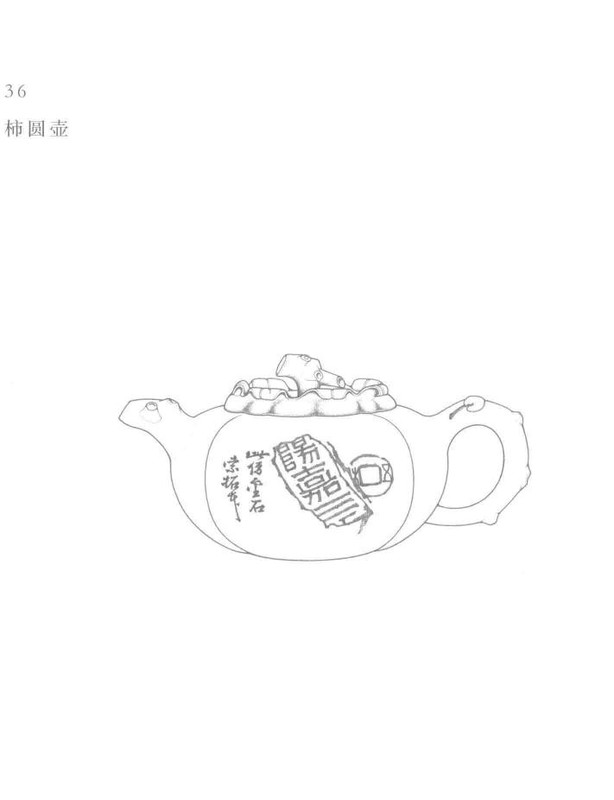
The Shiyuan Hu (柿圆壶): A 1940s Masterpiece of Yixing Simplicity
In the world of Yixing teapots, where dragons coil around handles and bamboo motifs climb spouts, there exists a quieter poetry—one that speaks through pure form rather than ornament. The Shiyuan Hu, or Persimmon-Round Pot, embodies this philosophy with remarkable grace. Created during the 1940s and bearing the seals of the artisan Shou Zhe and the studio Ziwuxuan, this teapot represents a pivotal moment in Chinese ceramic history when traditional craftsmanship met the aesthetic restraint of mid-century design.
Understanding the Name: Why “Persimmon-Round”?
The Chinese name 柿圆壶 (Shiyuan Hu) literally translates to “persimmon-round pot,” and this nomenclature is far from arbitrary. The persimmon (柿, shi) holds deep cultural significance in Chinese tradition, symbolizing joy, transformation, and the sweetness that comes with patience—much like the aging process of fine tea. But more importantly, the name describes the pot’s distinctive shape: a rounded, slightly flattened spherical body that mirrors the gentle curves of a ripe persimmon fruit.
This design choice reflects a broader aesthetic principle in Chinese art known as “xing si” (形似)—resemblance in form. Rather than literally depicting a persimmon with painted details or carved leaves, the Shiyuan Hu captures the essence of the fruit through pure geometry. The body swells gently outward before tapering at the shoulder, creating a silhouette that feels both grounded and buoyant, stable yet organic.
The 1940s Context: A Decade of Transition
To understand the Shiyuan Hu, we must place it within its historical moment. The 1940s were tumultuous years in China, marked by the final years of the Second Sino-Japanese War and the subsequent civil war. Yet paradoxically, this period also saw remarkable continuity in Yixing pottery production. The kilns of Yixing, located in Jiangsu Province, continued their centuries-old tradition, though the market and aesthetic preferences were shifting.
During this decade, there was a growing appreciation for what collectors now call “classical simplicity”—designs that eschewed elaborate decoration in favor of perfect proportions and flawless execution. The Shiyuan Hu exemplifies this trend. In an era of upheaval, perhaps there was comfort in the timeless geometry of a sphere, in the honest expression of clay without pretense.
The artisan Shou Zhe, whose seal appears on the lid of this particular example, worked within this aesthetic framework. While less documented than some of the grand masters of earlier periods, Shou Zhe’s work demonstrates the high level of technical skill that persisted in Yixing workshops even during challenging times. The base seal reading “Ziwuxuan” (自悟轩, literally “Self-Enlightenment Studio”) suggests this pot may have been commissioned by or created for a scholar or tea connoisseur—someone who valued the meditative qualities of tea preparation and the philosophical dimensions of ceramic art.
Design Elements: Reading the Form
The Shiyuan Hu’s beauty lies in its restraint, but this simplicity is deceptive. Creating a successful round pot requires extraordinary skill, as any imperfection in symmetry or proportion becomes immediately apparent. There are no decorative flourishes to distract the eye from structural flaws.
The Body: The main chamber follows a compressed spherical form—wider than it is tall, creating a stable, grounded presence. This shape serves both aesthetic and functional purposes. The broad, rounded belly provides ample surface area for heat distribution, allowing tea leaves to unfurl evenly. The gentle taper toward the shoulder creates a natural flow that guides water and tea toward the spout.
The Spout: In keeping with the design’s minimalist philosophy, the spout emerges cleanly from the body without elaborate curves or decorative elements. Its placement and angle are critical—too high and the pot won’t pour fully; too low and it becomes unstable. The spout on a well-made Shiyuan Hu should create a smooth, controlled pour that can be stopped cleanly without dripping.
The Handle: Balancing the spout, the handle provides both practical grip and visual equilibrium. On classic Shiyuan Hu examples, the handle typically follows a simple C-curve or slightly squared arch, proportioned to allow comfortable lifting when the pot is full. The attachment points where handle meets body are areas where the potter’s skill becomes evident—these joints must be both structurally sound and visually seamless.
The Lid: The lid seal bearing Shou Zhe’s mark sits atop a well-fitted cover that demonstrates the precision of 1940s Yixing craftsmanship. A properly fitted lid should sit securely without wobbling, yet lift off smoothly. When the pot is tilted to pour, a small hole in the lid allows air to enter, preventing vacuum lock while controlling the flow rate. This seemingly simple feature requires careful calculation during the throwing and firing process, as clay shrinks unpredictably in the kiln.
Clay and Color: The Material Story
While the source material doesn’t specify the exact clay body used for this particular Shiyuan Hu, the design traditionally employs Yixing’s famous zisha (紫砂, purple sand) clay. This clay is prized not just for its color—which ranges from deep purple-brown to reddish-tan depending on iron content and firing temperature—but for its unique physical properties.
Zisha clay is porous at a microscopic level, allowing it to “breathe” while still being watertight. This porosity serves several functions in tea brewing. First, it helps regulate temperature, preventing the rapid heat loss that occurs with porcelain or glass. Second, over time and with repeated use, the clay absorbs trace amounts of tea oils, gradually developing a patina that tea enthusiasts call “tea nourishment” (养壶, yang hu). A well-seasoned Shiyuan Hu becomes a partner in the tea ritual, its surface developing a subtle luster that speaks to years of careful use.
The firing process for zisha clay is equally important. Traditional Yixing potters fire at relatively low temperatures (around 1100-1200°C) compared to porcelain, which preserves the clay’s porosity while achieving sufficient vitrification for strength. The 1940s kilns would have used wood or coal firing, creating subtle variations in color and surface texture that give each pot individual character.
Tea Pairing: Finding the Perfect Match
The Shiyuan Hu’s rounded form and moderate size make it remarkably versatile, but certain teas truly shine when brewed in this design.
Oolong Teas: The Shiyuan Hu excels with oolongs, particularly those from Fujian Province like Tieguanyin or Wuyi rock teas. The pot’s shape provides ideal conditions for oolong’s characteristic multiple infusions. The broad body allows tightly rolled oolong leaves to unfurl completely, while the clay’s heat retention maintains the consistent temperature these teas require. A well-seasoned Shiyuan Hu used exclusively for oolong will develop a patina that enhances the tea’s natural complexity, adding subtle depth to the floral and mineral notes.
Aged Pu-erh: For those who appreciate aged pu-erh, the Shiyuan Hu offers an excellent brewing vessel. The clay’s porosity helps soften any rough edges in the tea while the rounded shape promotes even extraction. The pot’s thermal properties are particularly beneficial for pu-erh, which benefits from sustained heat to release its complex, earthy flavors.
Red Teas (Black Teas): Chinese red teas like Dianhong or Keemun also pair beautifully with the Shiyuan Hu. The pot’s shape and clay composition enhance these teas’ natural sweetness while maintaining their robust body. The persimmon-round form seems particularly appropriate for red teas, as both share associations with autumn, warmth, and mellow richness.
What to Avoid: While versatile, the Shiyuan Hu is less ideal for delicate green teas or white teas, which prefer cooler brewing temperatures and benefit from the rapid heat dissipation of porcelain or glass. The clay’s heat retention, an asset for oolongs and pu-erh, can over-extract green teas, leading to bitterness.
Brewing Technique: Honoring the Design
Using a Shiyuan Hu properly requires understanding its particular characteristics and adjusting your technique accordingly.
Warming the Pot: Before brewing, always warm your Shiyuan Hu with hot water. This serves multiple purposes: it brings the clay to brewing temperature, preventing heat shock when you add boiling water; it allows you to check that the spout pours cleanly; and it begins the ritual of tea preparation, creating a mindful transition into the tea session.
Water Temperature: For oolongs, use water just off the boil (90-95°C). The Shiyuan Hu’s heat retention means the water will maintain temperature better than in a porcelain gaiwan, so you can afford to start slightly cooler. For aged pu-erh, full boiling water (100°C) is appropriate, as the pot will help maintain the heat needed to extract the tea’s depth.
Leaf Ratio: The Shiyuan Hu’s rounded shape means leaves have more room to expand than in a tall, narrow pot. Start with a slightly higher leaf-to-water ratio than you might use in other vessels—roughly one-third to one-half of the pot’s volume when using rolled oolongs, which will expand significantly.
Pouring Technique: The spout’s design allows for controlled pouring, but technique matters. Tilt the pot smoothly and decisively—hesitant pouring can cause dripping. When finishing the pour, a slight upward flick of the wrist helps create a clean break. The pot should empty completely, leaving no water to over-extract the leaves between infusions.
Multiple Infusions: One of the joys of using a Shiyuan Hu is experiencing how tea evolves across multiple steepings. The first infusion awakens the leaves; the second and third often represent the peak of flavor; subsequent infusions reveal subtler notes. With quality oolong or aged pu-erh, you might achieve six to ten satisfying infusions, each slightly different from the last.
Maintenance and Seasoning: The Long Relationship
A Shiyuan Hu is not a disposable object but a companion that improves with time and care. Proper maintenance ensures your pot will serve you for decades while developing the prized patina that marks a well-loved teapot.
Initial Preparation: A new Shiyuan Hu should be “opened” before first use. Simmer it gently in water with tea leaves (of the type you plan to brew in it) for 30-60 minutes. This removes any residual clay dust and begins the seasoning process.
After Each Use: Rinse the pot thoroughly with hot water only—never use soap, which the porous clay will absorb. Remove all tea leaves and allow the pot to air dry completely with the lid off. Some tea enthusiasts gently wipe the exterior with a soft cloth while the pot is still warm, gradually polishing the surface.
Dedicated Use: Traditional wisdom holds that a Yixing pot should be dedicated to a single type of tea—or at least to teas within the same family. This allows the pot to develop a seasoning specific to that tea, enhancing its character over time. A Shiyuan Hu used exclusively for Tieguanyin for years becomes, in a sense, a Tieguanyin pot, its clay memory holding traces of countless infusions.
The Patina: Over months and years of use, your Shiyuan Hu will develop a subtle sheen, particularly on areas frequently touched—the handle, the lid knob, the body where you steady the pot while pouring. This patina is prized by collectors and users alike, as it represents the pot’s history and the care invested in it. A well-seasoned pot from the 1940s, like the Shou Zhe example, carries not just aesthetic value but the accumulated tea memory of decades.
Collecting Considerations: Evaluating a Shiyuan Hu
For those interested in acquiring a Shiyuan Hu, whether a period piece from the 1940s or a contemporary interpretation, several factors determine quality and value.
Maker’s Marks: The seals on a pot provide crucial information. The lid seal “Shou Zhe” and base seal “Ziwuxuan” on the 1940s example discussed here indicate both the maker and the studio or patron. Research these marks carefully, as they affect both authenticity and value. Be aware that marks can be faked, so purchase from reputable dealers who can provide provenance.
Structural Integrity: Examine the pot carefully for cracks, chips, or repairs. Pay special attention to the spout attachment, handle joints, and lid fit—these are stress points where damage often occurs. A hairline crack might not affect function but significantly impacts value.
Proportions: Step back and assess the pot’s overall balance. Does the spout align properly with the handle? Is the lid knob centered? Does the pot sit level? These details reveal the maker’s skill and attention to detail.
Pour Quality: If possible, test the pour. Fill the pot with water and observe how it flows—smoothly and controllably, or with sputtering and dripping? Cover the lid hole with your finger while pouring; the flow should stop immediately, demonstrating proper air pressure design.
Clay Quality: Examine the clay’s texture and color. Quality zisha has a subtle granularity visible on close inspection—it should never look or feel like smooth porcelain. The color should be even, without blotchy areas that might indicate poor clay preparation or firing problems.
The Philosophy of Round: Why This Shape Endures
The Shiyuan Hu’s enduring appeal lies partly in its embodiment of fundamental aesthetic principles that transcend cultural boundaries. The circle and sphere have held symbolic significance across civilizations—representing completeness, perfection, the cycle of seasons, the unity of heaven and earth.
In Chinese philosophy, roundness connects to concepts of harmony and balance. The Daoist principle of “wu wei” (无为, effortless action) finds expression in the Shiyuan Hu’s unforced, natural form. There is no striving in its shape, no aggressive angles or dramatic flourishes—just the inevitable, perfect curve that a sphere describes.
This philosophical dimension elevates the Shiyuan Hu beyond mere utility. When you hold this pot, warm with freshly brewed tea, you’re participating in a tradition that values simplicity not as poverty of imagination but as the highest refinement. The pot’s form asks you to slow down, to notice the weight of the clay in your hand, the arc of the pour, the color of the tea as it fills your cup.
Conclusion: A Pot for Our Time
The Shiyuan Hu created by Shou Zhe in the 1940s emerged from a specific historical moment, yet its appeal feels remarkably contemporary. In our current age of excess and distraction, there is something deeply satisfying about an object that does one thing beautifully, without pretense or complication.
This persimmon-round pot reminds us that sophistication need not announce itself loudly. True mastery often whispers. The Shiyuan Hu’s gentle curves, its honest clay, its perfect proportions—these speak to an aesthetic sensibility that values essence over ornament, function integrated seamlessly with form.
Whether you’re fortunate enough to own a period piece from the 1940s or a contemporary interpretation by a skilled modern potter, using a Shiyuan Hu connects you to a lineage of tea drinkers and pot makers stretching back centuries. Each time you warm the pot, measure the leaves, and pour that first infusion, you’re participating in a ritual that has brought clarity and calm to countless individuals across generations.
In the end, the Shiyuan Hu teaches us that sometimes the most profound statements are the quietest ones, and that perfection might be found not in complexity but in the pure, simple curve of a sphere—round as a persimmon, complete as the circle, timeless as tea itself.
