水平壶
Discover the 水平壶, a classic Yixing pottery design with unique characteristics
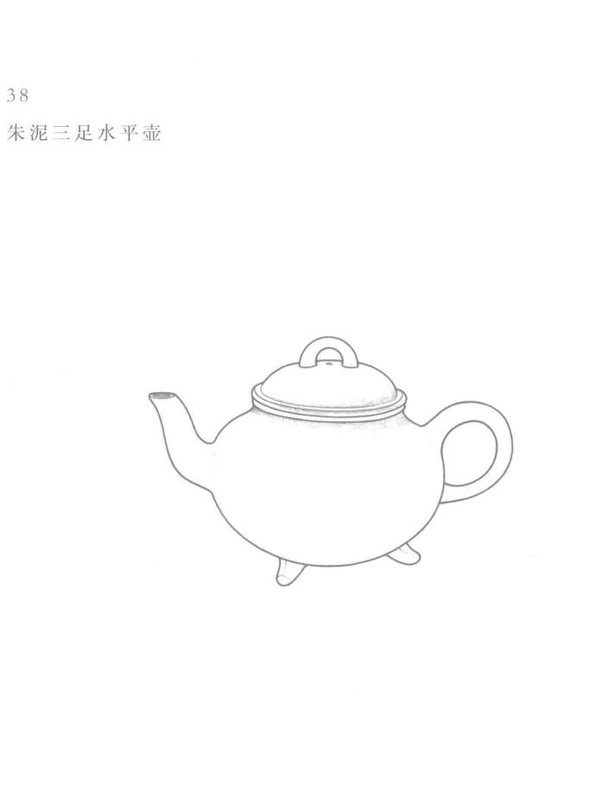
The Zhu Ni Tripod Water Level Pot (朱泥三足水平壶): A Masterpiece of 1950s Yixing Craftsmanship
When collectors and tea enthusiasts speak of iconic Yixing teapot designs, the Water Level pot (水平壶) consistently ranks among the most celebrated forms. But when this classic silhouette is rendered in precious zhu ni clay, elevated on three graceful feet, and bears the seal of master potter Gu Jingzhou, it transcends mere functionality to become a work of art that captures a pivotal moment in Chinese ceramic history.
Understanding the Water Level Design
The Chinese name 水平壶 (shuǐpíng hú) translates literally to “water level pot,” a name that speaks to one of this design’s most distinctive characteristics: the spout and handle are positioned at precisely the same height, creating a visual and functional balance that defines the form. This isn’t merely an aesthetic choice—it’s a deliberate engineering decision that affects how the pot pours and how tea flows from vessel to cup.
The Water Level pot represents a philosophy of equilibrium in teaware design. When filled to the proper level, the water inside sits at the same plane as the spout opening, allowing for a smooth, controlled pour without the turbulence that can occur when liquid must travel upward or downward through the spout channel. This creates what experienced tea practitioners describe as a “living water” pour—fluid, responsive, and remarkably precise.
The Tripod Innovation: Form Meets Function
What distinguishes this particular example from standard Water Level pots is the addition of three feet (三足, sān zú). This tripod base transforms the pot’s relationship with the tea table in several meaningful ways.
First, the elevation provides crucial air circulation beneath the pot. When brewing tea, especially with the high-temperature water required for oolong or aged pu-erh, the pot’s body retains significant heat. The tripod design allows air to flow underneath, helping to regulate temperature and prevent the base from becoming uncomfortably hot when placed on wooden tea tables or trays.
Second, the three-foot design creates visual lightness. Despite being crafted from dense zhu ni clay, the pot appears to float above the surface, lending an elegance that purely functional considerations alone could never achieve. The feet also provide stability—three points of contact create a naturally stable base that won’t wobble on uneven surfaces, a practical consideration for tea ceremonies conducted outdoors or on traditional carved tea tables.
The tripod form has deep roots in Chinese bronze vessel traditions, echoing the ancient ding (鼎) vessels used in ritual ceremonies. By incorporating this element into a tea pot, the maker connects the everyday practice of tea drinking with China’s ceremonial past, elevating the simple act of brewing tea into something more contemplative and culturally resonant.
Zhu Ni Clay: The Soul of the Pot
The choice of zhu ni (朱泥) clay for this Water Level pot is significant. Zhu ni, often called “vermillion clay” or “red clay” in English, represents one of the most prized materials in Yixing pottery. This clay fires to a distinctive reddish-orange hue that can range from bright cinnabar to deeper terracotta, depending on firing temperature and the specific clay vein from which it was extracted.
Zhu ni clay has unique physical properties that make it particularly suited for certain types of tea. The clay body is extremely dense after firing, with very low porosity compared to other Yixing clays like zi sha (purple clay) or duan ni (yellow clay). This density means zhu ni pots have excellent heat retention—they warm quickly and maintain temperature throughout the brewing session.
The clay’s tight structure also means it develops a distinctive patina more slowly than more porous clays, but when it does, the transformation is remarkable. With regular use and proper care, zhu ni develops a lustrous sheen that seems to glow from within, as if the pot itself has absorbed the essence of countless tea sessions.
However, zhu ni’s density comes with challenges. The clay has a high shrinkage rate during firing—sometimes up to 30%—making it technically demanding to work with. Pots can crack or warp if not fired with extreme precision. This difficulty is part of what makes well-executed zhu ni pieces so valuable: they represent not just artistic vision but technical mastery.
Gu Jingzhou: The Master’s Touch
The base seal reading “Gu Jingzhou” (顾景舟) immediately elevates this pot’s significance. Gu Jingzhou (1915-1996) is widely regarded as one of the greatest Yixing potters of the 20th century, a master whose influence on modern Yixing pottery cannot be overstated.
Born into a family of potters, Gu began his apprenticeship at age 18 and spent his entire life refining his craft. By the 1950s—the period when this particular pot was created—Gu had already established himself as a leading figure in Yixing pottery, though his most celebrated period would come later.
The 1950s were a transformative time for Yixing pottery. Following the establishment of the People’s Republic of China in 1949, traditional crafts were being reorganized and revitalized. The Yixing Zisha Factory was established in 1955, bringing together master potters who had previously worked independently. This period saw both a preservation of traditional forms and experimentation with new approaches.
A pot bearing Gu Jingzhou’s seal from this era represents work from a master in his prime, before his later fame made his pieces almost impossibly rare and valuable. The 1950s pieces show Gu’s deep understanding of classical forms—like the Water Level pot—while demonstrating the technical precision that would define his career.
Gu was known for his exacting standards. He would often destroy pieces that didn’t meet his criteria, even if they appeared flawless to others. A surviving pot with his seal represents not just skill but approval—a piece that met the master’s own rigorous standards.
Design Details and Craftsmanship
Examining the specific characteristics of this tripod Water Level pot reveals the thoughtfulness embedded in every element. The body likely follows the traditional Water Level proportions: a rounded, slightly flattened form that sits comfortably in the hand. The curve of the body would be subtle but deliberate, creating visual harmony with the straight lines of the spout and handle.
The spout on a Water Level pot is typically straight or gently curved, positioned to align precisely with the handle’s attachment point. This alignment isn’t approximate—it must be exact for the pot to achieve its characteristic balanced pour. The spout would be relatively short, as the water level design doesn’t require length to achieve proper flow.
The handle would likely be a simple loop or strap handle, positioned to provide comfortable grip while maintaining the crucial height alignment with the spout. In Gu Jingzhou’s work, handles are never merely functional—they’re carefully proportioned to complement the body’s curves and create visual rhythm.
The three feet would be carefully shaped and positioned at equal intervals around the base, each one substantial enough to provide stability while remaining elegant. The feet might be simple cylindrical forms or more elaborate shapes—perhaps slightly tapered or with subtle decorative elements at their tops where they meet the pot body.
The lid would sit flush with the pot’s rim, creating a clean line that emphasizes the horizontal emphasis of the Water Level design. A small knob or button finial would provide grip for lifting, sized proportionally to the pot’s overall dimensions.
Tea Pairing: Finding the Perfect Match
Zhu ni Water Level pots excel with certain types of tea, and understanding these pairings can transform your tea experience. The dense, heat-retentive nature of zhu ni clay makes these pots particularly well-suited for teas that benefit from sustained high temperatures and multiple short infusions.
Taiwanese High Mountain Oolongs are perhaps the ideal match for a zhu ni Water Level pot. These lightly oxidized, tightly rolled oolongs need consistent heat to fully unfurl and release their complex aromatics. The pot’s heat retention ensures that each infusion maintains the temperature needed to coax out the tea’s floral and creamy notes. The relatively small size typical of Water Level pots (usually 100-200ml) aligns perfectly with the gongfu brewing style these oolongs demand.
Aged Tieguanyin also pairs beautifully with zhu ni. The roasted, mature character of aged Tieguanyin benefits from the pot’s ability to maintain heat while the dense clay doesn’t over-emphasize the tea’s roasted notes the way more porous clays might. The result is a balanced cup that showcases both the tea’s depth and its remaining floral complexity.
Phoenix Dancong oolongs (凤凰单丛) are another excellent choice. These highly aromatic oolongs from Guangdong province have intense fragrance profiles—from honey orchid to almond to ginger flower. The zhu ni pot’s tight structure helps preserve these volatile aromatics rather than absorbing them, allowing each brewing session to fully express the tea’s character.
Red teas (black teas) can also work well, particularly more delicate varieties like Yunnan gold needle or Fujian Jin Jun Mei. The pot’s heat retention brings out sweetness and body without over-extracting tannins, creating a smooth, rounded cup.
What to avoid? Heavily roasted oolongs or robust shou pu-erh might overwhelm the pot’s refined character. Green teas generally require lower temperatures than zhu ni pots naturally maintain. Raw pu-erh can work, but younger, more astringent examples might benefit from more porous clay that can soften their intensity.
Brewing Technique: Maximizing the Design
Using a Water Level pot effectively requires understanding its unique characteristics and adjusting your technique accordingly.
Preheating is crucial. Because zhu ni is so dense, it takes longer to warm than more porous clays. Before your first infusion, fill the pot with hot water and let it sit for 30-60 seconds. Pour this water over the exterior as well, warming the entire vessel. This ensures your first infusion won’t lose heat to a cold pot.
Water temperature matters more. The pot’s heat retention means you can use slightly lower water temperatures than you might with other vessels, as the pot will maintain that heat throughout the infusion. For high mountain oolongs, try starting at 90-95°C rather than full boiling.
Pour with confidence. The Water Level design’s balanced spout means the pot wants to pour smoothly and completely. Don’t be tentative—a steady, deliberate pour will give you better control than a hesitant one. The pot should empty cleanly without dribbling.
Watch your timing. Because the pot retains heat so well, infusion times may need to be slightly shorter than with other vessels. Start conservative—perhaps 30-40 seconds for your first infusion—and adjust based on the results.
Clean gently but thoroughly. After your session, rinse the pot with hot water and let it air dry completely with the lid off. Never use soap or detergents. The dense zhu ni clay won’t absorb flavors as readily as more porous clays, but you still want to maintain the pot’s purity.
Dedicate your pot. Traditional practice suggests using each Yixing pot for only one type of tea—or at least one category. With a zhu ni Water Level pot, you might dedicate it to Taiwanese oolongs or to Phoenix Dancong, allowing the pot to develop a patina specific to that tea’s character.
The Collector’s Perspective
A 1950s zhu ni tripod Water Level pot bearing Gu Jingzhou’s seal represents a significant piece in any collection. This period predates Gu’s later international fame, meaning these pieces were created purely for function and artistic expression rather than for a collector’s market.
The 1950s dating places this pot in an interesting historical moment. Post-1949 China was rebuilding its cultural institutions, and traditional crafts like Yixing pottery were being preserved and promoted. Pots from this era often show exceptional craftsmanship because they were made by masters working within a system that valued quality over quantity.
For collectors, provenance and condition are paramount. A pot of this significance should be examined carefully for any repairs or damage. Hairline cracks, chips to the spout or rim, or replaced lids all affect value. However, appropriate wear—a developed patina, slight staining inside from use—can actually enhance a pot’s appeal, as it demonstrates the piece was used and appreciated rather than merely stored.
Authentication is crucial when dealing with pieces attributed to famous makers like Gu Jingzhou. Seal marks can be forged, and many later pots bear spurious attributions to famous potters. Genuine pieces should show consistency in clay quality, craftsmanship details, and seal characteristics with other authenticated works from the same period.
Living with a Masterpiece
Owning a pot of this caliber brings both privilege and responsibility. This isn’t a piece to be locked away in a cabinet—Yixing pots are meant to be used, to develop character through interaction with tea and water and human hands.
Yet using such a pot requires mindfulness. Each brewing session becomes more intentional when you’re working with a piece of history. You become aware of the lineage—the master potter who shaped this clay decades ago, the countless tea drinkers who might have used similar pots, the tradition of Chinese tea culture that stretches back centuries.
The tripod Water Level pot embodies a particular philosophy of tea: that the vessel matters, that form and function can achieve perfect unity, that the simple act of brewing tea can be elevated into something approaching art. When you pour from a pot like this, you’re not just making tea—you’re participating in a cultural practice that values beauty, craftsmanship, and the mindful appreciation of simple pleasures.
Conclusion: A Testament to Timeless Design
The zhu ni tripod Water Level pot bearing Gu Jingzhou’s seal from the 1950s represents more than the sum of its parts. It’s a convergence of ideal material (precious zhu ni clay), masterful craftsmanship (Gu Jingzhou’s skilled hands), timeless design (the balanced Water Level form), and thoughtful innovation (the elegant tripod base).
This pot reminds us that the best designs are those that solve problems elegantly while creating beauty. The Water Level form addresses the practical challenge of controlled pouring. The tripod base provides stability and air circulation. The zhu ni clay offers ideal thermal properties for certain teas. Yet none of these functional considerations diminish the pot’s aesthetic appeal—instead, they enhance it, creating an object where every element serves both practical and artistic purposes.
For tea enthusiasts, such a pot offers the opportunity to experience tea at its finest—brewed in a vessel specifically designed to enhance the characteristics of high-quality oolongs and red teas. For collectors, it represents a significant piece of 20th-century Chinese ceramic art. For anyone who appreciates craftsmanship, it stands as a testament to what human hands and minds can achieve when skill, knowledge, and artistic vision align.
In our modern world of mass production and disposable goods, a pot like this—carefully crafted by a master’s hands seventy years ago, still functional and beautiful today, likely to remain so for centuries to come—offers a different model of value. It suggests that some things are worth making well, worth preserving, worth using with care and appreciation. In this sense, the pot becomes more than a tea vessel—it becomes a teacher, reminding us with every use that beauty, function, and mindfulness can coexist in even the simplest daily rituals.
