扁笠壶
Yixing Pottery and Gu Jingzhou's Collaborative Works From the 1950s onward, Gu Jingzhou formed close friendships with several professors from art a
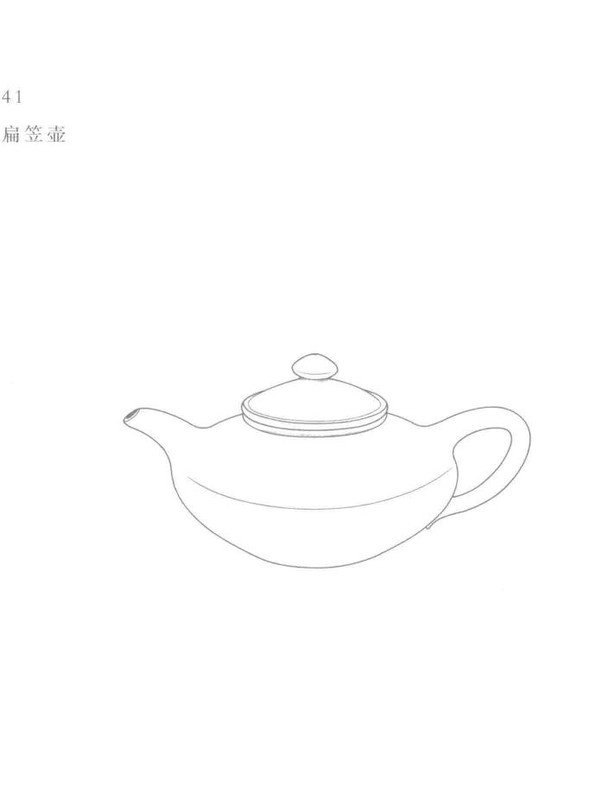
The Bian Deng Hu (扁笠壶): Where Modern Design Meets Traditional Craft
In the late 1950s, a remarkable collaboration between master potter Gu Jingzhou and Professor Yu Yaozhong of the Central Academy of Arts and Crafts produced one of the most elegant expressions of modernist principles in Yixing teapot design: the Bian Deng Hu, or Flat Lamp Teapot. This design represents a pivotal moment when traditional Chinese ceramic artistry embraced contemporary aesthetic theory, creating a form that remains both timeless and distinctly of its era.
A Design Born from Collaboration
The Bian Deng Hu emerged during a period of intense creative exchange in Chinese ceramic arts. Throughout the 1950s, Gu Jingzhou—already recognized as one of the greatest Yixing masters—cultivated close relationships with professors from various art academies. These weren’t casual acquaintances but deep friendships built on mutual respect and shared curiosity about the intersection of traditional craft and modern design principles.
Together, these artists and academics explored how the fundamental elements of three-dimensional composition—points, lines, and planes—could be transplanted into the ancient art of teapot making. They sought to discover aesthetic theories and practical principles through meticulous attention to detail in their collaborative works. The Bian Deng Hu stands as one of the most successful fruits of this exploration.
The specific example documented from the late 1950s bears Gu Jingzhou’s seals on both the lid (景舟, Jingzhou) and base (顾景舟, Gu Jingzhou), authenticating it as a genuine piece from this master’s hand during this innovative period. The design was significant enough that photographs of the work were published in the third issue of Decoration magazine in 1960, bringing this new aesthetic approach to a wider audience.
Understanding the Form: Two Bamboo Hats Meeting
The Chinese name “Bian Deng Hu” translates roughly as “Flat Lamp Teapot,” but this simple translation barely captures the visual poetry of the design. The body of the pot evokes two inverted bamboo hats (笠, li) placed rim to rim, creating a distinctive flattened spherical form. This isn’t merely a decorative choice—the shape creates remarkable structural tension at the waist section, where the two “hat rims” meet.
This central band possesses what the original documentation describes as “remarkable tension”—a quality that gives the pot its dynamic character despite its low, stable profile. The eye is drawn to this equatorial line, which serves as the visual anchor for the entire composition.
The lid design demonstrates sophisticated understanding of visual flow. Its rim line extends outward while simultaneously drawing inward, creating a subtle compound curve that slopes toward the knob. This knob rises in what’s described as a “lamp-like form”—hence the “deng” (lamp) in the pot’s name. The shoulder of the pot, the lid, and the knob all share the same angle of inclination, creating what observers describe as “a sense of natural ease” when viewing the piece from any angle.
The spout curves gracefully outward, while the handle forms a triangular shape that echoes and balances the spout’s gesture. Both elements extend naturally from the body, neither dominating nor receding, but existing in perfect equilibrium with the whole.
Modern Aesthetics in Clay
What makes the Bian Deng Hu particularly significant in the history of Yixing pottery is how completely it embodies modernist design principles while remaining unmistakably a functional teapot. The overall lines flow smoothly and elegantly—there are no abrupt transitions or jarring elements. Every curve leads naturally to the next.
The form achieves what’s described as “simple yet dignified, stable yet restrained”—qualities that align perfectly with mid-century modern design philosophy. There’s no excess decoration, no unnecessary embellishment. The beauty emerges entirely from the purity of the form itself, from the relationships between curves and planes, from the balance of positive and negative space.
This represents a significant departure from some traditional Yixing styles that might feature elaborate surface decoration, naturalistic elements like bamboo or plum blossoms, or complex sculptural additions. The Bian Deng Hu strips away everything except essential form, yet the result feels rich rather than austere.
Professor Yu Yaozhong’s training in modern design principles clearly influenced the pot’s geometry. The exploration of “points, lines, and planes in aesthetics” that characterized Gu Jingzhou’s collaborations with academy professors finds full expression here. The pot can be analyzed as a series of geometric relationships—the circular rim, the elliptical profile, the triangular handle, the curved spout—all working together in mathematical harmony.
The Clay and Color Palette
While the specific clay body used for the late 1950s examples isn’t detailed in the available documentation, Gu Jingzhou was known for his masterful selection of Yixing clays to complement each design. For a form as refined as the Bian Deng Hu, he likely chose clays that would showcase the purity of the lines without distraction.
Traditional Yixing clays—zisha (purple sand), hongni (red clay), or duanni (yellow clay)—each would bring different qualities to this design. A fine-grained zisha would emphasize the smooth curves and create subtle color variations across the surface as the clay oxidizes differently on various planes. Hongni would provide warmth and richness, while duanni would offer a more contemplative, scholarly aesthetic.
The flat, broad surfaces of the Bian Deng Hu’s body would showcase the natural texture and color of the clay beautifully, without the interruption of decorative elements. As the pot seasons with use, tea oils would gradually darken these surfaces, creating a patina that enhances rather than obscures the form.
Tea Pairing: Matching Form to Function
The Bian Deng Hu’s design characteristics make it particularly well-suited for specific types of tea. The broad, flat body provides substantial surface area relative to volume, which affects heat retention and dissipation in ways that favor certain tea types.
Oolong Teas: The pot’s shape makes it excellent for rolled oolongs like Tieguanyin or Dong Ding. The wide body allows the tightly rolled leaves to unfurl completely, while the moderate height prevents excessive heat retention that might scorch delicate oolong leaves. The pot’s stable, low center of gravity also makes it practical for the multiple short infusions that oolong preparation requires.
Aged White Teas: The gentle curves and moderate volume work beautifully with aged white teas like aged Bai Mudan or Shou Mei. These teas benefit from the even heat distribution that the pot’s broad form provides, allowing their complex, mellow flavors to develop fully without harsh notes.
Lighter Pu-erh: While many Yixing pots are associated with robust shou (ripe) pu-erh, the Bian Deng Hu’s refined character makes it better suited to younger sheng (raw) pu-erh or well-aged examples that have mellowed. The pot won’t overpower subtle flavors, and its form allows for the controlled brewing these teas require.
Red Teas (Black Teas): Chinese red teas like Dian Hong or Qi Men would also pair well with this pot. The broad body allows the leaves to expand fully, while the smooth pour from the curved spout delivers the tea cleanly into cups.
The key is matching the pot’s refined, restrained character with teas that possess similar qualities—complexity without aggression, depth without heaviness, elegance without fragility.
Brewing Technique and Practical Considerations
Using a Bian Deng Hu requires understanding how its unique form affects the brewing process:
Preheating: The broad, flat body means more surface area to warm. Pour boiling water over the exterior as well as filling the interior, allowing the entire pot to come to temperature. This is particularly important with this design because the large surface area can lose heat quickly if not properly preheated.
Leaf Quantity: The wide body means leaves will spread out more than in a taller pot. You may need slightly more leaf than you’d use in a more vertical design to achieve the same strength. Start with your usual ratio and adjust based on results.
Pouring Technique: The curved spout and low profile mean you’ll pour from a lower angle than with taller pots. The spout’s design should provide a clean, controlled pour without dripping, but practice your angle to avoid splashing.
Heat Management: The flat form dissipates heat more quickly than a taller, more enclosed shape. For teas requiring sustained high temperature, you may want to use a tea cozy or pour slightly hotter water to compensate. For teas that benefit from cooling slightly between infusions, this characteristic becomes an advantage.
Cleaning and Maintenance: The smooth curves and lack of decorative elements make the Bian Deng Hu relatively easy to clean. The wide opening allows easy access to the interior. After each session, rinse thoroughly with hot water and allow to air dry completely with the lid off. The broad surfaces will dry more quickly than deeply enclosed forms.
Seasoning: Like all Yixing pots, the Bian Deng Hu will develop a patina over time. Dedicate it to one type of tea (or closely related types) to build up the most beneficial seasoning. The large surface area means the patina will develop visibly and relatively quickly, creating a beautiful record of the pot’s use.
The Legacy of Innovation
The Bian Deng Hu represents more than just an attractive teapot design—it embodies a moment when Chinese ceramic arts actively engaged with international modernist principles while maintaining deep roots in traditional craft. The collaboration between Gu Jingzhou and Yu Yaozhong demonstrated that innovation need not mean abandoning tradition, but rather can mean finding new expressions of timeless principles.
The publication of the design in Decoration magazine in 1960 helped spread these ideas beyond the immediate circle of makers and academics. It showed that Yixing pottery could evolve, could incorporate new aesthetic theories, and could speak to contemporary sensibilities while remaining functionally excellent and culturally grounded.
For today’s tea enthusiasts, the Bian Deng Hu offers a chance to experience this synthesis of old and new. Its clean lines appeal to modern aesthetic sensibilities, while its careful proportions and thoughtful design deliver the functional excellence that centuries of Yixing tradition have refined. Whether you’re drawn to its visual elegance or its practical brewing characteristics, this design rewards both contemplation and use.
The pot’s “simple yet dignified, stable yet restrained” character makes it suitable for both daily use and special occasions. It’s equally at home in a minimalist modern setting or a traditional tea space. This versatility—aesthetic and functional—is perhaps the ultimate achievement of the collaboration that created it.
Collecting and Appreciation
Original examples of the Bian Deng Hu from the late 1950s, bearing Gu Jingzhou’s authentic seals, are now highly prized by collectors. The master’s work from this period represents the peak of his creative powers and his most innovative phase. However, the design has been reproduced by later makers, allowing more tea enthusiasts to experience its qualities.
When evaluating any Bian Deng Hu, look for the characteristics that define the design: the precise curves of the body creating that sense of tension at the waist, the harmonious angles shared by shoulder, lid, and knob, and the balanced relationship between spout and handle. The quality of execution in these details separates excellent examples from mediocre ones.
The Bian Deng Hu stands as testament to what’s possible when master craftspeople and thoughtful designers collaborate with mutual respect and shared vision. It proves that tradition and innovation need not be opposing forces, but can combine to create something that honors the past while speaking clearly to the present. For anyone interested in the intersection of form and function, of art and utility, this elegant design offers endless rewards.
