一 50
Discover the 一 50, a classic Yixing pottery design with unique characteristics
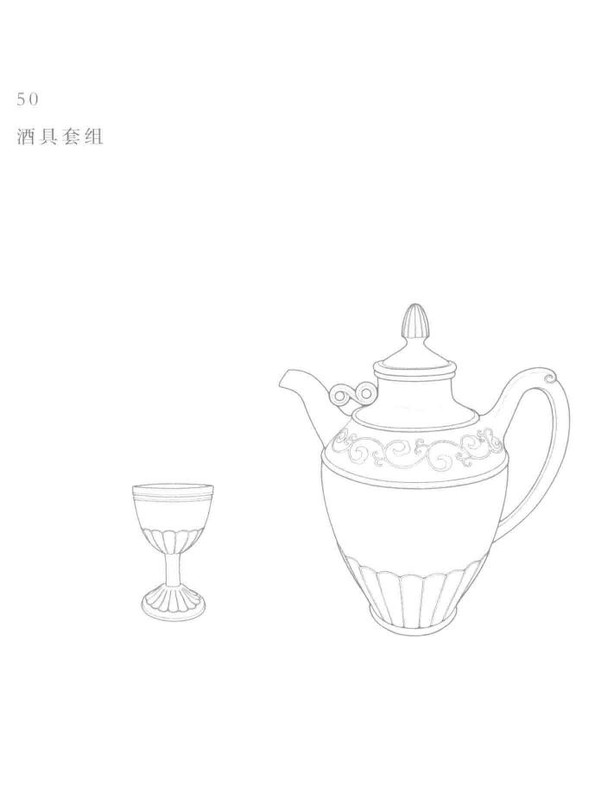
The Xifeng Wine Vessel Set: A Rare Glimpse into Gu Jingzhou’s Cultural Revolution Era
When most collectors think of Gu Jingzhou’s work, they envision his celebrated teapots—the elegant Shui Ping, the scholarly De Zhong, the architectural Stone Scoop. But tucked away in the early 1970s, during one of the most turbulent periods in Chinese history, the master created something entirely different: a wine vessel set that challenges our understanding of both his artistic range and the cultural constraints of the era.
The Xifeng (希丰) wine set, bearing Gu Jingzhou’s base seal and dated to the early 1970s, represents a fascinating departure from the teaware that built his reputation. This isn’t just another teapot in a different guise—it’s a complete rethinking of how Yixing clay could serve social ritual during a time when traditional culture was under siege.
A Master’s Unexpected Turn
Gu Jingzhou (1915-1996) is often called the greatest Yixing potter of the 20th century, and for good reason. His technical precision, design innovation, and ability to balance tradition with modernity earned him the title “Pot Art Master” in 1988. But the early 1970s were not kind years for traditional artisans in China. The Cultural Revolution (1966-1976) had branded much of classical culture as “feudal” and “bourgeois.” Tea culture, with its literati associations and contemplative rituals, was particularly suspect.
Yet here we find Gu Jingzhou creating a wine vessel set—a choice that speaks volumes about adaptation and survival. Wine, particularly in communal settings, carried different political connotations than the solitary, meditative act of gongfu tea brewing. A wine set could be framed as serving the people, facilitating collective celebration, aligning with revolutionary camaraderie. Whether this was strategic positioning or genuine artistic exploration, the Xifeng set reveals a master navigating impossible circumstances.
Decoding the Name: Xifeng (希丰)
The name “Xifeng” itself offers clues to the piece’s context. The character 希 (xī) means “hope” or “rare,” while 丰 (fēng) suggests “abundance” or “prosperity.” Together, they create a name that could be read as “Hoping for Abundance”—a sentiment that would have resonated deeply during the economic hardships of the early 1970s, when China was still reeling from the Great Leap Forward’s failures and the chaos of the Cultural Revolution.
This naming choice shows Gu’s characteristic subtlety. It’s optimistic enough to pass political scrutiny, yet carries an undertone of longing that anyone living through those years would have understood. The name doesn’t reference classical poetry or historical figures—the kind of allusions that could invite criticism—but instead speaks to universal human desires in uncertain times.
The Wine Vessel Set: Form and Function
Unlike a teapot designed for individual or small-group brewing, a wine vessel set serves a different social function entirely. While we don’t have detailed measurements from the source material, the designation as a “set” (套组, tàozǔ) tells us this was a coordinated collection—likely including a serving vessel, cups, and possibly a warming bowl or tray.
Gu Jingzhou’s approach to wine vessels would have drawn on centuries of Chinese ceramic tradition, but filtered through his modernist sensibilities. His work from this period typically featured clean lines, balanced proportions, and an emphasis on the clay’s natural beauty rather than excessive decoration. The early 1970s pieces often show a restraint born partly from aesthetic choice and partly from the political climate’s demand for simplicity over “decadent” ornamentation.
The base seal reading “Gu Jingzhou” (顾景舟) is significant. During the Cultural Revolution, many artisans were forced to work anonymously or under collective workshop names. That Gu’s personal seal appears on this piece suggests either that it was created for a specific commission that allowed individual attribution, or that it was made during a brief period of relative relaxation in the early 1970s when some traditional practices were cautiously being revived.
Clay, Color, and Craftsmanship
Gu Jingzhou was known for his discerning selection of clay, often personally visiting the mines to choose materials. For wine vessels, the clay choice would have been crucial but different from teaware considerations. While teapots benefit from the clay’s porosity and ability to season over time, wine vessels need to be less reactive—you don’t want the clay absorbing and altering the wine’s flavor with each use.
Likely, this set would have been crafted from a denser, less porous Yixing clay, possibly Zisha (purple clay) that had been processed to reduce its absorption qualities. The early 1970s saw some experimentation with clay preparation techniques as workshops sought to maintain production despite material shortages and political disruptions.
The color would have been natural—Gu rarely used artificial colorants, preferring to let the clay speak for itself. Depending on the specific clay body and firing temperature, this could range from a warm reddish-brown to a deeper purple-brown, with the subtle variations and iron speckling that make Yixing clay so visually compelling.
Historical Context: Creating Art in Constrained Times
To understand the Xifeng set, we must understand what it meant to be a traditional artisan in early 1970s China. The Cultural Revolution had shuttered many traditional workshops, sent intellectuals to labor camps, and destroyed countless cultural artifacts. The Yixing pottery industry, while it survived, was reorganized into collective factories where individual artistry was often subordinated to production quotas.
Gu Jingzhou’s status was complicated. His technical mastery was undeniable, and the government still needed skilled workers to maintain some level of ceramic production, including pieces for export that could earn foreign currency. But his association with traditional culture and his previous patrons among the educated elite made him politically vulnerable.
Creating a wine set rather than teaware during this period was likely both practical and protective. Wine culture, particularly when framed around communal celebration rather than refined appreciation, was less politically fraught than tea culture. A well-crafted wine set could be presented as serving the people’s celebrations—weddings, festivals, collective achievements—rather than catering to bourgeois contemplation.
Yet Gu couldn’t help but bring his full artistry to the work. Even in a wine vessel, his characteristic precision, his understanding of proportion, his ability to make clay feel both substantial and graceful—all of these would have been present. The Xifeng set represents what happens when a master’s skills meet constrained circumstances: adaptation without abandonment of excellence.
From Wine Vessel to Tea Vessel: An Unexpected Journey
Here’s where the story takes an interesting turn for contemporary tea enthusiasts. While the Xifeng was designed as a wine vessel set, many collectors and tea drinkers today use similar pieces for tea—particularly for certain styles of brewing that benefit from the unique properties these vessels offer.
The denser, less porous clay that would have been ideal for wine service actually works beautifully for certain teas. Delicate green teas and white teas, which can be overwhelmed by the seasoning in traditional Yixing teapots, often shine in vessels with less absorption. The clay still provides excellent heat retention and a pleasant tactile experience, but without the strong influence that a well-seasoned teapot imparts.
Additionally, the larger capacity typical of wine serving vessels makes them suitable for grandpa-style brewing or for serving tea to groups—a more casual, communal approach that echoes the social function the piece was originally designed for, just with a different beverage.
Tea Pairing Considerations
If you’re fortunate enough to use a piece like the Xifeng set for tea, consider these pairings:
White Teas: Silver Needle (Bai Hao Yin Zhen) or White Peony (Bai Mu Dan) work beautifully. The neutral clay won’t compete with these teas’ subtle sweetness and floral notes, while the vessel’s heat retention helps coax out their delicate flavors.
Green Teas: High-quality Dragon Well (Longjing) or Bi Luo Chun benefit from the even heat distribution. The less porous clay prevents over-extraction while still providing better temperature stability than porcelain.
Light Oolongs: Taiwanese high-mountain oolongs or lightly oxidized Tieguanyin find a good home here. The clay adds body without overwhelming the tea’s natural complexity.
Aged White or Yellow Teas: These often-overlooked categories can really shine in a vessel like this. The clay provides structure while allowing the tea’s aged character to express itself fully.
Brewing Guidance
Using a wine vessel for tea requires some adjustment from standard Yixing teapot technique:
Preheating is Essential: The denser clay takes longer to heat through. Pour boiling water through the vessel and let it sit for a full minute before brewing.
Adjust Your Ratios: Wine vessels typically have larger capacities than teapots. Start with a slightly lower leaf-to-water ratio than you’d use in a smaller pot—perhaps 1 gram of tea per 20-25ml of water rather than the typical 1:15 ratio.
Longer Infusions: The less porous clay means slower extraction. Add 10-20 seconds to your usual steeping times, especially for the first few infusions.
Temperature Matters: The excellent heat retention means your tea will stay hot longer. For green and white teas, consider using water at 80-85°C (176-185°F) rather than boiling to prevent bitterness.
Cleaning and Care: Unlike traditional teapots that you season and never wash with soap, wine vessels can be cleaned more thoroughly between uses. This is actually advantageous if you want to use the same vessel for different tea types.
The Collector’s Perspective
A piece like the Xifeng wine set occupies a unique position in the Yixing collecting world. It’s not one of Gu Jingzhou’s famous teapot designs that command astronomical prices at auction. It comes from a politically complicated period that many collectors overlook in favor of his pre-Cultural Revolution work or his celebrated pieces from the 1980s and 1990s.
Yet this very marginality makes it fascinating. It represents a moment of adaptation, a master’s response to impossible circumstances, a bridge between traditional craft and revolutionary politics. For collectors interested in the full arc of Gu’s career, or in understanding how traditional arts survived the Cultural Revolution, pieces like this are invaluable.
The early 1970s dating also places it in a relatively rare window. By the mid-1970s, some traditional practices were beginning to be cautiously revived, and by the late 1970s and 1980s, Gu would return to creating his celebrated teapot designs. But the early 1970s work captures a specific moment of uncertainty and adaptation.
Authenticity and Attribution
The base seal reading “Gu Jingzhou” is the primary attribution marker, but authentication of Cultural Revolution-era pieces requires careful expertise. The political climate meant that record-keeping was often poor, and some pieces were made collaboratively or under supervision that complicates attribution.
Genuine Gu Jingzhou pieces from this period should show his characteristic technical precision—clean lines, well-fitted components, balanced proportions—even if the designs themselves were simpler than his more celebrated work. The clay quality should be excellent; even during material shortages, Gu had access to good clay through his workshop connections.
Collectors should also look for consistency with other documented pieces from this period, both in terms of style and in the specific characteristics of the seal impression. Gu’s seals evolved over his career, and experts can often date pieces based on seal style alone.
Legacy and Reflection
The Xifeng wine vessel set reminds us that great artists don’t stop creating when circumstances become difficult—they adapt. Gu Jingzhou’s willingness to work in wine vessels during a period when his preferred medium of teapots was politically suspect shows both pragmatism and dedication to craft.
It also challenges our tendency to categorize too rigidly. Is this a wine vessel or could it be a tea vessel? Is it a compromise forced by politics or a genuine exploration of new forms? Is it a minor work from a master’s career or a significant document of artistic survival? Perhaps it’s all of these things simultaneously.
For contemporary tea enthusiasts, pieces like the Xifeng set offer a different entry point into Yixing pottery. Not everyone can afford or access Gu Jingzhou’s famous teapot designs, but understanding his full range of work—including these less celebrated pieces—deepens our appreciation of both the artist and the tradition.
The next time you pour tea (or wine) from a Yixing vessel, consider the hands that shaped it, the historical moment that produced it, and the long tradition of craft that survived despite everything. In the case of the Xifeng set, you’re not just using a functional object—you’re touching a small piece of history, a moment when art found a way forward through adaptation and persistence.
That, perhaps, is the deepest lesson of pieces like this: excellence endures, even when it must take unexpected forms.
