下未束滤
Discover the 下未束滤, a classic Yixing pottery design with unique characteristics
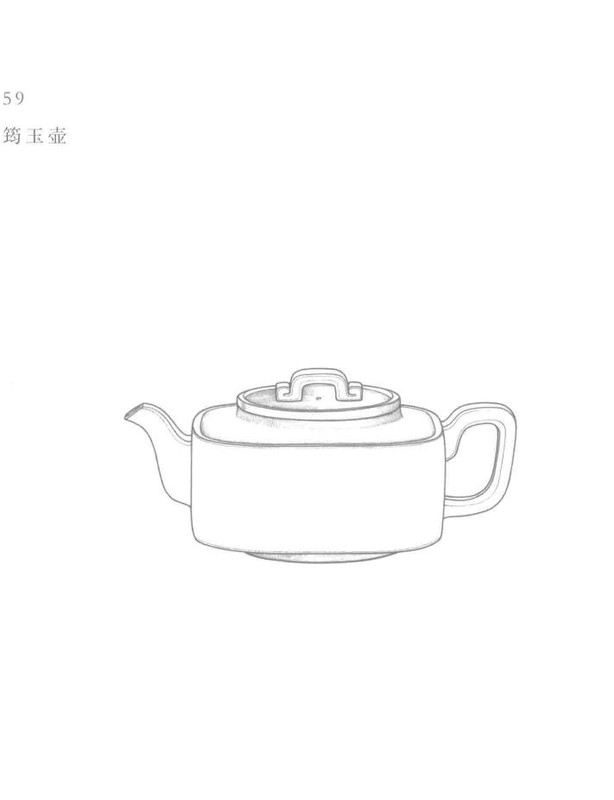
The Xia Wei Shu Lu (下未束滤): A Masterwork from Gu Jingzhou’s 1970s Period
In the world of Yixing pottery, certain pieces transcend their functional purpose to become touchstones of an era. The Xia Wei Shu Lu, created by the legendary master Gu Jingzhou during the 1970s, represents one such piece—a teapot that captures both the technical brilliance and artistic restraint that defined this pivotal decade in Chinese ceramic history.
Understanding the Name: Xia Wei Shu Lu
The Chinese name 下未束滤 (Xia Wei Shu Lu) presents an intriguing linguistic puzzle that speaks to the poetic nature of Yixing nomenclature. While direct translation proves elusive without additional context, the characters suggest concepts of filtering, refinement, and perhaps an unfinished or ongoing process. This ambiguity itself may be intentional—many Yixing masters of the period favored names that invited contemplation, turning the simple act of naming a teapot into a philosophical exercise.
What we know with certainty is that this design bears the unmistakable marks of authenticity: the lid seal reading “Jing Zhou” (景舟) and the base seal bearing the full name “Gu Jingzhou” (顾景舟). These dual seals are significant, as they represent Gu’s practice during the 1970s of marking his works with both his given name and his studio name, a convention that helps collectors and scholars authenticate pieces from this period.
The Master Behind the Clay: Gu Jingzhou in the 1970s
To understand the Xia Wei Shu Lu, we must first understand its creator. Gu Jingzhou (1915-1996) is widely regarded as the most influential Yixing potter of the 20th century, often called the “father of modern Yixing pottery.” By the 1970s, Gu had already established himself as a master, but this decade represented a particularly interesting phase in his career.
The 1970s in China were years of transition. The Cultural Revolution was winding down, and there was a gradual reopening to traditional arts and crafts. For Gu Jingzhou, this meant a return to classical forms after years of producing more utilitarian wares. The Xia Wei Shu Lu emerges from this context—a piece that looks backward to traditional design principles while incorporating the refined techniques Gu had perfected over decades of practice.
During this period, Gu was working at the Yixing Purple Sand Factory, where he had access to the finest clays and could dedicate himself fully to his craft. His 1970s works are characterized by a particular elegance and restraint, a quiet confidence that comes from a master who no longer needs to prove anything. The Xia Wei Shu Lu embodies these qualities perfectly.
The Design Philosophy: Classic Form Meets Individual Expression
The Xia Wei Shu Lu is classified as a “classic” design type, which in Yixing terminology refers to pots that draw inspiration from traditional forms while allowing for individual artistic interpretation. This is distinct from “reproduction” pieces that aim to exactly replicate historical designs, or “innovative” pieces that break entirely new ground.
Classic designs like the Xia Wei Shu Lu walk a delicate line. They must honor the proportions, balance, and aesthetic principles established by centuries of Yixing tradition, while still bearing the unmistakable stamp of their creator’s hand. It’s in this space—between reverence and innovation—that Gu Jingzhou excelled.
The fact that this piece carries Gu’s personal seals rather than factory marks indicates it was considered a significant work, worthy of his individual authentication. During the 1970s, not all of Gu’s production received this treatment; many pieces were marked only with factory stamps. The presence of both the lid and base seals suggests this was a pot Gu felt particularly satisfied with, one that met his exacting standards.
Clay, Color, and Craftsmanship
While the source material doesn’t specify the exact clay body used for this particular Xia Wei Shu Lu, we can make educated inferences based on Gu Jingzhou’s practices during the 1970s. This was a period when he had access to premium zisha (purple sand) clay, and he was known for his discerning selection of clay bodies that would enhance each design’s character.
Gu often chose clays that would develop a rich patina with use, understanding that a Yixing teapot is not a static object but one that evolves through its relationship with tea and user. The 1970s pieces tend toward medium-toned clays—neither the darkest zhuni nor the palest duanni, but rather balanced tones that showcase the clay’s natural texture without overwhelming the form.
The craftsmanship in Gu’s 1970s work is characterized by precision without rigidity. His throwing and shaping techniques had reached a level where technical virtuosity became invisible—the pot simply appears as it should be, with no evidence of struggle or compromise. Seams are imperceptible, curves flow naturally, and every element relates harmoniously to the whole.
The Seal as Signature: Reading Gu Jingzhou’s Marks
The dual sealing system on the Xia Wei Shu Lu deserves closer examination. The lid seal “Jing Zhou” (景舟) uses Gu’s given name, while the base seal provides his full name “Gu Jingzhou” (顾景舟). This wasn’t mere redundancy but a deliberate authentication system.
The lid seal, being smaller and more intimate, represents the artist’s personal touch—it’s the signature you might use among friends. The base seal, more formal and complete, serves as the official authentication, the equivalent of a notarized signature. Together, they create a system that’s difficult to forge and easy to verify.
The style of these seals also tells us something about the period. Gu’s 1970s seals tend to be cleanly carved with confident strokes, reflecting both traditional seal-carving aesthetics and a certain modernist clarity. They’re legible without being ostentatious, present without dominating the pot’s surface.
Brewing Character: How Form Influences Function
Every Yixing teapot is designed with specific brewing characteristics in mind, and the Xia Wei Shu Lu would be no exception. While we don’t have detailed measurements from the source material, we can discuss the general principles that would govern this pot’s performance based on its classification as a classic design from Gu’s 1970s period.
Classic forms typically prioritize balance in heat retention and tea extraction. The pot would likely feature a spout designed for smooth, controlled pouring—Gu was famous for his spouts that neither dripped nor gushed but delivered tea in a steady, elegant stream. The lid would fit precisely, creating a seal that allows for proper pressure when pouring while preventing heat loss during steeping.
The interior shape matters enormously for tea brewing. Gu understood that different teas need different environments: oolongs benefit from pots that allow leaves to unfurl fully, while aged teas need shapes that promote even heat distribution. A classic design like the Xia Wei Shu Lu would likely offer versatility, performing well with a range of teas rather than being hyper-specialized.
Tea Pairing: Finding the Perfect Match
Determining the ideal tea for the Xia Wei Shu Lu requires understanding both the pot’s physical characteristics and its historical context. Pots from Gu Jingzhou’s 1970s period were often designed with traditional Chinese teas in mind, particularly oolongs and aged teas that were experiencing a revival of interest during this period.
Aged Oolong: The balanced heat retention of a classic Gu Jingzhou design makes it excellent for aged oolongs, which need consistent temperature to release their complex, mature flavors without becoming bitter. The pot’s clay would gradually season with these teas, developing a patina that enhances subsequent brewings.
Wuyi Rock Tea: The robust character of Wuyi oolongs pairs beautifully with the substantial presence of a classic Yixing form. These teas can handle—and indeed benefit from—the mineral qualities that zisha clay imparts, creating a synergy between vessel and leaf.
Aged Pu-erh: While some Yixing purists reserve certain pots exclusively for pu-erh, a well-made classic design like the Xia Wei Shu Lu can handle aged pu-erh admirably. The key is consistency—once you begin using the pot for pu-erh, it’s best to continue with that category to build up the proper seasoning.
Phoenix Dancong: These aromatic oolongs from Guangdong province would also suit this pot well. The classic form wouldn’t overpower the tea’s delicate fragrance profile, while the clay would add subtle depth to the brew.
Practical Brewing Guidance
Using a Gu Jingzhou piece like the Xia Wei Shu Lu is both a privilege and a responsibility. Here’s how to approach brewing with this pot:
Initial Preparation: Before first use, rinse the pot thoroughly with hot water, then steep it with tea leaves (of the type you plan to use regularly) several times, discarding the tea. This begins the seasoning process and removes any residual clay dust.
Water Temperature: For most teas suited to this pot, use water just off the boil (90-95°C). The pot’s heat retention means you don’t need to compensate with higher temperatures.
Leaf Quantity: Classic forms typically work well with a leaf-to-water ratio of about 1:15 to 1:20, though this varies by tea type. Start conservative and adjust based on results.
Steeping Times: Begin with short steeps (20-30 seconds) and gradually increase. The pot’s design should allow for multiple infusions, with each revealing different aspects of the tea.
Pouring Technique: Pour decisively but not hastily. A well-designed spout like those Gu created rewards confident handling—hesitant pouring can actually cause more dripping than smooth, steady pouring.
Post-Brewing Care: After use, rinse the pot with hot water only (no soap), empty it completely, and let it air dry with the lid off. Never store a Yixing pot with the lid on, as this can trap moisture and create musty odors.
The Collector’s Perspective: Value and Authenticity
A genuine Gu Jingzhou piece from the 1970s represents a significant acquisition for any serious collector. The presence of both lid and base seals, as documented in the source material, is crucial for authentication. However, collectors should also consider:
Provenance: Documentation of the pot’s history adds immeasurably to its value and authenticity. Pieces that can be traced back to the original factory or early collectors are particularly prized.
Condition: Even minor damage can significantly affect value. Check for cracks, chips, or repairs, particularly around the spout and handle where stress points occur.
Patina: A pot from the 1970s that’s been used will show signs of age and tea staining. This patina, if genuine, actually adds to the pot’s character and value, as it demonstrates the piece has fulfilled its purpose.
Market Context: Gu Jingzhou’s reputation has only grown since his death in 1996, and his 1970s works occupy a sweet spot—mature enough to show his full mastery, but not so early as to be impossibly rare.
Living with a Masterwork
Owning a piece like the Xia Wei Shu Lu means entering into a relationship that extends beyond mere possession. This pot was created by hands that understood clay at a molecular level, shaped by a mind that had internalized centuries of tradition while maintaining individual vision.
Each time you brew tea in this pot, you’re participating in a continuum that stretches back through Gu Jingzhou’s life, through the generations of Yixing potters before him, to the very origins of tea culture in China. The pot will change with use, developing character and depth, becoming more itself with each brewing.
This is the magic of Yixing pottery—it’s never finished. The Xia Wei Shu Lu that Gu Jingzhou created in the 1970s is not the same pot it will be after years of careful use. It’s a living object, one that rewards attention and care with increasingly refined performance.
Conclusion: A Bridge Between Eras
The Xia Wei Shu Lu stands as a testament to a particular moment in Chinese ceramic history—a time when traditional arts were re-emerging after years of suppression, when masters like Gu Jingzhou could once again dedicate themselves fully to their craft. It bridges the classical tradition of Yixing pottery with the modern era, carrying forward ancient wisdom while speaking to contemporary sensibilities.
For the tea enthusiast, this pot offers not just excellent brewing performance but a tangible connection to one of the great masters of the craft. For the collector, it represents a significant piece of 20th-century Chinese art. And for anyone who appreciates the intersection of form and function, beauty and utility, the Xia Wei Shu Lu demonstrates how an everyday object can transcend its purpose to become something approaching art.
In the end, perhaps that’s what the name suggests—something not yet complete, still filtering and refining, still in the process of becoming. Like all great Yixing pottery, the Xia Wei Shu Lu is not a finished statement but an ongoing conversation between maker, user, and tea.
