上新桥壶
Shangxin Bridge Teapot Spring waters stretch beyond the sky, listening to rain from a moored boat with sleepy eyes. In the writings of Wei Zhuan
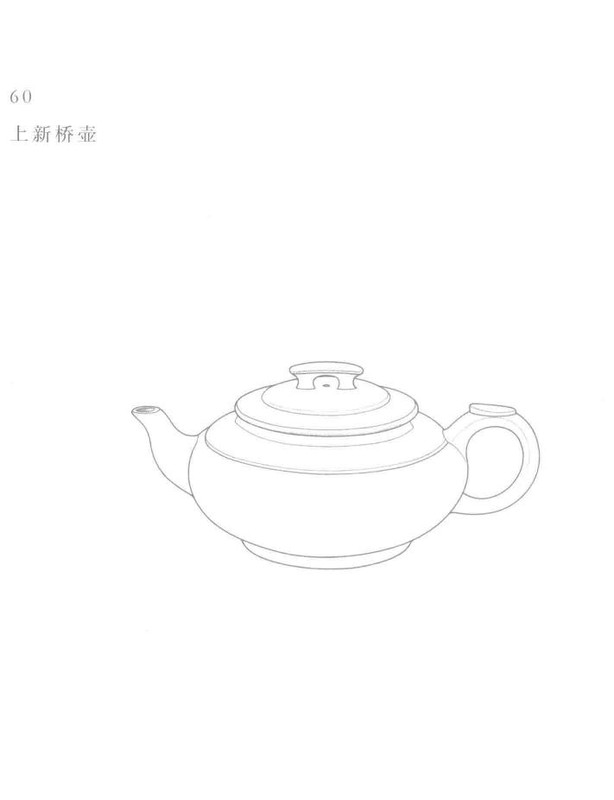
The Shangxin Bridge Teapot (上新桥壶): Where Poetry Meets Clay in Jiangnan’s Water Towns
“Spring waters stretch beyond the sky, listening to rain from a moored boat with sleepy eyes.” When Wei Zhuang, the poet of the Former Shu during the Five Dynasties period, penned these words, he captured the essence of Jiangnan’s water towns—those timeless landscapes of arched bridges, wooden boats, and rain-soaked cobblestones. Centuries later, master artisan Gu Jingzhou would translate this same poetic vision into clay, creating the Shangxin Bridge Teapot, a design that transforms the tranquil beauty of southern China’s canal towns into a functional work of art.
The Shangxin Bridge Teapot stands apart in the world of Yixing pottery not merely as a vessel for brewing tea, but as a three-dimensional landscape painting—one you can hold in your hands, pour from, and contemplate with each steeping. While many Yixing designs draw inspiration from natural forms like fruits, flowers, or geometric patterns, this teapot captures something more ephemeral: the quiet mood of a water town, the feeling of standing on an ancient bridge watching ripples spread across still water.
Birth in Turbulent Times: The Cultural Revolution Context
The story of the Shangxin Bridge Teapot cannot be separated from the era of its creation. During the 1960s and 70s, China’s Cultural Revolution swept through the country like a violent storm, and the Yixing purple clay industry found itself severely impacted, nearly paralyzed. Traditional crafts were viewed with suspicion, master artisans faced persecution, and the delicate art of teapot making—with its connections to literati culture and bourgeois tea ceremonies—became dangerous work.
Yet even in these turbulent years, Gu Jingzhou never abandoned his artistic creation. The Shangxin Bridge Teapot emerged during this period as a “prototype” piece created for factory production. This context adds poignant layers to the design: while chaos reigned outside, Gu Jingzhou retreated into the timeless serenity of Jiangnan’s water towns, creating a teapot that speaks of peace, continuity, and the enduring beauty of Chinese cultural traditions.
The fact that this design was intended for factory production is significant. Gu Jingzhou wasn’t creating a one-off masterpiece for a wealthy collector; he was designing a teapot that could be reproduced, bringing his artistic vision to everyday tea drinkers. This democratic impulse—making fine art accessible—reflects the complex negotiations artists made during this period, finding ways to continue their craft within the constraints of the time.
The Bridge as Focal Point: Understanding the Design
The genius of the Shangxin Bridge Teapot lies in how it uses a single architectural element—the bridge—to organize the entire composition and evoke a complete landscape. The bridge-shaped knob sits at the highest point in the center of the teapot lid, becoming the visual focal point of the whole piece. This isn’t merely decorative; it’s the key that unlocks the teapot’s meaning.
The lid employs a wide-rim style, a deliberate choice that serves both aesthetic and functional purposes. When you view the teapot from above, this wide rim creates inner and outer rings on both sides. Together with the shoulder line and the body’s contours, these concentric circles resemble rippling water waves beneath a bridge—circle upon circle, rippling outward from inside to outside with unrestrained freedom. It’s a remarkably economical visual metaphor: with just the interplay of curves and edges, Gu Jingzhou conjures the image of a stone dropped into still water, or perhaps a boat passing beneath a bridge, disturbing the mirror-like surface of a canal.
The body itself features a full, rounded shoulder line that yields gracefully downward. This generous curve contributes to the teapot’s substantial capacity—the Shangxin Bridge is designed for serious tea sessions, not delicate sips. The lustrous, smooth surface of the clay enhances the sense of water, while the robust, flowing spirit of the form gives the piece a distinctive character that’s immediately recognizable.
The Leaf Boat Handle: A Journey Toward the Bridge
Perhaps the most ingenious detail of the Shangxin Bridge Teapot is the handle design. The thumb rest is shaped like a small leaf boat, appearing to approach from afar and sail toward the bridge in the water. This transforms the act of holding the teapot into a narrative gesture—you’re not just gripping a handle, you’re guiding a tiny vessel on its journey through the water town.
This leaf boat serves practical purposes as well. The thumb rest facilitates single-handed holding, important for a teapot with relatively large capacity. The ergonomics are thoughtful: your thumb naturally settles into the boat shape, providing secure control even when the pot is full and heavy. Meanwhile, the bridge knob—wider at the top and narrower at the bottom—is similarly easy to grasp when removing the lid. These details reflect Gu Jingzhou’s deep understanding that a teapot must work as well as it looks.
The relationship between the bridge knob and the boat handle creates a dynamic tension in the design. The bridge is fixed, permanent, architectural—it represents stability and structure. The boat is mobile, temporary, organic—it represents journey and change. Together, they capture the dual nature of the water towns themselves: places of both permanence and passage, where ancient bridges stand witness to countless travelers moving through.
Clay, Color, and Surface: The Material Poetry
The Shangxin Bridge Teapot uses the plain surface texture characteristics of purple clay to present the tranquility and elegance of Jiangnan water towns. Unlike some Yixing designs that feature elaborate carving, applied decoration, or contrasting clay colors, this teapot relies on pure form and the inherent qualities of the clay itself.
The color is typically a lustrous, smooth tone—often a warm brown or reddish-brown that evokes the weathered stone of ancient bridges and the wooden boats that pass beneath them. The surface, when properly finished, has a subtle sheen that suggests water without literally depicting it. This restraint is crucial to the design’s success. A silent rhythm ripples in the heart of every observer, precisely because Gu Jingzhou doesn’t over-explain his metaphor. The teapot whispers rather than shouts.
The clay’s texture also plays a functional role in tea brewing. Yixing clay is prized for its porosity, which allows the pot to “breathe” and develop a seasoning over time. The smooth surface of the Shangxin Bridge design ensures even heat distribution, while the clay’s natural properties help maintain optimal brewing temperature and enhance the tea’s flavor through subtle mineral interactions.
Symbolism and Meaning: Crossing the Bridge
From a symbolic standpoint, the Shangxin Bridge Teapot operates on multiple levels. Most directly, it celebrates the distinctive landscape of Jiangnan—those water towns around Yixing itself, where Gu Jingzhou lived and worked. The design is a love letter to place, a recognition that the environment shapes the artist and deserves to be honored in return.
But the bridge carries deeper meanings in Chinese culture. Bridges are liminal spaces, thresholds between one state and another. They represent transition, connection, and the possibility of crossing from one realm to another. In the context of the Cultural Revolution, when this teapot was created, these symbolic resonances would have been particularly poignant. One can imagine: ascending the steps and crossing the bridge, what passes away are troubles and the past; what arrives is beauty and the future.
The act of brewing tea with this pot becomes a small ritual of crossing. As you lift the bridge-shaped knob, you’re symbolically opening a passage. As you pour, the tea flows like water beneath the bridge. Each tea session becomes a journey, a moment of transition from the mundane world into the contemplative space that tea creates.
Historical Variations and Dating
According to catalog records, examples of the Shangxin Bridge Teapot from the late 1970s bear specific seal marks, including “景舟” (Jingzhou) and “中国宜兴” (China Yixing). A documented piece from 1980 carries the seal “庚申苦复景舟制” on the base, along with other identifying marks on the lid. These inscriptions help authenticate pieces and trace the design’s production history.
The fact that we have documented examples from 1980 suggests the design remained in production after the Cultural Revolution ended, transitioning from those turbulent years into the period of reform and opening. This continuity speaks to the design’s enduring appeal—it wasn’t merely a product of its time but a classic form that transcended its origins.
Tea Pairing: Which Teas Suit the Shangxin Bridge?
The Shangxin Bridge Teapot’s design characteristics make it particularly well-suited for certain types of tea. The relatively large capacity suggests it’s intended for teas that benefit from generous leaf-to-water ratios and multiple infusions—classic gongfu brewing territory.
Oolong teas are an excellent match for this pot. The clay’s heat retention properties work beautifully with rolled oolongs like Tieguanyin or Dong Ding, which need sustained heat to unfurl properly. The pot’s capacity allows the leaves room to expand fully, while the smooth interior surface won’t trap leaf fragments. The rounded body shape promotes even circulation during steeping, ensuring consistent extraction.
Aged white teas also pair wonderfully with the Shangxin Bridge design. The pot’s substantial build can handle the boiling water these teas often require, and the clay’s porosity helps soften any rough edges in the tea’s character. There’s something poetically appropriate about brewing aged white tea—itself a product of patient transformation over time—in a pot that celebrates timeless landscapes.
Ripe pu-erh (shou pu-erh) is another natural pairing. The earthy, mellow character of ripe pu-erh harmonizes with the warm tones of the clay, and the pot’s capacity accommodates the generous leaf quantities these teas typically require. Over time, as the pot seasons with pu-erh oils, it will develop a patina that enhances future brewings—the pot itself becoming a bridge between past and present tea sessions.
Raw pu-erh (sheng pu-erh) can work well too, particularly aged raw pu-erh that has mellowed over the years. The pot’s heat retention helps coax out the tea’s complexity, while the clay’s mineral content can add subtle depth to the brew.
I’d generally avoid using this pot for delicate green teas or lightly oxidized oolongs, which prefer cooler water and shorter steeping times. The Shangxin Bridge’s substantial thermal mass makes it less ideal for teas that require precise temperature control in the lower ranges.
Brewing Advice: Practical Tips for Using Your Shangxin Bridge Teapot
Seasoning Your Pot: Before first use, rinse the pot thoroughly with hot water to remove any dust from storage. Then brew several pots of the tea you plan to dedicate it to, discarding these initial brewings. This begins the seasoning process, allowing the clay to absorb the tea’s character. Never use soap or detergents—just hot water and a soft cloth.
Choosing Your Tea: Ideally, dedicate your Shangxin Bridge Teapot to one type of tea or closely related teas. The clay will gradually absorb oils and flavors, developing a seasoning that enhances future brewings of the same tea. Switching between radically different teas (say, oolong and pu-erh) can create muddled flavors.
Water Temperature: The pot’s thermal mass means it will lower water temperature slightly upon contact. If brewing oolong at 95°C (203°F), consider starting with water just off the boil to compensate. For pu-erh, which typically uses boiling water, this isn’t a concern.
Handling the Bridge Knob: The bridge-shaped knob is functional as well as decorative. Grasp it firmly but gently—it’s wider at the top, providing good purchase. The knob’s design means you can lift the lid even when it’s hot, though a tea towel is still advisable for comfort.
Using the Leaf Boat Handle: The thumb rest is positioned for single-handed pouring. Place your thumb in the boat-shaped depression, wrap your fingers around the handle, and pour with a smooth, controlled motion. The pot’s balance point is well-designed, so it shouldn’t feel front-heavy even when full.
Pouring Technique: The spout design (while not extensively detailed in the source material) should allow for a clean pour without dripping. Tilt decisively rather than tentatively—a confident pour prevents dribbles. After pouring, return the pot to upright position smoothly to cut off the flow.
Between Brewings: Leave the lid off between tea sessions to allow the pot to dry completely. This prevents musty odors and allows the clay to breathe. Store in a clean, dry place away from strong odors—the porous clay can absorb ambient smells.
Cleaning: After your tea session, rinse the pot with hot water while it’s still warm. Use a soft brush to gently remove any leaf residue from the interior. Never scrub aggressively or use abrasive materials. Allow the pot to air dry completely with the lid off.
Developing Patina: Over months and years of use, your Shangxin Bridge Teapot will develop a beautiful patina—a subtle sheen on the exterior from tea oils and handling. This is desirable and adds to the pot’s character. Some tea enthusiasts gently wipe the exterior with a tea-soaked cloth after brewing to encourage even patina development.
The Enduring Appeal: Why This Design Matters
More than four decades after its creation, the Shangxin Bridge Teapot remains relevant because it achieves something rare: it’s simultaneously deeply rooted in Chinese cultural traditions and immediately accessible to anyone who appreciates beauty. You don’t need to understand the historical context or symbolic meanings to appreciate the elegant curves, the clever handle design, or the satisfying weight of the pot in your hand.
Yet for those who do explore its layers of meaning, the pot offers endless contemplation. It’s a meditation on place, on the relationship between permanence and change, on how art can preserve moments of tranquility even in turbulent times. Every time you brew tea with a Shangxin Bridge Teapot, you’re participating in a tradition that stretches back through Gu Jingzhou to the water towns of Jiangnan, to the poets who celebrated those landscapes, to the countless tea drinkers who have found solace and joy in the simple act of preparing and sharing tea.
In our contemporary world of rapid change and constant disruption, there’s something profoundly comforting about a teapot that celebrates bridges—those structures that connect, that allow passage, that stand firm while water flows beneath them. The Shangxin Bridge Teapot reminds us that beauty endures, that craftsmanship matters, and that sometimes the most meaningful journeys are the ones we take while sitting still, watching steam rise from a cup of tea, contemplating the ripples spreading outward from a bridge we can hold in our hands.
