折沿烟缸
Discover the 折沿烟缸, a classic Yixing pottery design with unique characteristics
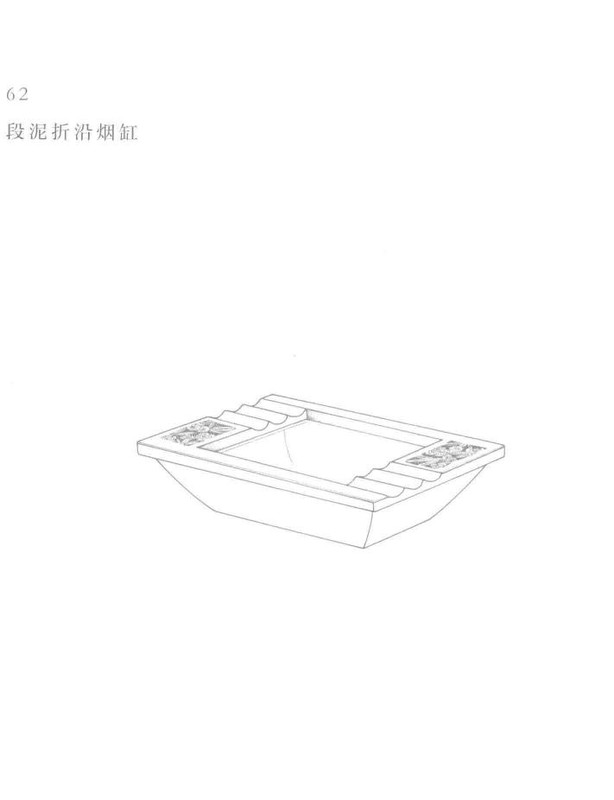
The Folded-Rim Ashtray: When Master Craftsmanship Meets Functional Art
In the world of Yixing pottery, we often focus on teapots—those elegant vessels that have graced tea ceremonies for centuries. But there’s a lesser-known category of Yixing work that reveals just as much about the artisan’s skill and the clay’s remarkable properties: the 折沿烟缸 (zhé yán yān gāng), or folded-rim ashtray. This particular piece, crafted in duan clay during the late 1970s and bearing the seal of the legendary master Gu Jingzhou with carving by Tan Jinghai, represents a fascinating intersection of utilitarian design and artistic expression.
Understanding the Folded-Rim Design
The term “折沿” (zhé yán) literally translates to “folded rim” or “bent edge,” describing the distinctive architectural feature that defines this piece. Unlike a simple bowl or dish, the folded-rim design incorporates an outward-turning lip that serves both aesthetic and practical purposes. This rim creates a visual boundary that frames the interior space while providing a functional edge that prevents ash from spilling over—a thoughtful detail that speaks to the designer’s understanding of how the object would actually be used.
In the context of Yixing pottery, where every curve and angle is deliberate, this folded rim represents a sophisticated approach to form. It’s not merely decorative; it’s a structural element that demonstrates the potter’s control over the clay during the forming process. Creating a clean, even fold requires precise timing—the clay must be leather-hard enough to hold its shape but still pliable enough to bend without cracking.
The Duan Clay Distinction
This particular ashtray was crafted from 段泥 (duàn ní), or duan clay, one of the most prized materials in the Yixing potter’s palette. Duan clay occupies a special place in the hierarchy of Yixing clays, sitting between the earthier tones of purple clay (zisha) and the pale elegance of white clay. When fired, duan clay typically develops a warm, sandy beige to light yellow color with a subtle, matte finish that feels almost like fine sandpaper to the touch.
What makes duan clay particularly interesting for a piece like this ashtray is its density and fine particle structure. The clay fires to a relatively high degree of vitrification, meaning it becomes quite hard and durable—essential qualities for an object that will experience regular use and cleaning. Yet despite this density, duan clay retains a certain breathability, a characteristic that Yixing clays are famous for. While this property is most celebrated in teapots, where it allows the vessel to “season” over time, it also means that a duan clay ashtray develops its own patina through use, gradually darkening and gaining character.
The color of duan clay also provides an interesting canvas for the carved decoration that adorns this piece. Against the light, neutral background, carved lines and characters stand out with particular clarity, creating a subtle interplay of light and shadow that changes throughout the day.
The Jingzhou Seal: A Mark of Mastery
The base of this ashtray bears the seal “景舟” (Jǐngzhōu), the studio name of Gu Jingzhou (1915-1996), widely regarded as one of the greatest Yixing masters of the 20th century. To find Gu Jingzhou’s seal on any piece is significant; to find it on an ashtray from the late 1970s offers a fascinating glimpse into a particular moment in Chinese craft history.
By the late 1970s, Gu Jingzhou was at the height of his creative powers. He had survived the tumultuous years of the Cultural Revolution, during which traditional crafts were often viewed with suspicion, and was entering a period of renewed artistic freedom. This era saw him creating not just teapots but exploring the full range of forms that Yixing clay could take. Ashtrays, brush washers, water droppers, and other scholar’s objects flowed from his workshop, each bearing his characteristic attention to proportion and finish.
What’s particularly interesting about this piece is that while it bears Gu Jingzhou’s seal—indicating his design and oversight—the actual carving was executed by Tan Jinghai (谭景海), a skilled artisan who collaborated with Gu on numerous pieces. This collaborative approach was common in Yixing workshops, where the master potter might create the form while a specialist carver added decorative elements. It’s a reminder that even pieces bearing a single famous name often represent the combined talents of multiple craftspeople.
The Late 1970s Context
Understanding when this piece was made adds another layer of meaning. The late 1970s marked a pivotal moment in Chinese history. Following Mao Zedong’s death in 1976 and the end of the Cultural Revolution, China was beginning to open up both economically and culturally. Traditional crafts that had been suppressed or relegated to producing simple, utilitarian wares were experiencing a renaissance.
For Yixing pottery, this meant a return to creating pieces that celebrated artistic merit alongside function. Masters like Gu Jingzhou could once again sign their work openly and explore designs that went beyond pure utility. An ashtray from this period, therefore, represents more than just a place to rest cigarettes—it’s a statement about the renewed value placed on craftsmanship and individual artistic expression.
It’s also worth noting that smoking culture in China during this period was quite different from today. Offering cigarettes was a common social gesture, and ashtrays were standard fixtures in homes and offices. A well-crafted ashtray in Yixing clay would have been a status symbol, a way of displaying both taste and means. That Gu Jingzhou chose to design such pieces suggests he understood their cultural significance beyond their practical function.
Form Follows Function: Design Analysis
While we’re working from historical documentation rather than the physical object, we can infer several design elements typical of Gu Jingzhou’s work from this period. His approach to form was characterized by clean lines, balanced proportions, and an almost architectural sense of structure. The folded rim would likely have been executed with mathematical precision, creating a uniform edge that circles the piece.
The body of the ashtray probably features a gentle, shallow bowl—deep enough to contain ash but not so deep as to make cleaning difficult. Gu Jingzhou was known for thinking through the practical aspects of use, and an ashtray needs to be easily accessible and simple to maintain. The duan clay’s smooth surface would facilitate cleaning, while its neutral color wouldn’t show staining as readily as darker clays might.
The carving by Tan Jinghai would have added visual interest without compromising the piece’s functionality. Traditional Yixing carving often features calligraphy, poetry, or nature motifs—bamboo, plum blosssom, orchids, or chrysanthemums being particularly popular. These decorations weren’t merely ornamental; they connected the object to the broader tradition of Chinese literati culture, where even everyday items were opportunities for artistic expression and philosophical reflection.
Beyond Teapots: Yixing’s Broader Tradition
This ashtray reminds us that Yixing’s pottery tradition extends far beyond teapots. The same clays, techniques, and aesthetic principles that make Yixing teapots prized by tea enthusiasts worldwide have been applied to a wide range of objects. Scholar’s desk items—brush pots, water droppers, seal paste boxes, and yes, ashtrays—represent an important category of Yixing work.
These pieces often allowed potters to experiment with forms and decorative techniques that might not work on teapots. An ashtray doesn’t need to pour cleanly or seal tightly; it can be purely about shape, surface, and visual appeal. This freedom sometimes resulted in more adventurous designs, pushing the boundaries of what Yixing clay could do.
The Collector’s Perspective
From a collector’s standpoint, a piece like this occupies an interesting niche. It’s not a teapot, which means it doesn’t command the astronomical prices that Gu Jingzhou’s teapots can reach. Yet it’s a genuine work by one of the masters, bearing his seal and representing his design sensibility. For collectors who appreciate Yixing pottery but find teapots prohibitively expensive, scholar’s objects like this ashtray offer an accessible entry point into owning authentic master works.
There’s also something appealing about the piece’s original function. While many people today might not want an ashtray for its intended purpose, these pieces translate beautifully into other uses. They make excellent catchalls for keys or jewelry, can serve as small planters for succulents, or simply stand as sculptural objects in their own right. The folded rim design, in particular, lends itself to display, creating interesting shadows and highlighting the clay’s texture.
A Connection to Tea Culture
Although this piece isn’t a teapot, it shares DNA with the tea vessels that Yixing is famous for. The same clay, the same firing techniques, the same aesthetic principles—all connect this ashtray to the broader world of Chinese tea culture. In traditional tea settings, the complete environment matters. A tea master might use a Yixing teapot, but also Yixing cups, a Yixing tea boat, and yes, perhaps a Yixing ashtray nearby.
This holistic approach to the tea space reflects a deeper philosophy about harmony and appropriateness. Just as you wouldn’t serve a delicate green tea in a heavily seasoned pot meant for aged pu-erh, you wouldn’t place a garish plastic ashtray next to your carefully curated tea setup. Every element should contribute to the overall atmosphere of mindfulness and appreciation.
For modern tea enthusiasts who don’t smoke, pieces like this can be repurposed in ways that honor their craftsmanship while adapting to contemporary use. Imagine using this ashtray as a rest for tea tools, a small dish for tea snacks, or even a vessel for displaying tea samples. The duan clay’s neutral color and smooth surface would complement rather than compete with the tea ceremony’s other elements.
Caring for Duan Clay Pieces
Whether you’re using this piece as an ashtray or have repurposed it, caring for duan clay requires some understanding. Unlike glazed ceramics, Yixing clay is porous and will absorb liquids and oils. This is generally desirable—it’s what allows teapots to season—but it means you need to be thoughtful about what the piece comes into contact with.
For an ashtray, regular cleaning is essential. The clay will gradually darken with use, developing a patina that many collectors prize. However, you don’t want buildup that could damage the surface or obscure the carved decoration. Gentle washing with warm water and a soft brush is usually sufficient. Avoid harsh detergents, which can be absorbed into the clay and are difficult to remove completely.
If you’ve repurposed the piece, the same principles apply. Don’t expose it to extreme temperature changes, which could cause cracking. Don’t use it for anything that might stain permanently or create odors you can’t remove. And handle it with clean hands—the oils from your skin will gradually darken the clay, which is fine, but you want this patina to develop evenly.
The Artisan’s Hand: Tan Jinghai’s Contribution
While Gu Jingzhou’s name rightfully draws attention, we shouldn’t overlook Tan Jinghai’s role in creating this piece. Carving on Yixing pottery is a specialized skill that requires years of training. The carver must understand how the clay will respond to different tools, how deeply to cut without compromising the vessel’s integrity, and how to create lines that are both expressive and technically precise.
Tan Jinghai’s work on this piece would have involved carefully planning the composition, transferring the design to the clay surface, and then executing the carving with various tools. Each stroke had to be confident and accurate—there’s no erasing or covering up mistakes on fired clay. The collaboration between Gu Jingzhou and Tan Jinghai represents the traditional workshop model, where different specialists contributed their expertise to create a unified whole.
Legacy and Influence
Pieces like this folded-rim ashtray contribute to our understanding of Yixing pottery’s evolution. They show us that master potters like Gu Jingzhou didn’t limit themselves to the forms that would bring them the most fame or profit. They explored the full range of what their material and skills could produce, treating even humble objects as opportunities for excellence.
This democratic approach to craft—where an ashtray receives the same attention to proportion and finish as a teapot—reflects a philosophy that values the process of making as much as the final product. It’s a reminder that craftsmanship isn’t about hierarchy but about bringing your full skill and attention to whatever you’re creating.
Conclusion: Small Objects, Large Meanings
The 折沿烟缸 in duan clay, bearing Gu Jingzhou’s seal and Tan Jinghai’s carving, might seem like a minor work compared to the master’s celebrated teapots. But in its own way, this piece tells us just as much about Yixing pottery’s traditions and values. It demonstrates technical mastery, aesthetic refinement, and a commitment to excellence regardless of an object’s function.
For those of us who love Yixing pottery and Chinese tea culture, pieces like this expand our appreciation beyond the teapot. They remind us that the same principles of harmony, proportion, and material honesty that make a great teapot also make a great ashtray—or brush pot, or water dropper, or any of the other forms that Yixing potters have explored over centuries.
Whether displayed as a sculptural object, repurposed for modern use, or appreciated simply as a document of a particular moment in craft history, this folded-rim ashtray deserves recognition as a legitimate expression of Yixing’s artistic tradition. In its modest way, it carries forward the same legacy of excellence that has made Yixing pottery treasured by collectors and tea lovers around the world.
