汉君壶
Discover the 汉君壶, a classic Yixing pottery design with unique characteristics
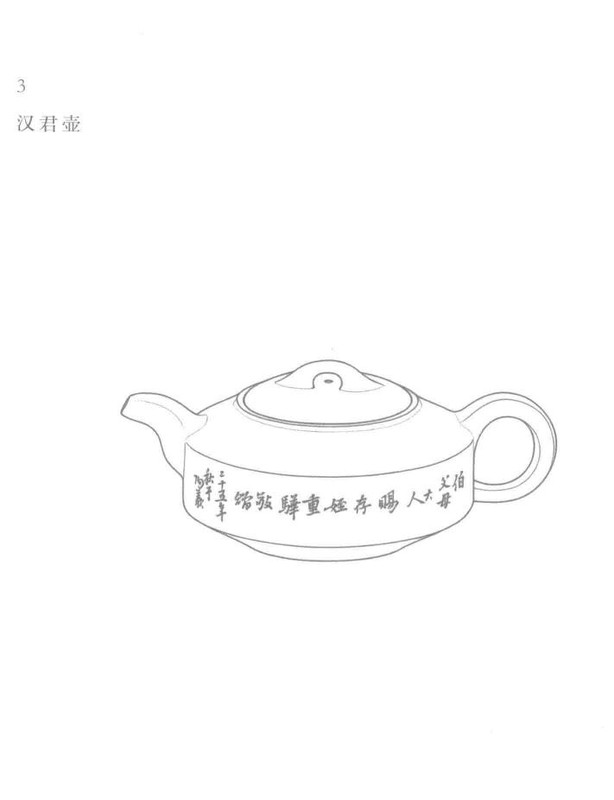
The Han Jun Hu (汉君壶): A Masterpiece of Republican-Era Yixing Craftsmanship
When collectors speak of Gu Jingzhou’s early work, the Han Jun Hu stands as a testament to the master’s developing artistry during one of Chinese history’s most turbulent periods. This classic design, created in the 1930s-40s, represents more than just a teapot—it embodies the resilience of traditional craftsmanship during the Republican era and showcases the collaborative nature of Yixing pottery commissioning.
The Story Behind the Name
The Han Jun Hu (汉君壶), whose name evokes the grandeur of the Han Dynasty, carries within it layers of historical resonance. The character “君” (jun) suggests nobility and refinement, while “汉” (Han) connects this piece to China’s golden age of cultural achievement. This wasn’t merely a decorative choice—during the 1930s and 40s, when China was navigating modernization and conflict, many artisans looked backward to classical periods for inspiration and legitimacy.
What makes this particular pot extraordinary is its documented provenance. The earliest known example was commissioned by Chong Hua in 1936, bearing the seals of the young Gu Jingzhou (then signing as “Jing Zhou”) along with his poetic pseudonym “Wuling Yiren” (武陵逸人—Recluse of Wuling). The handle bears the family seal “Gu Shi” (顾氏), marking it unmistakably as a product of the Gu family workshop.
Gu Jingzhou: The Artist Behind the Clay
To understand the Han Jun Hu is to understand Gu Jingzhou during a formative period of his career. In 1936, Gu was only in his early twenties, yet already accepting private commissions from discerning collectors like Chong Hua. The use of “Wuling Yiren” as a seal name reveals the romantic sensibility of the young artist—Wuling references the mythical Peach Blossom Spring from Tao Yuanming’s famous tale, suggesting an artist who saw himself as a recluse devoted to his craft despite the chaos of the outside world.
By the 1940s, when subsequent Han Jun Hu pieces were created, Gu had begun signing with his full name “Gu Jingzhou” (顾景洲), indicating growing confidence and recognition. These pots from the 1940s maintain the “Wuling Yiren” base seal, showing continuity in his artistic identity even as his public reputation evolved.
The fact that this design was commissioned rather than created speculatively tells us something important: the Han Jun Hu was made for serious tea drinkers who knew exactly what they wanted. Chong Hua, the original commissioner, was clearly someone with both means and refined taste, willing to work with a young but promising artisan to create something specific to his needs.
Design Characteristics: Form Follows Function
The Han Jun Hu belongs to the category of classic Yixing designs, meaning it adheres to traditional proportions and aesthetic principles that had been refined over centuries. While we don’t have exact measurements from the catalog entry, classic designs from this era typically emphasized balance, restraint, and functionality above all else.
The pot’s form would have been thrown and shaped by hand, with particular attention paid to the relationship between body, spout, and handle. In Gu Jingzhou’s work from this period, we see an emerging mastery of what Chinese potters call “qi yun” (气韵)—the vital energy or spirit that animates a piece beyond mere technical proficiency. The Han Jun Hu, even in its earliest 1936 iteration, would have demonstrated this quality.
The clay itself deserves attention. Yixing pottery from the 1930s-40s used clay from mines that are now depleted, giving these pieces a particular character that cannot be replicated. The clay would have been processed by hand, aged, and wedged to achieve the proper consistency. Depending on the specific commission requirements, Gu might have used zisha (purple clay), zhuni (vermillion clay), or duanni (yellow clay)—each with distinct properties affecting both aesthetics and tea brewing.
The Seal System: Reading the Potter’s Signature
The multiple seals on the Han Jun Hu provide a fascinating glimpse into Yixing authentication practices. The lid seal bearing “Jing Zhou” or later “Gu Jingzhou” served as the primary maker’s mark. The base seal “Wuling Yiren” added a poetic, personal dimension—this wasn’t just a product, but an artwork from a specific artistic sensibility. The handle seal “Gu Shi” (Gu family) connected the piece to lineage and tradition.
This triple-seal system made forgery difficult and provided collectors with multiple points of authentication. It also reflected the Confucian value of knowing one’s place in a continuum—Gu was simultaneously an individual artist (Wuling Yiren), a professional craftsman (Jing Zhou/Gu Jingzhou), and a member of a family tradition (Gu Shi).
Historical Context: Tea Culture in Republican China
The 1930s and 40s were paradoxical times for Chinese tea culture. On one hand, traditional practices were under pressure from modernization, Western influence, and eventually war. On the other hand, there was a conscious effort among educated elites to preserve and document traditional arts before they disappeared.
The fact that someone commissioned a Han Jun Hu in 1936—just before the full-scale Japanese invasion of 1937—suggests either remarkable optimism or a determination to maintain civilized pleasures despite approaching darkness. Tea drinking, and the rituals surrounding it, became for some a form of cultural resistance, a way of asserting Chinese identity and continuity.
Gu Jingzhou’s continued production of Han Jun Hu pieces into the 1940s, despite the chaos of war and civil conflict, demonstrates the resilience of the Yixing pottery tradition. These weren’t mass-produced items but carefully crafted individual pieces, each requiring days or weeks of work. That such work continued speaks to both the dedication of artisans and the persistence of patrons who valued these objects.
Tea Pairing: What Brews Best in a Han Jun Hu
The Han Jun Hu’s classic design makes it remarkably versatile, but certain teas will showcase both the pot and the tea to best advantage. Understanding these pairings requires thinking about how Yixing clay interacts with tea over time.
Aged Oolong: The Han Jun Hu excels with traditional Wuyi rock oolongs, particularly aged varieties. The pot’s clay will gradually absorb the mineral complexity of these teas, developing what collectors call a “tea mountain” (茶山) inside—a seasoned patina that enhances subsequent brews. The roasted, complex character of aged Da Hong Pao or Shui Xian finds perfect expression in this pot style.
Ripe Pu-erh: For those who prefer darker teas, a Han Jun Hu dedicated to ripe pu-erh will develop a rich, earthy character over years of use. The clay’s porosity helps soften any rough edges in younger ripe pu-erh while allowing aged varieties to express their full depth. The pot’s heat retention supports the higher temperatures these teas demand.
Traditional Tieguanyin: While modern light-oxidized Tieguanyin might be too delicate for this pot, traditional heavily-roasted Tieguanyin from the 1980s-90s style finds an ideal home here. The pot’s ability to maintain steady heat brings out the tea’s complex roasted notes without bitterness.
Aged White Tea: Surprisingly, well-aged white teas (10+ years) work beautifully in a Han Jun Hu. The pot’s neutral clay profile doesn’t interfere with the tea’s subtle evolution, while its heat retention allows proper extraction of aged white tea’s deeper flavors.
The key principle: dedicate your Han Jun Hu to one tea type or closely related family. The pot will season over time, becoming increasingly attuned to that specific tea’s character. This is not a pot for experimentation—it’s a pot for deepening your relationship with a particular tea over months and years.
Brewing Technique: Honoring the Design
Using a Han Jun Hu properly requires understanding both the pot’s capabilities and the tea’s needs. Here’s how to approach brewing:
Preparation: Before first use, boil the pot gently with tea leaves (of the type you’ll dedicate it to) for 30-60 minutes. This opens the clay’s pores and begins the seasoning process. Never use soap or detergents—only hot water.
Water Temperature: The pot’s clay composition and wall thickness affect heat retention. For oolong and pu-erh, use fully boiling water (100°C/212°F). The pot will moderate the temperature naturally. For aged white tea, you might start slightly cooler (95°C/203°F) and adjust based on results.
Pouring Technique: Fill the pot completely, allowing water to overflow slightly. This ensures the entire interior is at proper temperature. Pour over the exterior as well—this “external brewing” (淋壶) is traditional practice that helps maintain temperature and seasons the outside of the pot.
Timing: First infusion should be quick (10-15 seconds) to rinse leaves and warm the pot. Subsequent infusions can be 20-30 seconds initially, gradually increasing. The pot’s heat retention means you can extend later infusions significantly without losing extraction quality.
Between Sessions: After brewing, empty the pot completely, rinse with hot water, and leave it open to air dry. Never store it closed or with leaves inside. The pot should dry completely between uses to prevent any musty odors from developing.
Long-term Care: Over months and years, your Han Jun Hu will develop a lustrous patina from tea oils and handling. This “bao jiang” (包浆) is highly prized. Occasionally, you can gently polish the exterior with a soft tea cloth, but never scrub the interior—that seasoned surface is precious.
Collecting Considerations: Authenticity and Value
For those interested in acquiring a Han Jun Hu, particularly one from Gu Jingzhou’s early period, authentication is paramount. The 1936 and 1940s pieces are now extremely rare and valuable, commanding significant prices at auction.
Key authentication points include:
- Seal clarity and style: Gu’s seals evolved over time. Early “Jing Zhou” seals differ from later “Gu Jingzhou” marks in calligraphic style
- Clay quality: Pre-1949 Yixing clay has distinctive characteristics that experts can identify
- Provenance: Documentation of ownership history adds significant value and confidence
- Wear patterns: Genuine pieces from the 1930s-40s will show appropriate age-related wear
Modern reproductions of the Han Jun Hu design exist, made by contemporary Yixing artists. These can be excellent functional teapots at accessible prices, but they should never be misrepresented as vintage Gu Jingzhou pieces. A contemporary Han Jun Hu from a skilled artisan might cost several hundred to a few thousand dollars, while an authenticated 1936 or 1940s original would be worth tens of thousands or more.
The Han Jun Hu’s Legacy
The Han Jun Hu represents a specific moment in Yixing pottery history—when traditional craftsmanship met Republican-era patronage, when a young master was finding his voice, and when tea culture persisted despite national upheaval. Each pot tells a story not just of clay and fire, but of human dedication to beauty and ritual in difficult times.
For today’s tea drinker, whether using a vintage piece or a contemporary interpretation, the Han Jun Hu offers a direct connection to this history. Every infusion becomes a conversation across decades, a continuation of practices that survived war, revolution, and modernization. The pot in your hands links you to Chong Hua commissioning his piece in 1936, to Gu Jingzhou shaping clay in his workshop, to countless tea sessions held in uncertain times.
This is the true value of a Han Jun Hu—not merely as a brewing vessel, but as a tangible link to tea culture’s continuity, a reminder that some things endure because they matter deeply to those who practice them. In our own uncertain times, there’s something profoundly reassuring about holding a pot whose design has remained relevant for nearly a century, brewing tea in the same way it was brewed when this pot was new.
The Han Jun Hu asks us to slow down, to pay attention, to honor both the tea and the vessel. In doing so, it offers not just better tea, but a better way of being present in the moment—a gift as valuable now as it was in 1936.
