鹧鸪提梁壶
The Pengque Tiliang Teapot In early spring of 1983, Gu Jingzhou stayed at Huaihai Middle School in Shanghai while seeking treatment for his wife Xu
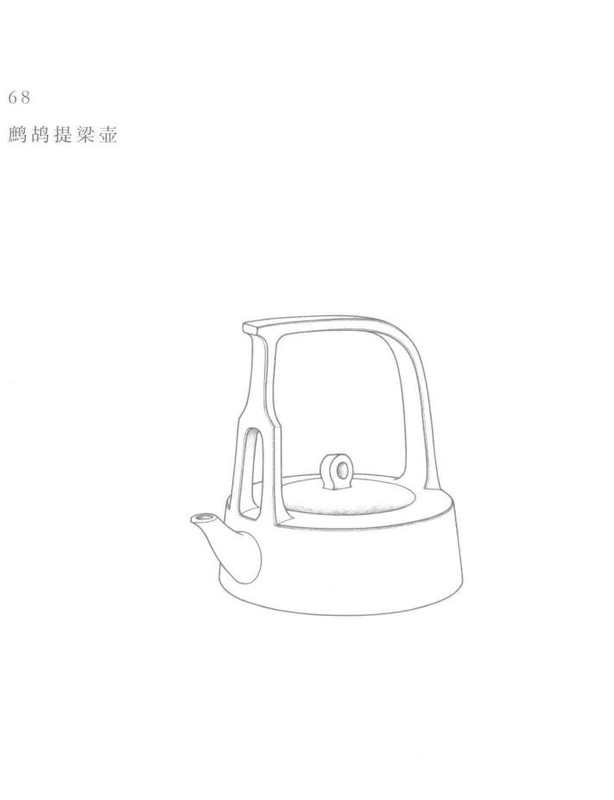
The Zhègū Tíliáng Hú (鹧鸪提梁壶): A Masterpiece Born from Sorrow
In the spring of 1983, master potter Gu Jingzhou found himself far from his workshop in Yixing, staying at Huaihai Middle School in Shanghai while his beloved wife Xu Yibao sought treatment for a terminal illness. At sixty-nine years old, facing one of life’s most difficult moments, he turned to the craft that had defined his existence. During those anxious days of waiting, his hands shaped clay into what would become one of his most celebrated original designs: the Zhègū Tíliáng Hú, or Partridge Handle-Over Teapot.
This wasn’t just another teapot. It was a vessel infused with longing, homesickness, and the quiet dignity of a craftsman confronting mortality. The result is a design that stands apart in the Yixing canon—modern yet timeless, simple yet profound, and deeply personal in its origins.
Understanding the Name: More Than Meets the Eye
The name “Zhègū” (鹧鸪, partridge) has sparked curiosity and debate among collectors and scholars. At first glance, many assume the teapot earned its name from a visual resemblance—perhaps the spout suggests a bird’s beak, or the overall silhouette evokes avian form. This interpretation seems logical enough, and it’s the explanation many have accepted.
But Gu Jingzhou himself offered a more nuanced answer when his student Pan Chiping asked about the name’s origin. The master explained two reasons: “First, it abstractly resembles the form; second, it takes its meaning from a famous tea called ‘Renjin Lu Pengque Tongue.’”
This second reason reveals the deeper layer of meaning. Gu Jingzhou was drawing from the literati tradition of naming objects not just for what they look like, but for what they evoke—the associations, emotions, and cultural resonances they carry. The reference to “Pengque Tongue” tea connects the vessel to the very beverage it was designed to brew, creating a poetic unity between container and contents.
There’s yet another dimension to consider. The Tang dynasty poet Zheng Gu wrote a seven-character regulated verse titled Pengque that includes the haunting line: “desolate, secluded and cold, jade feathers sink heavily.” This poem expresses the profound homesickness of a wanderer who encounters familiar sights in an unfamiliar place. Given Gu Jingzhou’s circumstances—displaced from home, anxiously tending to his dying wife, lodging in a school far from his workshop—this emotional resonance seems impossible to ignore. The partridge in Chinese poetry often symbolizes longing and separation, making it a fitting name for a teapot created during such a sorrowful period.
The Design: Modern Simplicity with Structural Innovation
The Zhègū Tíliáng Hú breaks from traditional Yixing forms in several striking ways. Its body features rounded shoulders that flow into clean, crisp lines—a departure from the more ornate or heavily decorated styles that dominated earlier periods. This simplicity isn’t minimalism for its own sake; it’s a refined aesthetic that allows the essential form to speak clearly.
The most distinctive feature is the handle, which gives the teapot its “tíliáng” (提梁, handle-over or overhead handle) designation. Unlike the traditional round or oval handles common in Yixing pottery, Gu Jingzhou crafted an angular handle that echoes the geometric treatment of the pot body itself. This creates a visual harmony between elements that might otherwise feel disconnected.
But the innovation doesn’t stop there. The front support of the handle—where it attaches to the pot body—divides in the middle, creating a bifurcated connection point. This design choice serves dual purposes: aesthetically, it avoids the visual monotony of a simple, solid attachment; structurally, it adds stability to the handle, distributing weight and stress more effectively. It’s the kind of thoughtful detail that reveals a master’s hand—solving practical problems while enhancing visual interest.
The knob atop the lid takes the form of a ring, connecting seamlessly with the overall angular aesthetic. Every element relates to every other element, creating a unified whole that feels both contemporary and rooted in tradition.
The lines throughout are simple and possess what observers have described as a “distinctly modern sensibility.” Created in 1983, the Zhègū Tíliáng Hú anticipated design trends that would become more prominent in later decades, when clean lines and geometric forms gained wider appreciation in the teaware world.
The Historical Record: Inscriptions That Tell a Story
Gu Jingzhou created at least two Zhègū Tíliáng Hú teapots during his time in Shanghai, and both bear inscriptions that provide intimate glimpses into his state of mind. These aren’t merely maker’s marks—they’re personal messages that transform functional objects into historical documents.
The first pot carries the inscription: “For the keeping of my elder brother Xiangming, made by younger brother Jingzhou in Shanghai, carved in the spring month.” This piece was clearly intended as a gift, created for someone Gu Jingzhou addressed with the familial term “elder brother,” suggesting either a blood relation or a relationship of deep respect and affection. The mention of “Shanghai” and “spring month” anchors the piece in time and place.
The second pot bears a longer, more revealing inscription: “In the spring of the year Guihai, seeking medical treatment in Shanghai for my elderly wife’s illness, lodging at Huaihai Middle School. In utter boredom, I crafted several pots to commemorate life’s rough journey. Recorded by Jingzhou, at the age of sixty-nine.”
This inscription is remarkable for its candor. Gu Jingzhou doesn’t hide behind euphemism or false cheer. He acknowledges his wife’s serious illness, his displacement from home, and his emotional state—“utter boredom” being perhaps a translation of a term that might also suggest restlessness, anxiety, or the need for distraction from worry. The phrase “life’s rough journey” (命途坎坷) speaks to the hardships he’d faced, and at sixty-nine, he was old enough to reflect on a lifetime of challenges.
Both pots also bear his seal: “Jingzhou” (景舟), marking them as authentic works from the master’s hand.
Clay, Color, and Craftsmanship
While the source material doesn’t specify the exact clay type used for these particular Zhègū Tíliáng Hú teapots, Gu Jingzhou was known for his discerning selection of Yixing clays and his ability to match clay characteristics to design intentions. Given the clean lines and modern aesthetic of this design, he likely chose a clay that would showcase the form without distraction—possibly a refined zisha (purple clay) with a smooth texture that would highlight the geometric precision of the piece.
The craftsmanship evident in the Zhègū Tíliáng Hú reflects Gu Jingzhou’s decades of experience. By 1983, he had been working with Yixing clay for over fifty years, and his technical mastery was absolute. The challenge with a design this simple is that there’s nowhere to hide imperfections—every line must be exact, every curve must flow smoothly, every angle must be true. The fact that this design has become celebrated rather than forgotten speaks to the execution’s excellence.
Tea Pairing: What to Brew in a Zhègū Tíliáng Hú
The Zhègū Tíliáng Hú’s connection to “Pengque Tongue” tea provides a starting point for understanding its ideal uses. This reference suggests the pot was conceived with certain tea types in mind, likely green teas or lighter oolongs that would have been associated with such poetically named varieties.
The pot’s form—with its rounded body and clean lines—creates an interior space that allows tea leaves to unfurl and circulate freely. This makes it particularly well-suited for:
Green Teas: The shape promotes even heat distribution without overheating, which is crucial for green teas that can turn bitter if brewed too hot. Dragon Well (Longjing), Biluochun, or other premium green teas would shine in this vessel.
Light Oolongs: Taiwanese high-mountain oolongs or lightly oxidized Tieguanyin would benefit from the pot’s ability to maintain consistent temperature while allowing the leaves room to expand.
White Teas: Silver Needle or White Peony teas, which require gentle handling and moderate temperatures, would work beautifully in this design.
The overhead handle design has practical implications for tea brewing. It allows you to pour without your hand coming into direct contact with the hot pot body, making it easier to handle when brewing at higher temperatures. This feature would have been particularly appreciated when brewing teas that require boiling or near-boiling water.
Brewing Advice: Getting the Most from This Design
Using a Zhègū Tíliáng Hú—or any teapot inspired by this design—requires understanding its particular characteristics:
Seasoning the Pot: Like all Yixing teapots, a new Zhègū Tíliáng Hú should be seasoned before first use. Rinse it thoroughly with hot water, then brew several pots of the tea type you plan to dedicate it to, discarding these initial brews. This process removes any clay dust and begins building the patina that will develop over years of use.
Temperature Control: The rounded body retains heat well, so pay attention to your water temperature. For green teas, let boiling water cool to around 175-185°F (80-85°C) before brewing. For oolongs, you can use slightly hotter water, around 195°F (90°C).
Leaf Quantity: The spacious interior means you can be generous with leaves—typically filling the pot about one-third full with dry leaves for most tea types. The leaves will have room to expand without becoming cramped.
Pouring Technique: The overhead handle changes the pouring dynamics. Grip the handle firmly and pour with a smooth, controlled motion. The angular handle provides a secure grip, but practice your pour to avoid splashing or dripping.
Cleaning and Care: After each use, empty the leaves and rinse the pot with hot water only—never use soap, which can be absorbed by the porous clay and affect future brews. Let the pot air dry completely with the lid off before storing.
Building Patina: Over time, the pot will develop a lustrous patina from the tea oils that gradually season the clay. This is desirable and will enhance the pot’s performance. Some users gently wipe the exterior with a soft tea-soaked cloth after brewing to encourage even patina development.
The Legacy of a Difficult Spring
The Zhègū Tíliáng Hú stands as one of Gu Jingzhou’s rare original designs—a significant distinction for a master who spent much of his career perfecting and reinterpreting classical forms. That he created something genuinely new during one of his life’s darkest periods speaks to the sustaining power of craft and the way creative work can provide solace in difficult times.
The teapot’s modern aesthetic was somewhat ahead of its time in 1983, when more traditional forms still dominated the Yixing market. Today, its clean lines and geometric precision feel remarkably contemporary, appealing to collectors who appreciate minimalist design and functional elegance.
But perhaps the most moving aspect of the Zhègū Tíliáng Hú is how it embodies the intersection of personal sorrow and artistic creation. Gu Jingzhou didn’t retreat into formulaic work during his wife’s illness—he pushed himself to create something new, channeling his anxiety and displacement into innovation. The inscriptions he carved into the pots ensure that future generations would understand the circumstances of their creation, transforming these functional objects into vessels of memory and emotion.
When you hold a Zhègū Tíliáng Hú—or a piece inspired by this design—you’re not just holding a teapot. You’re holding a moment in time: a spring in Shanghai, a master potter far from home, hands shaping clay while waiting for news from doctors, creating beauty as an act of defiance against despair. The partridge’s call echoes through the design, carrying its ancient associations of longing and separation, reminding us that the objects we use daily can carry profound meaning if we take the time to understand their stories.
In the end, the Zhègū Tíliáng Hú teaches us that great design often emerges not from comfort and ease, but from the crucible of difficult experience—when a master craftsman, facing life’s rough journey, creates something that will outlast the sorrow that inspired it.
