四方小千简盆
Yixing Purple Clay Basin This purple clay basin was created in 1983 with the assistance of Teacher Gu Guodong during the period when Gu Jingzhou tr
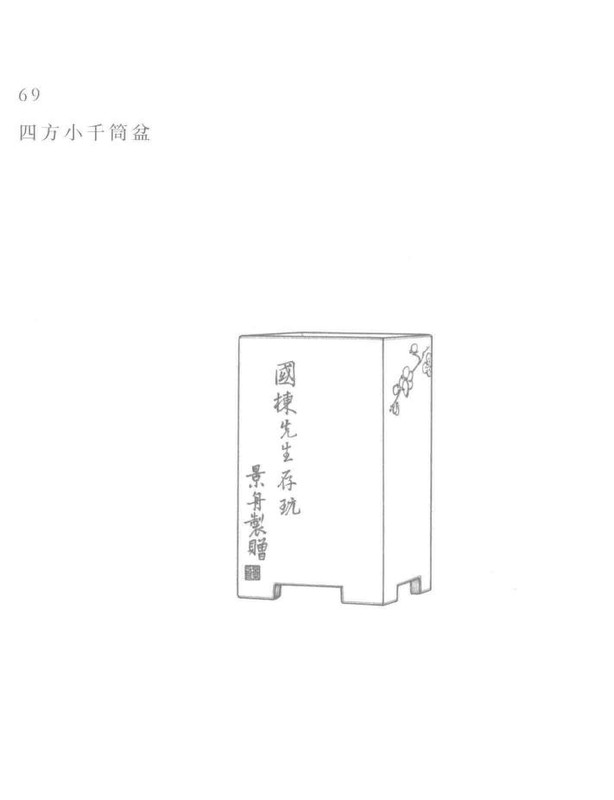
The Four-Square Qianjian Basin: A Testament to Friendship in Purple Clay
In the world of Yixing pottery, some pieces transcend their functional purpose to become vessels of memory, friendship, and artistic collaboration. The 四方小千简盆 (Sìfāng Xiǎo Qiānjiǎn Pén), or “Small Square Qianjian Basin,” represents one such treasure—a purple clay basin that captures a moment of profound personal connection between master artisans during a difficult period in 1983.
Unlike the teapots that typically dominate discussions of Yixing ware, this square basin reveals another dimension of purple clay artistry: the creation of bonsai containers and decorative vessels that showcase the material’s versatility and the deep bonds within China’s artistic community.
A Gift Born from Adversity
The story behind this particular basin adds layers of meaning to its elegant form. In 1983, the legendary Yixing master Gu Jingzhou (顾景舟) traveled to Shanghai seeking medical treatment for his wife’s eye condition. During this challenging time, he stayed with Gu Guodong (顾国栋), a fellow artist and friend who provided support and companionship.
It was during this period of worry and waiting that Gu Jingzhou created this basin as a gift for his host. The inscription on the basin wall reads: “Created as a gift for Elder Brother Guodong, Jingzhou” (赠了予顾国栋,景舟). This simple dedication transforms the piece from a mere decorative object into a tangible expression of gratitude and friendship between two masters.
The basin bears Gu Jingzhou’s seal “Jing Zhou” (景舟) on its exterior wall, authenticating its provenance and connecting it directly to one of the most revered names in 20th-century Yixing pottery.
The Collaborative Nature of Mastery
What makes this basin particularly special is its collaborative creation. While Gu Jingzhou shaped the vessel itself, the carved decoration was executed by Xu Xiutang (徐秀棠), another accomplished Yixing artist known for his exceptional carving skills. Xu’s signature appears on the piece: “Carved in the spring of the Guihai year, Xiutang depicted plum blossoms and inscribed this” (癸亥春刻,秀棠写梅并记).
This collaboration reflects a common practice among Yixing masters, where potters and carvers would combine their specialized skills to create works of greater artistic depth. The division of labor wasn’t merely practical—it represented a philosophical approach to craftsmanship where each artist contributed their highest expertise to the final piece.
Form and Structure: Stability in Simplicity
The “Small Square Qianjian Basin” embodies the principle that true elegance requires no excess. Its design features speak to a refined aesthetic sensibility:
The Body: The basin presents a delicate form with pure clay quality, demonstrating Gu Jingzhou’s mastery of material selection and preparation. The clay’s purity ensures even firing and a surface that ages beautifully with time.
The Rim and Walls: A flat rim crowns the vessel, providing a clean horizontal line that emphasizes the basin’s geometric precision. The walls maintain uniform thickness throughout, though they’re slightly thicker than one might expect in a teapot—a practical consideration for a basin that would hold soil and plants rather than hot water. The sides rise straight and true, creating a sense of architectural stability.
The Base: Four low feet elevate the basin, allowing air circulation beneath and creating subtle shadows that enhance the piece’s visual interest. These feet are proportioned to provide stability without drawing attention away from the basin’s overall form.
Overall Impression: The complete form conveys stability and dignity. Clean, simple lines create what the original description calls “a sense of solemnity and substance” (庄重和实在感). This isn’t a showy piece—it’s one that reveals its quality through restraint and precision.
The Poetry of Plum Blossoms
The carved decoration on this basin elevates it from functional object to poetic statement. Xu Xiutang carved plum blossoms and their shadows into the purple clay surface, creating a visual reference to one of Chinese poetry’s most beloved images.
The design evokes the famous lines from Lin Bu’s (林逋) Song Dynasty poem about plum blossoms: “Sparse shadows slanting across clear shallow water, delicate fragrance floating in the moonlit dusk” (疏影横斜水清浅,暗香浮动月黄昏). These lines have resonated through Chinese culture for nearly a millennium, capturing the plum blossom’s ethereal beauty and its symbolic associations with resilience, purity, and the promise of spring.
By carving both the blossoms and their shadows, Xu Xiutang created a sense of depth and atmosphere. The shadows suggest moonlight or water reflections, bringing the poetic imagery to three-dimensional life. This decoration “embellishes the otherwise plain exterior of the purple clay without compromising the vessel’s simple and dignified appearance”—a delicate balance that requires both technical skill and aesthetic judgment.
The plum blossom motif also carries personal resonance. In Chinese culture, plum blossoms symbolize friendship and perseverance through hardship—entirely appropriate for a gift created during a difficult time and given in gratitude for support during adversity.
Understanding the Qianjian Form
The term “Qianjian” (千简) in the basin’s name deserves exploration. While “qian” (千) means “thousand” and “jian” (简) can mean “simple” or “bamboo slip,” in the context of Yixing pottery, this likely references a traditional design lineage or style category. The “small square” (四方小) designation clearly describes the basin’s geometric form—a departure from the round shapes more common in both teapots and basins.
Square forms in Chinese aesthetics carry specific cultural meanings. They represent earth, stability, and the human-made world in contrast to heaven’s circular perfection. A square basin grounds whatever it contains, providing a stable foundation that complements the organic growth of plants or the flowing curves of water.
Purple Clay: The Material’s Magic
Though this piece is a basin rather than a teapot, it’s crafted from the same purple clay (紫砂, zisha) that makes Yixing famous among tea enthusiasts. The clay’s “pure quality” mentioned in the description indicates careful selection and preparation—likely from one of Yixing’s prized clay seams.
Yixing purple clay is actually a category that includes various colors from deep purple to red-brown to pale yellow, depending on the specific clay body and firing temperature. The clay’s unique properties—its porosity, heat retention, and ability to develop a patina over time—make it ideal not just for teapots but for any vessel that benefits from breathability and aging characteristics.
For a basin, these properties mean the clay can absorb and release moisture gradually, creating a beneficial microclimate for plants. The material’s natural beauty also improves with age and handling, developing a subtle luster that synthetic materials cannot replicate.
The 1983 Context
The year 1983 holds significance in the timeline of Chinese pottery and cultural history. By this point, China had emerged from the Cultural Revolution’s disruptions, and traditional arts were experiencing a renaissance. Master artisans like Gu Jingzhou, who had maintained their skills through difficult decades, were once again able to create freely and pass their knowledge to new generations.
Gu Jingzhou (1915-1996) was already in his late sixties when he created this basin, at the height of his artistic powers and reputation. His work from this period is particularly prized by collectors, as it combines the vigor of his earlier years with the refinement that comes from decades of practice.
The fact that he created this piece while dealing with family medical concerns adds poignancy to its story. Rather than being paralyzed by worry, Gu Jingzhou channeled his energy into creation, producing a gift that would outlast the immediate crisis and serve as a permanent reminder of friendship.
Beyond Tea: The Basin’s Purpose
While this article appears in a context focused on tea and Yixing pottery, it’s important to acknowledge that this basin wasn’t designed for brewing tea. Instead, it would have served as a container for bonsai, succulents, or as a water basin for scholar’s desk arrangements.
However, the connection to tea culture remains strong. The same aesthetic principles that guide teapot design—balance, proportion, restraint, and the beauty of natural materials—apply equally to basins. Many serious tea enthusiasts also appreciate bonsai and scholar’s objects, seeing them as complementary expressions of the same cultural values.
The basin could also serve in a tea setting as a container for a tea pet, as a vessel for rinsing cups, or simply as a decorative element that enhances the tea space’s atmosphere. Its square form would provide visual contrast to the round teapots and cups typically used in gongfu tea preparation.
Caring for a Purple Clay Basin
If you’re fortunate enough to own a similar Yixing basin, proper care will ensure it ages beautifully:
Initial Preparation: New purple clay should be gently cleaned and allowed to soak in clean water to remove any dust from production. Unlike teapots, basins don’t require seasoning with tea.
Regular Use: If using for plants, ensure proper drainage to prevent water from pooling and potentially causing clay deterioration. The four feet design helps with this, but additional drainage considerations may be necessary.
Cleaning: Clean only with water and a soft cloth. Avoid soaps or detergents, which can be absorbed by the porous clay. The natural patina that develops over time is desirable, not something to scrub away.
Handling: Always handle with clean hands. The oils from your skin will gradually create a subtle luster on frequently touched areas, adding to the piece’s character.
Display: Keep away from direct sunlight, which can cause uneven fading, and protect from temperature extremes that might cause cracking.
The Legacy of Friendship
Perhaps the most valuable lesson from this Small Square Qianjian Basin isn’t about pottery techniques or aesthetic principles—it’s about the human connections that give objects meaning. Gu Jingzhou could have simply thanked Gu Guodong with words or a purchased gift. Instead, he invested his time, skill, and creative energy into making something unique.
The collaboration with Xu Xiutang added another layer of generosity, bringing a third artist into the circle of friendship. The plum blossom carving wasn’t just decoration—it was a carefully chosen symbol that spoke to the circumstances of the gift and the values shared by all involved.
This basin serves as a reminder that the greatest works of craft aren’t necessarily the most technically complex or the most expensive. Sometimes, the most meaningful pieces are those created with specific people and moments in mind, where every element—from the clay selection to the carved imagery to the inscribed dedication—tells a story of human connection.
Conclusion: Small Vessel, Large Meaning
The 四方小千简盆 may be small in size, but it contains multitudes: the friendship between masters, the collaboration between potter and carver, the poetry of plum blossoms in moonlight, and the quiet dignity of perfect proportions. It represents a moment in 1983 when worry and gratitude, skill and generosity, tradition and personal expression all came together in purple clay.
For collectors and enthusiasts of Yixing pottery, pieces like this basin remind us that the tradition encompasses far more than teapots. The same clay, the same hands, and the same aesthetic principles that create perfect brewing vessels also produce works of art that enhance our living spaces and connect us to centuries of cultural refinement.
Whether you encounter this specific basin in a museum, a private collection, or through photographs and descriptions, let it inspire you to look beyond the surface of any crafted object. Ask about the hands that made it, the circumstances of its creation, and the relationships it represents. In doing so, you’ll discover that the true value of masterwork pottery lies not just in its form or function, but in its ability to carry human stories across time.
