秦权壶
Qin Quan Teapot The Qin Quan was a standardized weight implement promoted after Emperor Qin Shi Huang unified the system of weights and measures. I
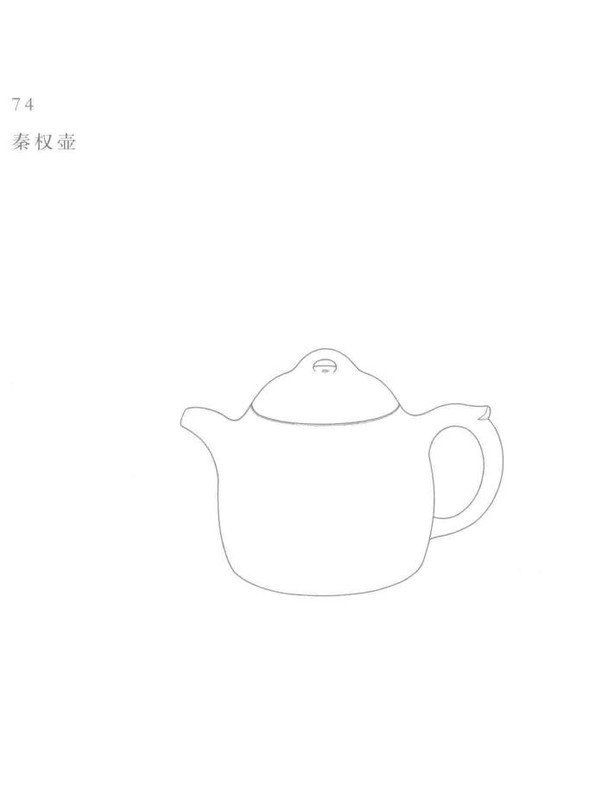
The Qin Quan Teapot: Ancient Authority Reimagined in Purple Clay
When Emperor Qin Shi Huang unified China’s chaotic system of weights and measures in 221 BCE, he created standardized bronze weights called “Qin Quan” (秦权) that would become symbols of imperial authority and order. Over two millennia later, Yixing pottery masters would transform this ancient implement into one of the most philosophically resonant teapot designs in the purple clay tradition—a vessel that carries the weight of history in every curve.
The Qin Quan teapot doesn’t just reference history; it embodies it. This classic design translates the solid, grounded form of ancient standardized weights into a functional tea vessel, creating a bridge between China’s imperial past and the intimate ritual of tea drinking. Unlike ornate Yixing designs that celebrate decoration, the Qin Quan speaks through pure form—a meditation on simplicity, stability, and the enduring power of essential shapes.
The Historical Weight of Design
The original Qin Quan weights represented far more than mere measurement tools. When Emperor Qin Shi Huang standardized weights and measures across his newly unified empire, he was imposing order on chaos, creating a common language of commerce and governance that would fundamentally reshape Chinese civilization. These bronze weights, with their characteristic bell-like shape and substantial presence, became physical manifestations of imperial authority—objects that citizens across the vast empire would recognize and trust.
The Qin Quan played a significant driving role in the development of China’s social, political, and economic spheres. Merchants could trade with confidence across provinces. Tax collectors could assess levies fairly. The standardization enabled by these weights helped knit together disparate regions into a functioning empire, making them artifacts of profound historical importance in the development of Chinese civilization.
When Yixing artisans began creating teapots inspired by this ancient form, they weren’t simply copying an interesting shape. They were invoking this entire historical legacy—channeling the gravitas, stability, and timeless authority of the Qin dynasty into vessels meant for the contemplative practice of tea drinking. The Qin Quan teapot asks us to hold history in our hands, to pour tea with the same deliberation that ancient officials once weighed precious goods.
Master Gu Jingzhou’s Interpretation
Among the most celebrated examples of the Qin Quan design is a teapot created by the legendary master Gu Jingzhou in the 1980s. Gu Jingzhou (1915-1996) is widely regarded as one of the greatest Yixing artisans of the 20th century, a master who elevated purple clay pottery to new artistic heights while maintaining deep respect for traditional forms. His interpretation of the Qin Quan design demonstrates why he earned such reverence.
This particular piece, bearing Gu’s seal on the lid and his maker’s mark “Jingzhou zhi tao” (景舟制陶) on the base, exemplifies the master’s philosophy of design. The teapot resembles a weight in form, with a body that is simple and rounded—yet within this apparent simplicity lies extraordinary sophistication. The upper portion above the waist tapers inward in a restrained manner, creating a subtle tension between expansion and containment that gives the pot its distinctive character.
The fitted lid and body merge seamlessly into one unified form, a technical achievement that requires exceptional skill. There’s no visible gap, no awkward transition—just a continuous flow of clay that reads as a single, coherent statement. The false bottom creates a dignified and stable presence, ensuring the pot sits with authority on any surface, echoing the unwavering stability of the ancient weights that inspired it.
The Poetry of Unadorned Form
What makes Gu Jingzhou’s Qin Quan particularly remarkable is what it lacks: decoration. The entire piece bears no decorative embellishments whatsoever. No carved bamboo, no applied plum blossoms, no calligraphic inscriptions beyond the necessary seals. Instead, the teapot interprets the most authentic charm of purple clay through the beauty of its unadorned form.
This is not minimalism for its own sake, but rather a profound confidence in the essential rightness of the shape itself. The bridge-shaped knob arches slightly, providing a natural grip point that feels inevitable rather than designed. The curved spout connects naturally with the body—not grafted on as an afterthought, but emerging organically from the pot’s form as if it had always been there. The handle extends gracefully and naturally in a ring shape, its curve echoing the rounded body while providing comfortable, balanced handling.
The teapot’s color is warm and elegantly refined, showcasing the natural beauty of the purple clay without artificial enhancement. The lines flow smoothly from one element to the next, creating a visual rhythm that the eye follows with pleasure. The form is simple yet substantial—there’s nothing tentative or delicate about this pot. It has presence, weight, authority.
This approach to design reflects a deep understanding of what the ancient Daoist philosophers called “ziran” (自然)—naturalness, or things being exactly as they should be. The Qin Quan teapot doesn’t try to impress through complexity or ornament. It simply exists, perfectly resolved, asking nothing more than to be what it is.
Clay, Color, and Character
Traditional Qin Quan teapots are typically crafted from Zisha clay in its various natural forms—most commonly hongni (red clay) or zini (purple clay). The warm, earthy tones of these clays complement the pot’s grounded, substantial character. The clay’s natural texture, neither too smooth nor too rough, develops a beautiful patina over years of use, gradually deepening in color and developing a subtle sheen that collectors call “baojiang” (包浆)—the treasure light.
The choice of unadorned clay is crucial to the design’s philosophy. Yixing clay is prized for its porosity and mineral content, properties that improve tea flavor by absorbing and releasing aromatic compounds over time. By leaving the surface unglazed and undecorated, the Qin Quan maximizes this interaction between clay and tea, allowing the pot to “season” and develop character through use.
The substantial wall thickness typical of Qin Quan designs serves both aesthetic and functional purposes. Visually, it reinforces the pot’s connection to heavy bronze weights. Practically, it provides excellent heat retention, keeping tea at optimal temperature throughout a brewing session while protecting hands from excessive heat.
Tea Pairing: Finding the Right Match
The Qin Quan’s robust form and substantial presence make it particularly well-suited for certain categories of tea. This is not a delicate pot for subtle white teas or light greens—it’s a vessel that demands teas with character and body to match its own gravitas.
Aged Pu-erh finds its ideal companion in the Qin Quan. The pot’s excellent heat retention maintains the high temperatures that aged pu-erh requires to fully express its complex, earthy character. The substantial clay walls moderate temperature fluctuations, creating stable brewing conditions that allow the tea’s deep, woody notes to develop fully. As the pot seasons with repeated pu-erh brewing, it absorbs the tea’s essential oils, gradually enhancing future infusions with accumulated depth.
Ripe (Shou) Pu-erh also pairs beautifully with this design. The Qin Quan’s generous capacity and stable heat make it perfect for the longer steeping times that ripe pu-erh often benefits from. The pot’s weight and stability mean you can pour with confidence, even when the pot is full of hot tea and heavy in hand.
Aged Oolongs, particularly traditional Wuyi rock teas like Da Hong Pao or Shui Xian, thrive in the Qin Quan. These teas need sustained high heat to unlock their roasted, mineral complexity, and the pot’s thermal properties deliver exactly that. The substantial form also suits the bold, assertive character of these teas—there’s a rightness to drinking powerful rock oolong from a pot inspired by ancient weights.
Black teas with body and depth—Yunnan Dian Hong, aged Keemun, or robust Assam—also work well. The Qin Quan’s heat retention brings out the malty sweetness and full-bodied character of these teas without the temperature dropping mid-session.
What the Qin Quan doesn’t suit are delicate, subtle teas that require precise temperature control and quick cooling. Green teas, white teas, and light oolongs generally prefer thinner-walled pots that allow more rapid heat dissipation. The Qin Quan is a pot for teas that can stand up to its substantial character.
Brewing Technique: Working with Weight and Stability
Using a Qin Quan teapot requires adjusting your technique to work with its particular characteristics. The pot’s weight and stability are assets, but they demand respect and awareness.
Preheating is essential. The substantial clay walls take longer to heat than thinner pots, so give the Qin Quan a thorough preheat with boiling water before adding tea. This ensures the pot won’t steal heat from your first infusion, which would result in under-extraction and weak flavor.
Fill generously. The Qin Quan’s capacity and form work best when filled to about 70-80% capacity. This allows the tea leaves room to expand while maintaining the pot’s thermal efficiency. Under-filling can lead to heat loss and uneven extraction.
Pour with confidence. The pot’s weight when full requires a firm, deliberate grip. The ring handle provides excellent control—use your whole hand, not just fingers, to support the pot’s weight. The spout’s natural curve and connection to the body create a smooth, controlled pour when you tip the pot decisively. Hesitant pouring leads to drips and spills.
Embrace longer steeps. The Qin Quan’s heat retention means your tea stays hot longer, allowing you to extend steeping times slightly compared to thinner pots. This is particularly useful for aged teas that benefit from sustained heat exposure.
Season with intention. Dedicate your Qin Quan to one type of tea—ideally a specific category like aged pu-erh or rock oolong. The pot’s unglazed interior will gradually absorb the tea’s essential oils, developing a seasoned patina that enhances future brewings. Switching between tea types will muddy this seasoning and compromise the pot’s developing character.
Clean minimally. After each session, rinse the pot with hot water and let it air dry completely with the lid off. Avoid soap, which will be absorbed by the porous clay and taint future teas. The goal is to build up a natural seasoning, not to keep the pot looking new.
The Philosophy of Essential Form
The Qin Quan teapot represents a particular philosophy of design that runs deep in Chinese aesthetic tradition—the idea that the most profound beauty emerges not from addition but from refinement, from stripping away everything unnecessary until only the essential remains.
This approach contrasts sharply with much contemporary design, which often equates value with complexity and decoration. The Qin Quan asks us to reconsider: What if the most sophisticated design is the one that needs nothing added? What if true mastery lies not in demonstrating technical virtuosity through elaborate decoration, but in achieving such perfect resolution of form that decoration would only diminish the result?
When you hold a well-made Qin Quan, you’re holding an argument made in clay—an assertion that simplicity, when executed with complete understanding and skill, carries more weight than any amount of ornament. The pot’s connection to ancient standardized weights reinforces this message: just as those bronze weights needed no decoration to convey authority and trustworthiness, this teapot needs no embellishment to communicate its quality and purpose.
Living with a Qin Quan
Owning and using a Qin Quan teapot is a practice in itself, separate from but complementary to the practice of tea. The pot’s substantial presence makes it a focal point in any tea session—this is not a vessel that disappears into the background. Its weight in your hand, its stability on the table, its confident pour all demand attention and mindfulness.
Over months and years of use, you’ll watch the pot develop character. The clay will darken slightly, developing that prized baojiang sheen. The interior will build up a patina of tea oils that enhances each brewing. Small changes in how the pot pours, how it feels in your hand, how the tea tastes—these subtle evolutions create a relationship between user and object that goes beyond mere ownership.
This is perhaps the deepest connection between the Qin Quan teapot and the ancient weights that inspired it: both are objects designed for long-term use, for building trust through consistent performance, for becoming more valuable through time and handling rather than less. The bronze weights grew smoother with use, their authority confirmed through countless transactions. The teapot grows richer with use, its character deepened through countless brewings.
Conclusion: The Weight of Tradition
The Qin Quan teapot stands as one of Yixing pottery’s most philosophically complete designs—a form that successfully translates historical significance into functional beauty, that honors tradition while remaining utterly practical, that achieves sophistication through simplicity rather than complexity.
In an age of constant innovation and novelty, there’s something deeply satisfying about using a teapot design that looks backward to ancient forms, that values stability over change, that finds beauty in essential shapes refined over centuries. The Qin Quan doesn’t need to be new or different—it needs only to be exactly what it is, perfectly resolved, carrying the weight of history with quiet authority.
When you brew tea in a Qin Quan, you’re participating in a tradition that spans millennia, connecting the standardization of weights under the First Emperor to the refinement of tea culture in the Ming and Qing dynasties to the masterful interpretations of 20th-century artisans like Gu Jingzhou. You’re holding history, pouring tradition, drinking from a vessel that embodies the Chinese aesthetic principle that true sophistication requires nothing more than perfect understanding of essential form.
That’s the real weight the Qin Quan carries—not just the physical heft of substantial clay, but the accumulated significance of centuries of cultural refinement, all concentrated in a simple pot designed to brew tea.
