疏部下泪
Discover the 疏部下泪, a classic Yixing pottery design with unique characteristics
Shubu Xialei (疏部下泪): The Teardrop from Sparse Branches
In the pantheon of Yixing teapot designs, few pieces capture the poetic intersection of nature and craftsmanship quite like the Shubu Xialei—literally translated as “Teardrop from Sparse Branches.” This evocative name conjures images of morning dew clinging to bare winter branches, a single drop suspended in that moment before it falls. It’s a design that speaks to the Chinese aesthetic principle of finding profound beauty in simplicity and transience.
The Shubu Xialei represents a masterclass in restraint. Unlike the ornate, heavily decorated teapots that sometimes dominate collectors’ shelves, this design embraces minimalism while maintaining deep symbolic resonance. The name itself tells a story—sparse branches suggest the stark beauty of late autumn or early spring, while the teardrop evokes both melancholy and renewal, the cycle of seasons, and the contemplative nature of tea drinking itself.
The Master Behind the Clay: Gu Jingzhou’s Late Period Work
The examples documented in classical Yixing references reveal that the Shubu Xialei design was executed by none other than Gu Jingzhou (顾景洲), one of the most celebrated Yixing masters of the 20th century. The seal marks on documented pieces—“Jingzhou Zhi Tao” (景舟制陶, “Made by Jingzhou”) on the body, with “Jingzhou” on the handle and “Gu Jingzhou” on the base—authenticate these as genuine works from the master’s hand.
What makes these particular pieces especially significant is their creation period: the late 1980s, during Gu Jingzhou’s mature phase. One documented example bears the inscription “Jingzhou Qier Hou Zuo” (景舟七二后作), meaning “Made by Jingzhou after age 72.” This places the work firmly in the master’s final creative period, when decades of experience had refined his technique to its absolute peak.
By this stage in his career, Gu Jingzhou had nothing left to prove. He had already trained a generation of potters, revived traditional forms, and created numerous iconic designs. The Shubu Xialei from this period represents the work of an artist in complete command of his medium—someone who could achieve maximum expression with minimum embellishment.
The presence of additional seals reading “Huren” (壶人, “Potter”) and “He” (合) on some examples suggests either collaborative works or pieces made under Gu’s supervision, a common practice in his later years as he mentored younger artisans. These marks don’t diminish the pieces’ value; rather, they document the transmission of knowledge from master to student, a lineage that continues to this day.
Design Philosophy: Where Form Meets Meaning
The Shubu Xialei design embodies the Chinese concept of “yi jing” (意境)—the creation of artistic mood or atmosphere. Every element of the pot’s construction serves both functional and symbolic purposes.
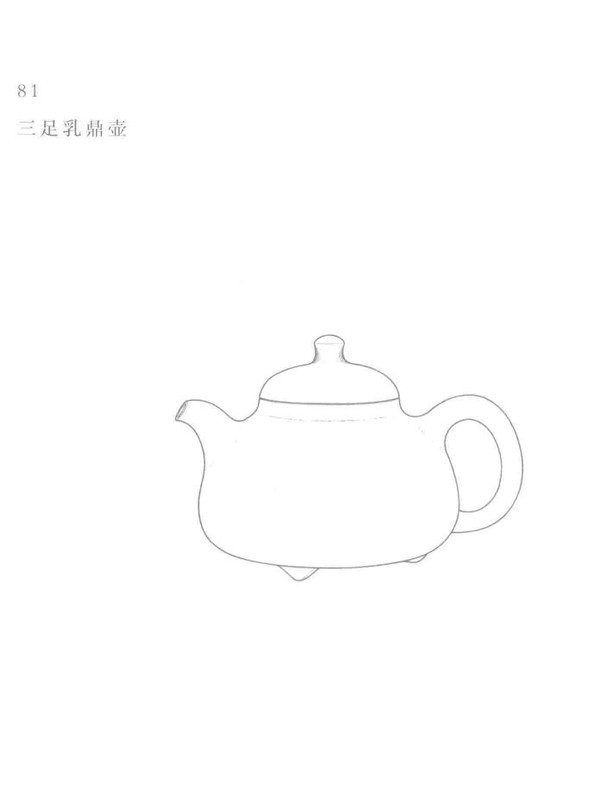
The form itself likely features clean, flowing lines that suggest the graceful arc of a branch. The body would be smooth and unadorned, allowing the natural beauty of the Yixing clay to speak for itself. This restraint is intentional—in Chinese aesthetics, empty space is as important as filled space, silence as important as sound. The pot’s surface becomes like a blank canvas where the tea drinker’s imagination can wander.
The spout, handle, and lid would be designed with the same principle of elegant simplicity. Rather than elaborate decorative flourishes, these elements likely feature subtle curves and proportions that create visual harmony. The handle might echo the curve of a branch, while the spout could suggest the trajectory of a falling drop. These aren’t literal representations but poetic suggestions—the design invites contemplation rather than demanding attention.
The choice of clay is crucial to the Shubu Xialei’s character. Gu Jingzhou was known for his discerning selection of clay bodies, often choosing materials that would develop rich patinas over time. For a design evoking natural imagery, he likely selected a clay with warm, earthy tones—perhaps a zisha (purple sand) that would darken with use, or a zhuni (red clay) that would develop a lustrous sheen. The clay’s texture and color would complement the design’s naturalistic theme, creating a pot that feels like it emerged from the earth itself.
The Art of Seasoning: Developing Your Shubu Xialei
One of the most rewarding aspects of owning a Yixing teapot is the seasoning process—the gradual transformation that occurs as the pot absorbs tea oils and develops a patina. With a Shubu Xialei, this process takes on special significance, as the pot literally becomes a record of your tea journey.
Before first use, rinse the pot thoroughly with boiling water to remove any dust from storage. Then, perform an initial seasoning by filling the pot with tea leaves (preferably the type you plan to use regularly) and hot water, letting it sit overnight. This begins the process of opening the clay’s pores and establishing the pot’s character.
With each subsequent brewing, the pot will gradually darken and develop a subtle sheen. The unglazed Yixing clay is porous, absorbing trace amounts of tea with every use. Over months and years, this creates a seasoned interior that enhances the tea’s flavor—a phenomenon Chinese tea enthusiasts call “yang hu” (养壶), or “raising the pot.”
For the Shubu Xialei, this aging process mirrors the design’s natural theme. Like a tree that develops character through seasons of growth, your pot will develop its own unique patina based on your tea choices and brewing habits. No two pots will age identically, making each Shubu Xialei a one-of-a-kind piece.
Tea Pairing: Finding the Perfect Match
The Shubu Xialei’s design philosophy suggests certain tea pairings that complement its aesthetic and functional qualities. While Yixing pots are traditionally dedicated to a single tea type (to preserve flavor purity and develop optimal seasoning), choosing the right tea for your Shubu Xialei is an important decision.
Oolong teas, particularly traditional Wuyi rock teas like Da Hong Pao or Shui Xian, are excellent matches. These teas share the Shubu Xialei’s balance of complexity and restraint. The pot’s clay will enhance the tea’s mineral notes and smooth out any rough edges, while the tea’s oils will season the pot beautifully. The multiple infusions typical of oolong brewing also allow you to fully appreciate how the pot affects the tea’s evolution across steepings.
Aged raw pu-erh is another superb pairing. The earthy, complex character of aged sheng pu-erh resonates with the naturalistic theme of the Shubu Xialei design. The pot’s clay will soften the tea’s astringency while preserving its depth, and the dark tea liquor will contribute to a rich, even patina over time.
Phoenix Dan Cong oolongs offer an intriguing alternative. These highly aromatic teas from Guangdong province feature complex flavor profiles ranging from floral to fruity to honey-like. The Shubu Xialei’s clean design won’t compete with these delicate aromatics, instead providing a neutral stage that allows the tea’s nuances to shine.
For those who prefer ripe pu-erh (shou pu-erh), the Shubu Xialei can work well, though the dark, earthy character of these teas will season the pot quite distinctly. If you choose this path, commit to it fully—switching between ripe and raw pu-erh in the same pot is generally not recommended.
Black teas (red teas in Chinese terminology) like Keemun or Dian Hong can also pair beautifully with the Shubu Xialei, particularly if you prefer a smaller pot for solo sessions. The pot will mellow these teas’ tannins and enhance their natural sweetness.
Brewing Technique: Honoring the Design
Brewing tea in a Shubu Xialei is both a practical act and a meditative ritual. The pot’s design invites a mindful approach that honors both the tea and the vessel.
Water temperature should match your chosen tea type—boiling for pu-erh and most oolongs, slightly cooler (around 90-95°C) for more delicate oolongs. The Yixing clay’s heat retention properties mean the pot will maintain temperature well throughout the session.
Tea quantity depends on the pot’s size, but a general guideline is to fill the pot about one-third full with dry leaves. The leaves will expand significantly during brewing, and you want to leave room for this expansion while ensuring good water circulation.
Steeping times should start short—perhaps 10-15 seconds for the first infusion—and gradually increase with subsequent steepings. The Shubu Xialei’s design likely facilitates good water flow and even extraction, so you may find you can push the tea through more infusions than you might in other vessels.
Pouring technique matters more than many realize. Pour decisively but not hastily, allowing the tea to flow smoothly from spout to cup. The pot’s design should make this natural and effortless—if you find yourself fighting the pot, you may need to adjust your grip or pouring angle.
After each session, rinse the pot thoroughly with hot water (never soap) and let it air dry completely with the lid off. This prevents any musty odors from developing and allows the clay to breathe. Some enthusiasts gently wipe the exterior with a soft tea cloth to enhance the patina’s development, though this is optional.
Collecting and Authentication
For those interested in acquiring a Shubu Xialei, particularly one from Gu Jingzhou’s workshop, authentication is crucial. The late 1980s pieces documented in classical references bear specific seal marks that can help verify authenticity:
- Base seals reading “Gu Jingzhou” (顾景洲)
- Body seals with “Jingzhou Zhi Tao” (景舟制陶)
- Handle seals marked “Jingzhou” (景舟)
- Age-specific inscriptions like “Jingzhou Qier Hou Zuo” (景舟七二后作)
However, Gu Jingzhou’s fame has unfortunately led to numerous forgeries. Authentic pieces from his late period command significant prices, which incentivizes counterfeiters. When evaluating a potential purchase, examine the seal marks carefully—authentic seals should show consistent depth and clarity, with characters that match documented examples. The clay quality should be exceptional, with a refined texture that speaks to careful material selection. The craftsmanship should be flawless, with precise joints, smooth surfaces, and perfect proportions.
Working with reputable dealers who provide provenance documentation is essential. Auction records, previous ownership history, and expert authentication can all help establish a piece’s legitimacy.
The Living Tradition
What makes the Shubu Xialei design particularly significant is how it represents the continuity of Yixing tradition. Gu Jingzhou didn’t simply replicate ancient forms—he reinterpreted them for modern sensibilities while maintaining their essential spirit. The Shubu Xialei bridges past and present, traditional and contemporary.
Contemporary Yixing artists continue to create interpretations of the Shubu Xialei design, each bringing their own perspective while honoring the original concept. These modern pieces may not carry Gu Jingzhou’s seals, but they carry forward his artistic vision and technical standards. For tea enthusiasts who appreciate the design but find authentic Gu Jingzhou pieces beyond their budget, these contemporary interpretations offer an accessible entry point.
Conclusion: A Pot for Contemplation
The Shubu Xialei—the Teardrop from Sparse Branches—is ultimately a pot that rewards contemplation. Its name invites us to slow down, to notice the small moments of beauty that punctuate our days. In our rushed modern lives, the simple act of brewing tea in a thoughtfully designed pot becomes a form of meditation, a brief respite from constant demands on our attention.
When you hold a Shubu Xialei, you’re not just holding a functional object. You’re holding a piece of artistic philosophy, a tangible expression of values that have guided Chinese aesthetics for centuries: simplicity, naturalness, and the beauty of impermanence. Each time you brew tea, you’re participating in a tradition that stretches back through generations of tea drinkers and potters, each finding their own meaning in the ritual.
Whether you’re fortunate enough to own an authentic late-period Gu Jingzhou piece or a contemporary interpretation, the Shubu Xialei invites you to approach tea drinking as more than mere consumption. It’s an invitation to pause, to observe, to appreciate—to notice the teardrop on the sparse branch before it falls, and to find beauty in that fleeting moment.
