mo 滤
Discover the mo 滤, a classic Yixing pottery design with unique characteristics
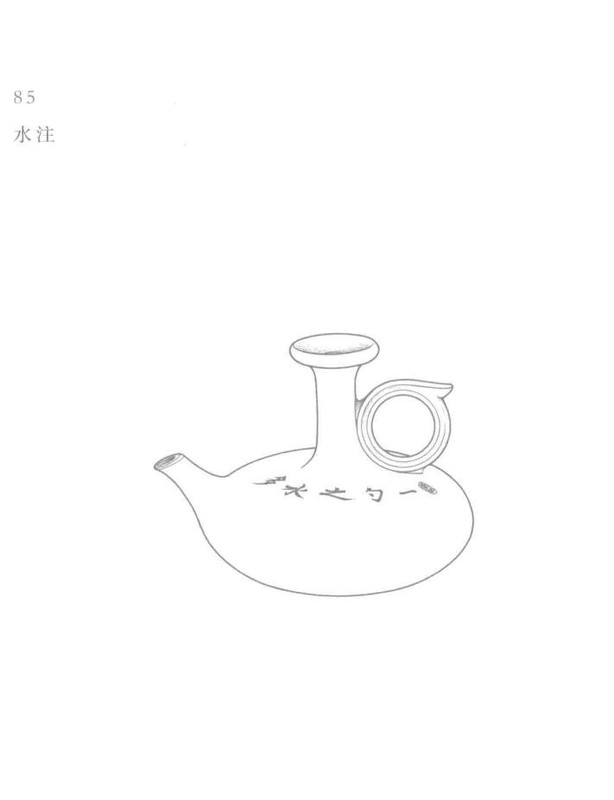
The Mo 滤 Water Pourer: A Collaborative Masterpiece of Modern Yixing Craftsmanship
In the summer of 1992, two skilled artisans came together to create something special in the ancient pottery town of Yixing. The result was a mo 滤 water pourer—a compact, elegant vessel that represents both the continuation of classical Chinese pottery traditions and the collaborative spirit that has always defined the best of Yixing craftsmanship.
Understanding the Mo 滤: More Than Just a Pourer
The mo 滤 is not a teapot in the traditional sense, but rather a water pourer—a specialized vessel used in the gongfu tea ceremony. Standing at just 85mm tall, this particular piece embodies the principle that great things often come in small packages. The Chinese character 滤 (lǜ) means “to filter” or “to strain,” hinting at the vessel’s refined purpose in the tea preparation process.
Water pourers occupy a unique position in Chinese tea culture. While teapots steep the leaves, water pourers serve the crucial function of controlling water temperature and flow during the brewing process. The mo 滤 design represents a classical approach to this function, one that prioritizes precision and elegance in equal measure.
A Tale of Two Artisans
What makes this particular mo 滤 especially noteworthy is its collaborative origin. The base inscription reads “陶索外史与江华二人小品” (A small piece by Tao Suo Waishi and Jiang Hua), revealing that this was a joint creation between two makers. In the world of Yixing pottery, such collaborations are relatively rare and highly prized.
The primary maker, Liu Ji (刘吉), was responsible for the overall execution of the piece. Liu’s involvement suggests a level of technical mastery, as water pourers demand exceptional skill—their small size leaves no room for error, and their function requires precise engineering of the spout and body relationship.
The inscription mentions “Tao Suo Waishi” (陶索外史), a studio name or artistic pseudonym that translates roughly to “Pottery Explorer Outside History” or “Pottery Seeker Beyond Convention.” This evocative name suggests an artisan interested in pushing boundaries while respecting tradition. The second collaborator, Jiang Hua (江华), brought their own expertise to the project.
The timing is significant: 1992 marked a period of renaissance in Yixing pottery. After the disruptions of the mid-20th century, the 1990s saw a renewed interest in traditional craftsmanship combined with contemporary artistic expression. This mo 滤 emerged during that fertile creative period, when master potters were rediscovering classical forms while adding their own interpretations.
The Renshen Summer: Context and Creation
The inscription specifies “竹申夏目” (summer of the Renshen year), placing the creation in the summer months of 1992. In Chinese culture, the season of creation matters. Summer in Yixing brings specific conditions—higher humidity, warmer temperatures—that affect how clay behaves during forming and drying. Experienced potters work with these seasonal variations, and pieces made in summer often have their own character.
The Renshen year (壬申) in the Chinese zodiac is the year of the Water Monkey, an auspicious combination associated with intelligence, adaptability, and flow—all qualities that resonate with both water pourers and tea culture more broadly. Whether the artisans chose this timing deliberately or simply recorded when inspiration struck, the temporal marker adds another layer of meaning to the piece.
Design and Form: Classical Elegance in Miniature
At 85mm in height, this mo 滤 exemplifies the “small piece” (小品) aesthetic mentioned in its inscription. In Chinese art, xiaopin refers to works that are intimate in scale but complete in artistic expression—small in size but not in ambition or accomplishment.
The classical design designation tells us this piece draws from established Yixing forms rather than pursuing radical innovation. Classical water pourers typically feature:
A rounded or slightly compressed body that provides stability and allows for comfortable handling despite the small size. The body shape affects how water moves inside the vessel, influencing pour control and temperature retention.
A carefully engineered spout that must deliver a precise, controlled stream. In a water pourer, the spout is everything—it determines whether you can accurately direct water onto tea leaves or into small cups. The best spouts cut off cleanly without dripping, a technical achievement that requires perfect understanding of clay properties and firing effects.
A handle proportioned to the body, allowing secure grip while pouring. On an 85mm vessel, the handle must be substantial enough to grasp but not so large as to overwhelm the form.
A lid that fits precisely, as even small gaps can affect how the vessel pours. The relationship between lid, body, and spout creates the internal air pressure dynamics that control water flow.
The Jing Ji Seal: A Mark of Quality
The exterior bears the seal “景记” (Jing Ji), which translates to “Jing’s mark” or “recorded by Jing.” Seals on Yixing pottery serve multiple purposes—they authenticate the maker, mark the studio or workshop, and sometimes indicate the clay source or firing method.
The presence of this seal alongside the base inscription creates an interesting layering of attribution. While Liu Ji is credited as the maker and the inscription mentions the collaboration with Tao Suo Waishi and Jiang Hua, the Jing Ji seal adds another dimension. This could indicate:
- The workshop or studio where the piece was created
- A master who supervised or approved the work
- A collector or dealer who commissioned the piece
- A quality control mark from a pottery collective
This multiplicity of marks reflects the complex social and economic structures of Yixing pottery production, where individual artisans, workshops, studios, and commercial entities all play interconnected roles.
Clay and Firing: The Foundation of Function
While the source material doesn’t specify the exact clay type, classical water pourers from this period typically used zisha (紫砂, purple sand) clay in its various forms. The choice of clay profoundly affects both aesthetics and function.
For water pourers, potters often selected clays with specific properties:
Zhuni (朱泥, vermillion clay): A fine-grained, iron-rich clay that fires to warm red-orange tones. Zhuni’s density makes it excellent for water pourers because it retains heat well and produces a smooth interior surface that doesn’t interfere with water quality.
Duanni (段泥, section clay): A lighter-colored clay that fires to yellow or beige tones. Duanni has slightly higher porosity than zhuni, which some tea practitioners prefer for its subtle effect on water character.
Zini (紫泥, purple clay): The most common zisha clay, firing to purple-brown tones. Zini offers a middle path between zhuni’s density and duanni’s porosity.
The 1992 date suggests this piece was fired in traditional dragon kilns or modern electric kilns that had become more common by that period. The firing temperature—typically between 1100-1200°C for zisha clays—determines the final clay body’s density, color, and functional properties.
The Art of the Water Pourer in Tea Practice
Understanding how to use a mo 滤 properly reveals why its design matters so much. In gongfu tea preparation, the water pourer serves several crucial functions:
Temperature Control: By pouring water from a larger kettle into the mo 滤 first, you can moderate temperature. The small vessel cools boiling water slightly, bringing it to the ideal temperature for delicate teas. The 85mm size is perfect for this—large enough to hold a useful amount of water, small enough to cool it appropriately.
Precision Pouring: The spout design allows you to direct water exactly where you want it. When brewing in a small gaiwan or teapot, this precision prevents splashing and ensures even saturation of the leaves.
Aesthetic Ritual: The water pourer adds a layer of ceremony to tea preparation. Using a beautiful vessel for this intermediate step elevates the entire experience, engaging multiple senses and creating mindful moments.
Water Quality: Yixing clay’s unique properties can subtly affect water character. The clay’s mineral content and porosity interact with water in ways that some tea practitioners believe enhance the brewing process.
Tea Pairing: Finding the Perfect Match
The mo 滤’s characteristics make it particularly well-suited for certain tea types:
Delicate Green Teas: The water pourer’s cooling effect helps prevent scorching tender green tea leaves. Longjing, Biluochun, and other premium green teas benefit from water that’s been tempered through a small vessel.
White Teas: Silver Needle and White Peony require gentle treatment. The controlled pour from a mo 滤 allows you to introduce water gradually, coaxing out the tea’s subtle flavors without overwhelming the leaves.
Light Oolongs: Taiwanese high-mountain oolongs and lightly oxidized Tieguanyin appreciate the precision pouring that prevents leaf damage and allows for even extraction.
Aged Teas: When brewing aged white teas or well-stored oolongs, the water pourer helps you control the awakening process, gradually introducing water to leaves that have been dormant for years.
The key is matching the vessel’s properties to the tea’s needs. The mo 滤’s small size and classical design make it ideal for teas that require careful, controlled brewing rather than aggressive extraction.
Practical Brewing Guidance
To get the most from a mo 滤 like this 1992 piece:
Seasoning: Before first use, rinse the vessel with hot water several times. Some practitioners brew inexpensive tea in new Yixing pieces to season them, though this is less critical for water pourers than teapots.
Temperature Management: Fill the mo 滤 from your kettle, wait 10-15 seconds, then pour into your brewing vessel. This brief pause allows optimal temperature adjustment.
Pouring Technique: Hold the vessel securely, using your thumb on the lid to prevent it from falling. Pour with steady, controlled motion—the spout should deliver a clean stream that cuts off without dripping.
Cleaning: After each session, rinse with hot water only. Never use soap, which can be absorbed by the clay and affect future use. Allow the vessel to air dry completely before storing.
Storage: Keep your mo 滤 in a clean, dry place with good air circulation. Avoid sealed containers, which can trap moisture and lead to musty odors.
Maintenance: Over time, the clay will develop a patina from use. This is desirable—it shows the vessel’s history and can enhance its properties. Simply continue your regular cleaning routine.
Collecting and Appreciating
A piece like this 1992 mo 滤 represents several collecting interests:
Collaborative Works: Pieces made by multiple artisans are relatively uncommon and document the social nature of pottery production.
Dated Pieces: The specific temporal marking makes this vessel a historical artifact, capturing a moment in Yixing’s modern renaissance.
Functional Art: Unlike purely decorative pieces, this water pourer was made to be used, embodying the Chinese aesthetic principle that beauty and utility should unite.
Classical Revival: As a classical design from the 1990s, it represents the period’s interest in reconnecting with traditional forms while bringing contemporary sensibilities.
For collectors, condition matters greatly. Check for:
- Intact spout (chips here severely affect function)
- Secure lid fit
- Clear inscriptions and seals
- No cracks or repairs
- Original patina (if previously used)
The Broader Context: Water Pourers in Tea Culture
The mo 滤 exists within a rich tradition of specialized tea vessels. Chinese tea culture has always valued having the right tool for each task, and water pourers exemplify this principle. They occupy the space between kettle and teapot, serving a specific function that enhances the overall brewing process.
This specialization reflects deeper cultural values: attention to detail, respect for craft, and the belief that small refinements accumulate into transcendent experiences. A tea session using a mo 滤 involves more steps, more vessels, more opportunities for mindfulness—and that’s precisely the point.
Conclusion: Small Piece, Large Significance
The 1992 mo 滤 created by Liu Ji in collaboration with Tao Suo Waishi and Jiang Hua stands as a testament to Yixing pottery’s enduring vitality. At just 85mm tall, it proves that significance isn’t measured in size. This “small piece” from that Renshen summer carries forward centuries of ceramic tradition while bearing the marks of its specific moment and makers.
For tea practitioners, it offers functional excellence—a tool that enhances the brewing process through thoughtful design and skilled execution. For collectors, it provides historical documentation of a collaborative creative process during an important period in Yixing’s modern history. For anyone who appreciates fine craft, it demonstrates how traditional forms can remain relevant and vital when made with skill and intention.
Whether you use such a vessel daily or simply admire its form, the mo 滤 invites us to slow down, pay attention, and find meaning in small, carefully executed actions—lessons that extend far beyond the tea table.
